.
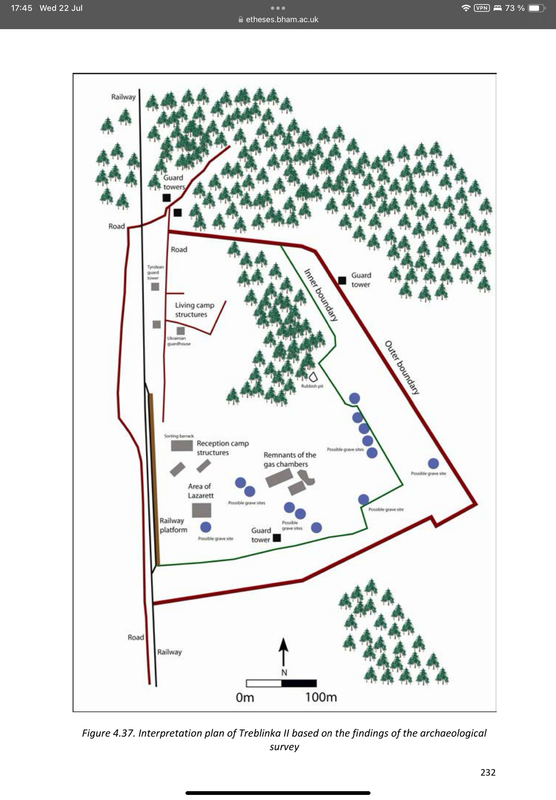
Franz Stangl became Kommandant of Treblinka, on 1 September 1942. He was replacing the first Treblinka Kommandant Irmfried Eberl. He was moved there from his position of Kommandant of Sobibor.
After the war he never tried to hide his identity nor did he change his name to avoid detection.
A curious fact if we are to believe he specifically left Austria and moved about with his wife and children from Italy to Syria and finally to Brazil in order to avoid capture and punishment for his alleged crime of mass murder of over a million people at Sobibor and Treblinka.
A comment on the Unz review — on one of the articles about the new book by Caroline Colls perpetuating WW2 atrocity propaganda — discusses this. It also alludes to suspicions regarding the timing and manner of his death while in prison.
It refers to the fact that on the 28th of June 1971 Stangl mysteriously and conveniently died, just 19 hours after being interviewed by Jewish author,
Gitta Sereny in the Düsseldorf prison where he was appealing his sentence.
He supposedly died of heart failure.
Hmmmm?
So… Just like Richard Baer conveniently did!
The commenter makes the claim that jewess Sereny brought Stangl soup. For which she was reprimanded.
I checked with an Ai engine and it confirmed she brought him soup the day before he died:
On 27 June 1971, the day before Stangl died, Sereny brought him a thermos of a special Austrian soup that, according to her account, his wife used to make when he was unwell.
Stangl ate the soup and then continued talking with Sereny. He died of heart failure the following day.
It refutes the suggestion this was unlawful or that she was reprimanded for it. It states she was merely criticised by an unnamed “critic”.
A 1998 New York Times interview notes that a critic had challenged her over making soup for him.
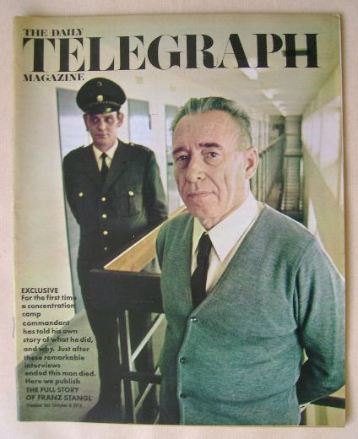 Franz Stangl in the Düsseldorf prison where he was serving a life sentence,
photographed by someone accompanying Gitta Sereny.
Here is the comment from the Unz Review article on Caroline Colls’s new work of fiction:
Franz Stangl (1908-71), escaped after the war to Syria and then re-located to Brazil, where he was arrested in 1967 after efforts by Simon Wiesenthal, and than extradited to West Germany. His trial took place in 1970; he was sentenced to life in prison.
Franz Stangl was the only commandant of an extermination camp who was brought to trial.
Whilst he was appealing his sentence and hoping to get out of prison before he died, Stangl was interviewed extensively ‘for 70 hours’ by Jewish author Gitta Sereny (1921-2012), Stangl dying of a heart attack in 1971 shortly after the interviews.
Sereny was sharply criticised for bringing Stangl soup one day.
Sereny’s book on her interviews with Stangl, ‘Into That Darkness’, was published in 1974. The book was hailed as involving some degree of confession by a commandant that Treblinka was in fact a death camp, with German Nazis keeping some degree of distance from death operations by using Ukrainian camp guards and staff.
The denialist [revisionist] claims are that Stangl was trying to win release from prison before he died, by going along with the holocaust narrative … and that when Gitta Sereny finally published her book, Stangl was no longer arround to contradict anything.
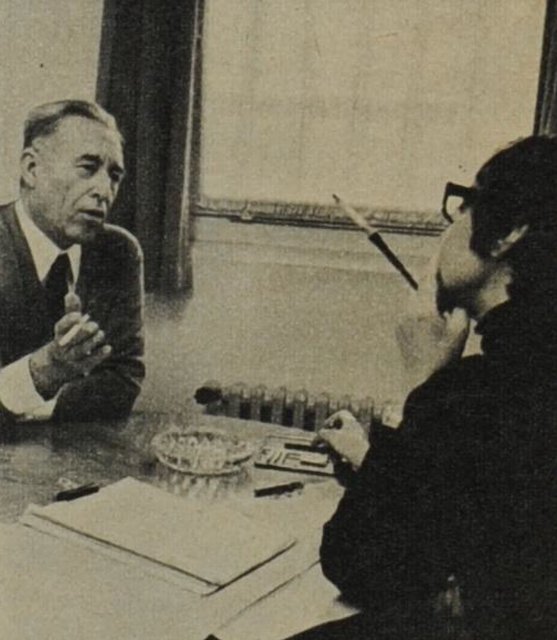
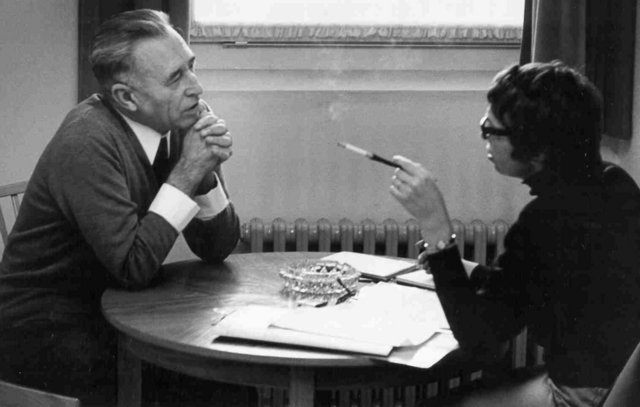 Here below is a poster for yet another deceitful dramatised Jewish fiction.
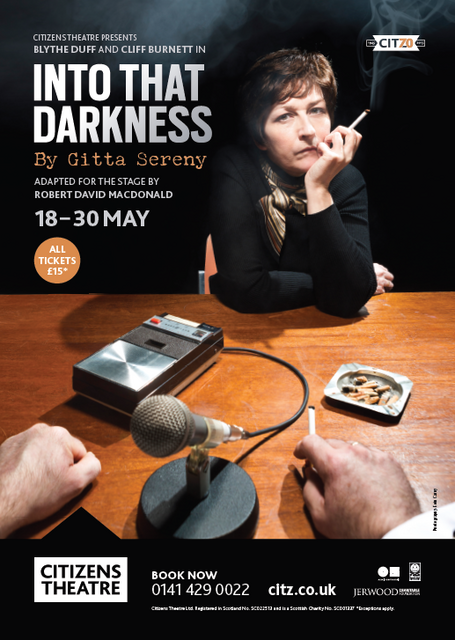
Sereny took no tape recorder!
She didn’t record her conversations!
Nor did she ever allow anyone to see any notes of her conversations with Stangl.
Everything she claimed Stangl said to her is therefore completely unverifiable!!!
How convenient.