Jews and communism

Bringing some objectivity to the history of the Chosen People
Post Reply
User avatar
Wahrheitssucher
Posts: 986
Joined: Mon May 19, 2025 2:51 pm

Jews and communism

Post by Wahrheitssucher »

A recurring theme in my reading is that Communism was a prominently ‘jewish’ ideology. Connected to that understanding is that capitalist jews world-wide wholeheartedly supported it.
I’m not sure how much that last idea is accurate.
Anyone here have views or info on that?

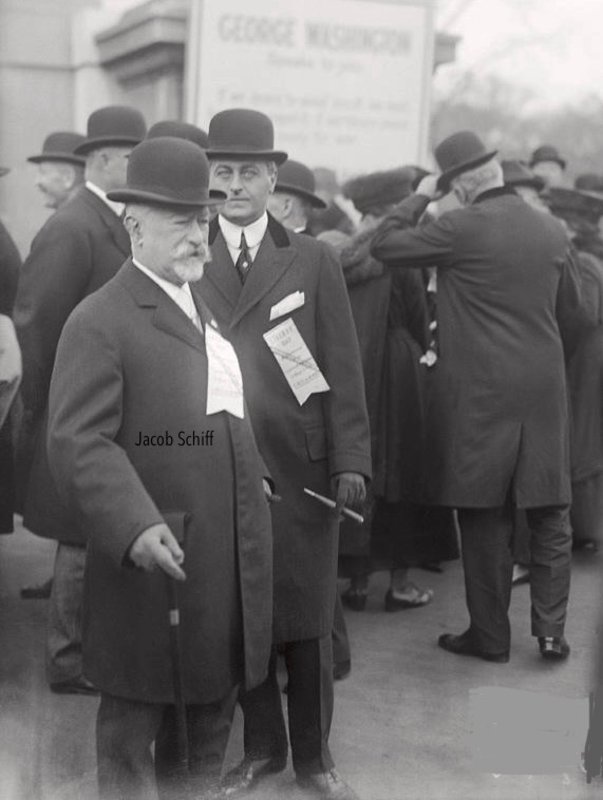
E.g. Jacob Henry Schiff a prominent Jewish financier on Wall Street of German origin, gave huge financial support to the communist revolutionaries. but this is explained away as only being because he was waging a personal vendetta against Tsarist Russia due to belief it was permitting ‘progroms’.
Image
Schiff was a German-born American banker and businessman. He helped finance the the Japanese military efforts against Tsarist Russia in the Russo-Japanese War.
Born in Frankfurt, Germany, Schiff migrated to the United States after the American Civil War and joined the firm Kuhn, Loeb & Co. From his base on Wall Street, he was the foremost Jewish leader from 1880 to 1920 in what later became known as the "Schiff era", grappling with all major Jewish issues and problems of the day, including the plight of Russian Jews, American and international antisemitism and the rise of Zionism.

… Journalist George Kennan noted that Schiff helped finance revolutionary propaganda during the Russo-Japanese War and Revolution of 1905, through the Society of Friends of Russian Freedom. The Jewish Communal Register of New York City stated that, "Mr. Schiff has always used his wealth and his influence in the best interests of his [jewish] people. He financed the enemies of autocratic Russia [the communist revolutionaries] and used his financial influence to keep Tsarist Russia from the money markets of the United States".

National loans
What is perhaps Schiff's most famous financial action took place during the Russo-Japanese War (1904–1905). Schiff met with Takahashi Korekiyo, deputy governor of the Bank of Japan, in Paris in April 1904. Schiff agreed to extend loans to the Empire of Japan in the amount of $200 million (equivalent to $5.3 billion in 2023), through Kuhn, Loeb & Co. These loans were the first major flotation of Japanese bonds on Wall Street, and provided approximately half the funds needed for Japan's war effort.
… It is quite likely Schiff also saw this loan as a means of answering, on behalf of the Jewish people for the antisemitic actions of the Russian Empire, specifically the recent Kishinev pogrom in 1903. This loan attracted worldwide attention, and had major consequences…

Schiff forbade any of the funds from his loans from going to the Russian Empire, during the reign of the Tsars. When the Tsar was overthrown in 1917, Schiff repealed the impediments within his firm against lending to Russia.
~ Wikipedia
But apparently Schiff's stance changed once the Bolsheviks' seized power:
…in March 1917 Alexander Kerensky, representing the new provisional government, had declared Jews to be equal citizens. In addition to repeated public statements of support, Schiff used both his personal wealth and the resources of Kuhn Loeb to float large loans to Kerensky's regime. But when Lenin and Trotsky seized power for themselves in November 1917, Schiff immediately rejected them, cut off further loans, started funding anti-Bolshevist groups, and even demanded that the Bolsheviks pay back some of the money he'd loaned Kerensky.
Schiff also joined a British-backed effort to appeal to fellow Jews in Russia to continue the fight against Germany.
~ Wikipedia
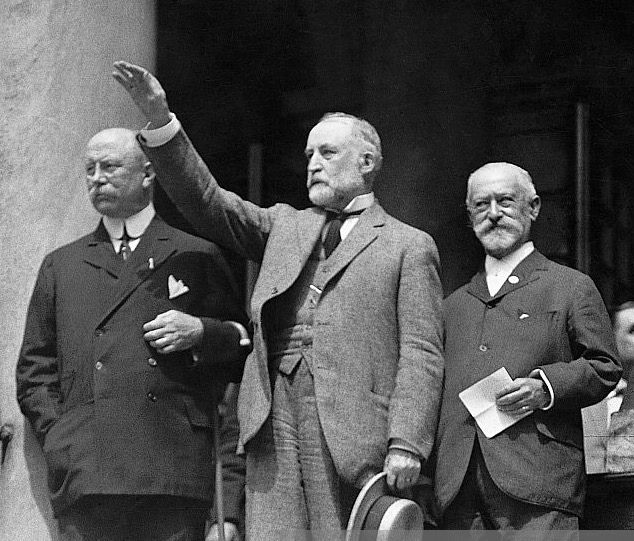
That last fact is intriguing. Despite being himself a German jew who had emigrated to America (so would have had friends and family still living in Germany) in 1917 he wanted Russia to “continue the fight against Germany”.

Image
Jacob Schiff standing far right.

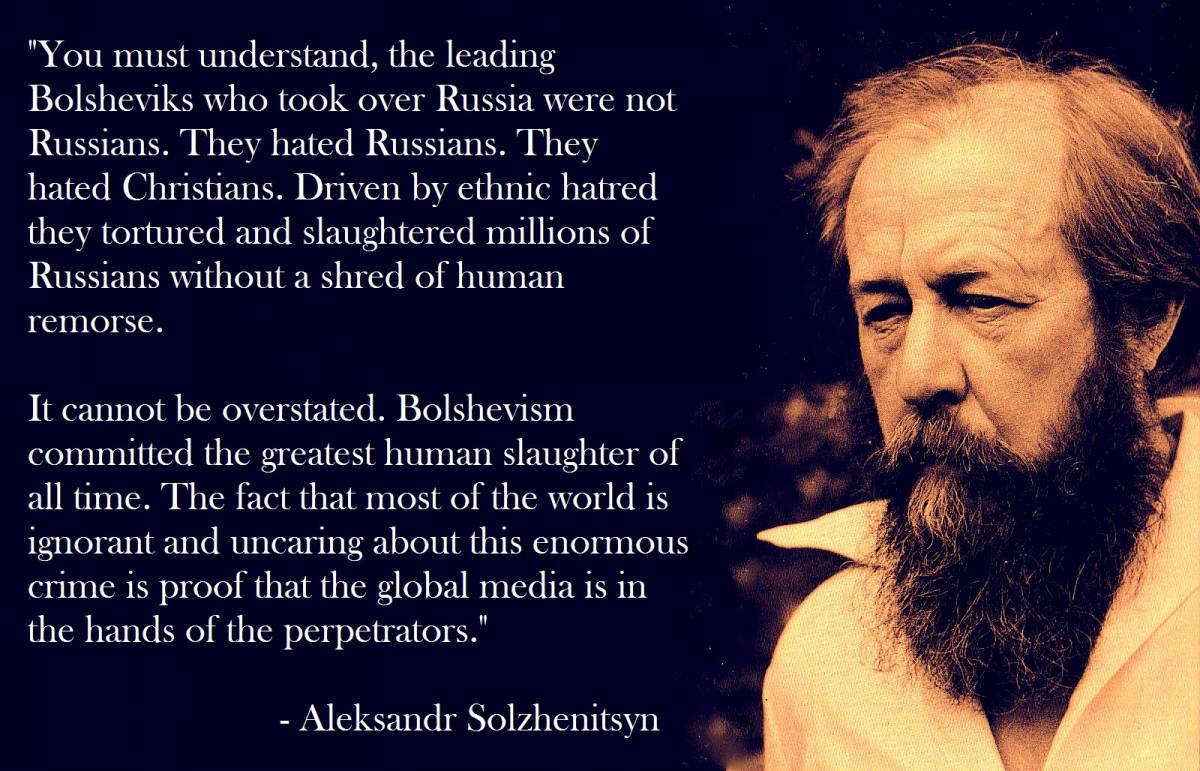
Another recurring idea connected to the above, is that both these communist jews and their capitalist jewish supporters wanted a world-wide ‘new order’ ruled by communism’s jewish leaders.
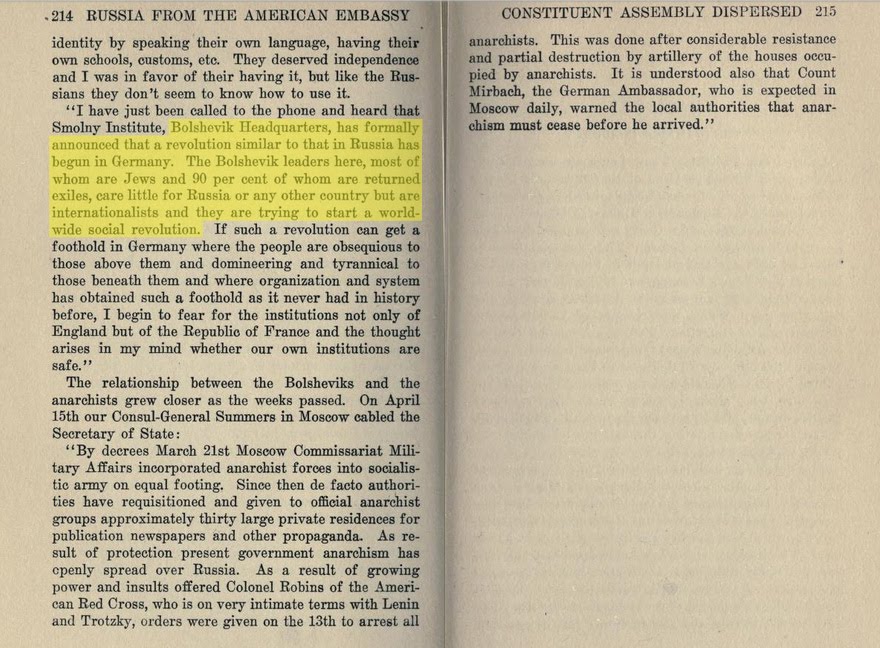
Image
Image

Image

Here is an article by Karl Radl on the origins of both ‘zionism’ and ‘communism’
Did you know that Communism and Zionism originally come from the same man?

You’ve probably not heard the name of the nineteenth century Jewish intellectual Moses Hess but biographers of Karl Marx – the Jewish founder of Communism along with his German friend Friedrich Engels – and historians of Zionism are not only familiar with his name but also often offer gushing praise of him.

After all what else could you say for a man who more or less single-handedly created two major intellectual movements that have dominated the twentieth century?

Moses Hess was a close friend of Karl Marx and Friedrich Engels at the University of Berlin, and it has long been admitted that his ideas – especially his economic ideas – are the basis for Marx’s ideas as explained in his famous 1848 pamphlet ‘The Communist Manifesto’ which is based on Hess’ 1846 pamphlet ‘The Communist Confession Faith’.

Indeed, it was Moses Hess who converted Marx to the idea of Communism!

Moses Hess however was also a Jewish nationalist and wrote a book called ‘Rome and Jerusalem: A Study in Jewish Nationalism’ in 1862 which served as the basis for Theodor Herzl’s own 1896 book and manifesto of Zionism ‘Der Judenstaat’.

In ‘Rome and Jerusalem’ Moses Hess argued for the forcible creation of a Jewish state (in what was then Palestine and ruled by the Ottoman Empire) based on a racial categorisation. We must remember that Judaism is not a confession-based religion as is often claimed today but rather an ancestry-based religion … [if in doubt please look up the concept of ‘Noahides’ and ask yourself why a ‘confession-based religion’ would require such a category]. Moses Hess envisioned that this state would adhere to both a Communist economic system and be a racial state in which only jews could be citizens.

He also argued that because of its geographic position and trade/financial links – meaning links to other Jews in positions of influence – to the West (Europe and North America) and to the East (China and India) that this Jewish state would become one of the richest and possibly the most pre-eminent superpower in the world as it would control international trade.

Moses Hess’ two ideas – Communism and Zionism – quickly caught on amongst the Jews but also among many non-Jews with large scale movements devoted to one or sometimes both – for example the Poale Zion in Poland and Russia – coming into existence by the turn of the twentieth century.

Communist movements around the world were often led by Jews – such as for example the Socialist Party of Germany (out of which the Communist Party of Germany later emerged) was led by Eduard Bernstein from the 1880s to 1920s. The Communist Party of Germany was led by Rosa Luxembourg, Leo Jogiches and Paul Levi [all born to wealthy Jewish families]) – while the Zionist movement was supported by well-meaning Christians such as Lord Arthur Balfour; who wrote the famous ‘Balfour Declaration’ of 1917 that is the basis for the modern Israeli State.

Originally Christian Zionists - like Balfour and Winston Churchill - wanted to use a projected Jewish state in Palestine as a tool of British foreign policy and also as a way to deal with the large numbers of Jews who had arrived in England (as well as America, France and Germany) from the Russian Empire due the Russian Tsars taking a dim view of the heavy Jewish involvement in radical and revolutionary terrorist groups that managed to murder Tsar Alexander I in 1881.

These Jews had immediately begun making such a social, economic and political nuisance of themselves – such as promoting Communism in the West - that some way to get rid of them had to be found lest a popular anti-Jewish revolution occur and with which such a policy Jewish supporters of Hess’ and Herzl’s creation of Zionism such as the famous Rothschild and Warburg banking families agreed lest the behaviour of these less-assimilated Jews cause the non-Jewish populations to become resistive.

Around the same time an American clergyman named Cyrus Scofield produced a new version of the Bible called the ‘Scofield Reference Bible’ designed to promote a very niche version of Christian theology by deliberately mistranslating and creating interpreting – via long footnotes – the text of the Old and New Testaments to support Scofield’s idea – derived from the obscure Plymouth Brethern cleric John Nelson Darby – that if all Jews could be forced – or induced - to immigrate to what was then Palestine then it would trigger the Second Coming of Jesus.

Scofield’s Bible was never that popular – it was atrociously bad Biblical scholarship as many theologians and Biblical scholars of Scofield’s time pointed out - till it was seized upon by the Christian Zionist movement in the 1920s and 1930s as a way to attract and justify Christian support for creating and supporting a Jewish state in Palestine which we now call Israel.

Scofield’s Bible has continued to be the basis of Christian support for Israel and is fundamentally why many otherwise well-meaning Christians continue to promote an ‘Israel First’ not an ‘America First’ point of view with Israel being by far the top destination for US foreign aid with $310 billion of American taxpayer’s money currently spent and numerous other sources of disguised revenue for Israel such as the United States-Israel Free Trade Agreement of 1985 – the US’ first ever free trade agreement – which drained $12.5 billion from the US economy in 2016 and $9.5 billion from it in 2017 (these being the latest published numbers).

Just as Moses Hess envisioned in his 1862 book ‘Rome and Jerusalem’!

Indeed, while Jewish Zionists and their Christian allies were busy trying to achieve a Jewish state in the then Ottoman province of Palestine; Jewish followers of Communism (Hess’ other creation) were spearheading similar Jewish homeland projects after the Bolshevik Revolution of late 1917. Bolshevism was so dominated by Jews that it was actually the subject of widespread Jewish jokes at the time and continued to right up until after the death of Joseph Stalin. One prominent historian of Stalinism noted with alarm that Stalin’s closest confidents during the 1930s were circa 80-85% Jewish based upon their uniquely Jewish surnames alone. Other Jewish homeland projects include the creation of the Jewish Autonomous Oblast in Russia in 1924 and other similar proposals for additional Jewish states being proposed by prominent Soviet Jewish officials in the form of Crimea (twice) and Latvia, with the non-Jewish residents being expelled and Jews allowed to create state of their own there.

There was rising non-Jewish discontent against Jews in the Soviet Union following Jewish Soviet officials being responsible for multiple genocides targeting non-Jews and resulting in millions of deaths – for example the Kazakh Famine of 1930-1933 supervised by the Jewish Bolshevik Filipp Goloshchyokin which killed circa 2 million Kazakhs; and the Holodomor of 1932-1933 in the Ukraine supervised by the Jewish Bolshevik Lazar Kaganovich which killed 3.5-5 million Ukrainians. Therefore Stalin began to sacrifice some of the Jewish officials such as Ana Pauker in Romania, Rudolf Slansky in Czechoslovakia and Matyas Rakosi in Hungary in order to pacify the populace of the Soviet Union and its newly conquered countries.

This resulted in the destruction of the Soviet Zionist-Communist consensus that had been built up by Stalin’s Soviet Union during the 1920s to the late 1940s. It also led to $180 billion being spent by Franklin Delano Roosevelt’s administration in supporting the Soviet Union against Germany and the Axis powers in the Second World War with the Soviet Union only repaying $722 million and having the rest of the debt written off by the Nixon administration in 1971. Many of Roosevelt’s administration’s senior figures had been Jewish and had been supportive of the Soviet Union, such as his Secretary of the Treasury Henry Morgenthau Jr.

The Soviet Union repaid this debt to Jews by immediately recognizing the state of Israel in 1948. They’d already been helping arm the Jewish terrorist groups of pre-Israel Palestine – such as providing them with large quantities of guns and ammunition from Czechoslovakia with shipment alone in June 1948 compromising over 6,000 machine guns and more than 52 million bullets – and influencing Israeli politics via the ‘Marxist-Zionist’ Mapam party till the Soviet Union’s collapse in December 1991.

Once again this is exactly how Moses Hess had envisioned the future in his 1862 book ‘Rome and Jerusalem’ as embodied by the fact that Soviet and American taxes both paid for Israel’s generous and highly subsidised healthcare, education and day-care systems. This while both countries were (and the United States still is) run by a disproportionately Jewish elite who stifle all criticism of Jews, Judaism and Israel under the guise of ‘anti-Semitism’. In return for these subsidies, Israelis take an ever increasing chunk of American taxpayers’ money for themselves while Jews in America support policies such as free and widespread access to abortion, homosexual marriage, illegal immigration, every increasing gun control, etc.

It is almost like this was planned: isn’t it?

~ Karl R
A ‘holocaust’ believer’s problem is not technical, factual, empirical or archeological — their problem is psychological.
f
forasanerworld
Posts: 3
Joined: Sun Oct 06, 2024 7:15 pm

Re: Jews and communism

Post by forasanerworld »

Jacob Schiff demanded of President Taft the abrogation of the seventy year Russo American Trade Treaty of 1824. Taft declined and Schiff stormed out if the White House and, on the steps,turned and said to Taft, 'This means war!", subsequently the wires glowed red as the mobilised Jewish protest rang every Senator and Congressmen's phones off the hook. (This report from Henry Ford's 'The International Jew" a very good read.

In the 1910s, the New York Times carried the stereotypical headline 'Six Million in Peril' with a large 'donate' message, the millions garnered from Main Street USA were directed to Kuhn Loeb, thence to Frankfurt and on to Lenin. At this point it is worth clarifying that 'six million' is and never has been a real number of loss but rather is a requirement in the Talmud before 'return' will happen 'less six million', I don't know the context of that, it could simply mean 'after a long time and many have died', which is rather normal, isn't it?
User avatar
Hektor
Posts: 543
Joined: Mon Nov 18, 2024 6:58 pm

Re: Jews and communism

Post by Hektor »

forasanerworld wrote: Sat Jul 05, 2025 5:28 pm Jacob Schiff demanded of President Taft the abrogation of the seventy year Russo American Trade Treaty of 1824. Taft declined and Schiff stormed out if the White House and, on the steps,turned and said to Taft, 'This means war!", subsequently the wires glowed red as the mobilised Jewish protest rang every Senator and Congressmen's phones off the hook. (This report from Henry Ford's 'The International Jew" a very good read.

In the 1910s, the New York Times carried the stereotypical headline 'Six Million in Peril' with a large 'donate' message, the millions garnered from Main Street USA were directed to Kuhn Loeb, thence to Frankfurt and on to Lenin. At this point it is worth clarifying that 'six million' is and never has been a real number of loss but rather is a requirement in the Talmud before 'return' will happen 'less six million', I don't know the context of that, it could simply mean 'after a long time and many have died', which is rather normal, isn't it?

Prior to World War Two the association between Jews and Communism/Marxism was kind of common knowledge. Although there were of course also Jews that were quite vocal in their opposition to it, the leadership of any of the leftist movements was over-proportionally Jewish...And I should add, especially the intellectual leadership of those groups was. The initial Frankfurt School was overwhelmingly Jewish with all members having at least some Jewish family in their bigoraphical background.

Now this subject is avoid by present main-stream academia. You won't have a career with a Master-Thesis on "Jews and Marxism" right now. In fact expect plenty of obstacles if you even approach the subject in published materials.

While there is public denial of the problem, there will be private admission of the fact that Jews were overproportionally represented in leftist movements and there also the most ardent drivers of the ideology, while being the most hateful against the 'old order' and its representatives.

In short, while the non-Jewish socialists had more practical reasons for joining the leftist movements e.g. social security, better working conditions, but also resentment against the 'rich' of his own group, Jews had a more ideological and vitriolic attitude against those institutions. Sure,some of those were Workers with similar motivation than their leftist colleagues. But especially educated middle-class Jews had a different type of motivation that bordered on the religious... At a later stage one would also find non-jewish educated middle-class behaving in a similar way, but it took the 'cultural revolution' of the 1960s to make this normative.
User avatar
Wahrheitssucher
Posts: 986
Joined: Mon May 19, 2025 2:51 pm

Re: Jews and communism

Post by Wahrheitssucher »

* * *
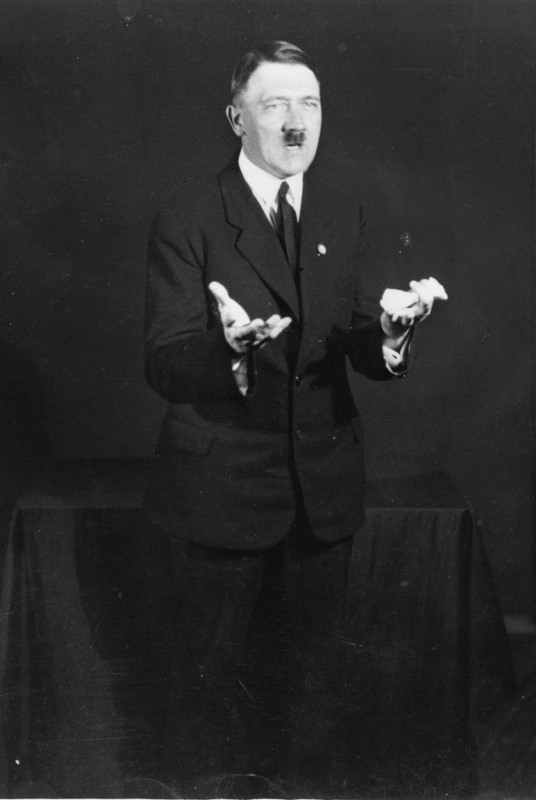
Adolf Hitler stating unequivocally that he was not an anti-semite as he had nothing against ALL jews.

„Nachdem Hitler an die Macht gekommen war … hatte ich als Präsident der KWG die Aufgabe, beim Führer vorzusprechen. Ich wollte die Gelegenheit nutzen, ein Wort für meinen jüdischen Kollegen Fritz Haber einzulegen …
Hitler antwortete mir mit den Worten:
‚Gegen die Juden an sich habe ich gar nichts. Aber die Kommunisten sind alle Juden, und diese sind meine Feinde; gegen sie führe ich Krieg’.”

~ Physicist Max Planck recollecting the conversation he had with Adolf Hitler at 11.00 am on the 16 th May 1933.

* * *

Translation:
“After Hitler came to power... I, as President of the KWG [Kaiser Wilhelm Society], had the task of speaking to the Führer. I wanted to use the opportunity to speak for my Jewish colleague Fritz Haber...
Hitler responded by saying,
'I have nothing against the Jews per se. But the communists are all Jews, and they are my enemies; it is against them that I wage war’.

I commented that there are different types of Jews, both worthy and worthless ones to humanity, with old families of the highest German culture among the former; and when I suggested that a distinction would have to be made between them after all, he replied: “That’s not right. A Jew is a Jew; all Jews stick together like burrs. Where there is one Jew, all kinds of other Jews gather right away. It would have been the duty of the Jews themselves to draw a dividing line between the various types. They did not do this; and that is why I must act against all Jews equally.”

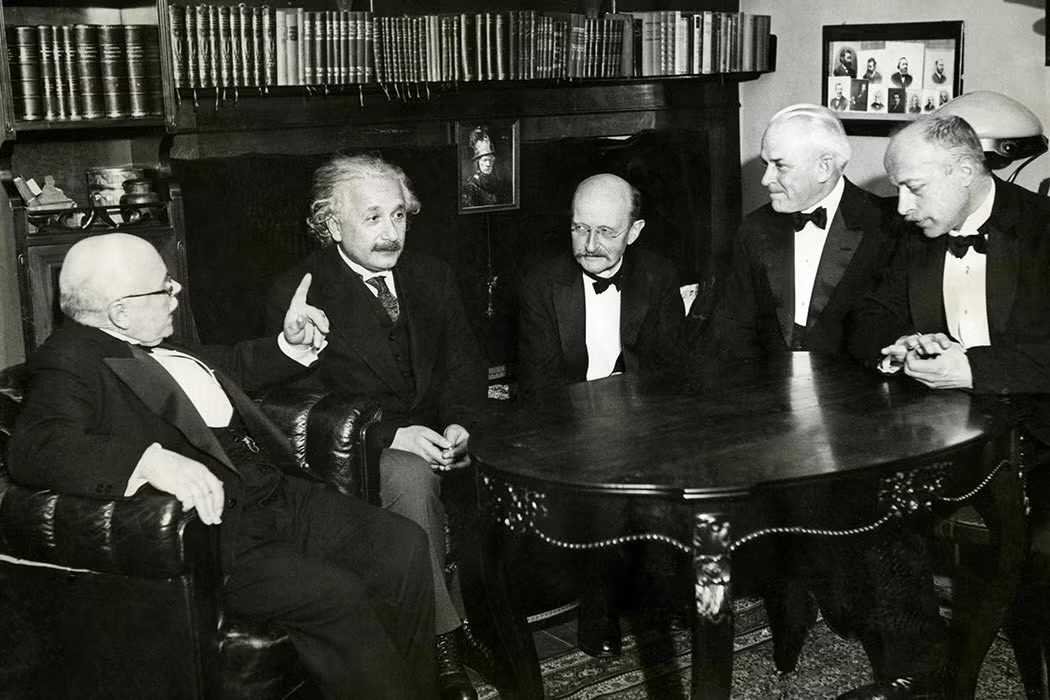
Image
From left to right: W. Nernst, A. Einstein, Max Planck, R.A. Millikan and von Laue at a dinner given by von Laue
A new scientific truth does not triumph by convincing its opponents and making them see the light, but rather because its opponents eventually die, and a new generation grows up that is familiar with it.
A Scientific Autobiography (1949, tr. F. Gaynor)
German physicist Max Planck (1858–1947) explaining the common human characteristic of being illogically resistant to change, and therefore to resisting amending false knowledge and to being corrected.
^ * ^ * ^

P.S. I have slightly amended the first quote above to fit what makes for a more logically consistent meaning. It seems unlikely that Adolf thought ALL Jews were communists. It is much more likely that he expressed the view to Max Planck that most communist agitators were Jewish. Consequently I have merely amended the word order to reflect that.
A ‘holocaust’ believer’s problem is not technical, factual, empirical or archeological — their problem is psychological.
User avatar
Wahrheitssucher
Posts: 986
Joined: Mon May 19, 2025 2:51 pm

Re: Jews and communism

Post by Wahrheitssucher »

.
Here is an article detailing the evidence showing the infamous, treacherous, UK spy-ring in Cambridge
in the 1930s was prominently ‘Jewish’.

First, here’s some background history from jewish-controlled wikipedia:
The Cambridge Five was a spy ring in the United Kingdom that passed information to the Soviet Union during the Second World War and the Cold War and was active from the 1930s until at least the early 1950s.
None of the known members were ever prosecuted for spying.
The number and membership of the ring emerged slowly, from the 1950s onwards.
The general public first became aware of the conspiracy in 1951 after the sudden flight of Donald Maclean (1913–1983, codename Homer) and Guy Burgess (1911–1963, codename Hicks) to the Soviet Union. Suspicion immediately fell on Kim Philby (1912–1988, codenames Sonny, Stanley), who eventually fled to the Soviet Union in 1963. Following Philby's flight, British intelligence obtained confessions from Anthony Blunt (1907–1983, codename Johnson) and then John Cairncross (1913–1995, codename Liszt), who have come to be seen as the last two of a group of five. Their involvement was kept secret for many years: until 1979 for Blunt, and 1990 for Cairncross.
~ jewish, wikipedia deceit-by-omission
If you read the whole wiki stub, notice how it doesn’t mention at all the ‘jewish’ aspect of this treasonable, British, communist espionage. Not at all! Nothing on it!!
Not only is the ‘Jewish’ angle NEVER mentioned, instead the wiki intro suggests that the members of this treasonous spy-ring were actually not traitors at all but heroes fighting ‘fascism’: “The five were convinced that the Marxism–Leninism of Soviet communism was the best available political system and the best defence against fascism”. :? :roll:

. . . . . . . . . . . . . . . . . .

Here is an excerpt from the article focusing on the otherwise unmentioned (deliberately obscured) ‘jewish’ angle:
even a cursory glance at Cairncross’s file should have confirmed to any competent MI5 investigator that his background was consistent with Golitsyn’s notion that there was something Jewish about the ring of five Cambridge spies.

It wasn’t immediately certain that Cairncross was one of these five, but he certainly did have Jewish associations and an admitted espionage role (though he tried to minimise it).
Most obviously, his wife (like Philby’s first wife) was a Jewish immigrant – indeed she had worked for a Jewish refugee organisation in London. By Cairncross’s own admission, one of the most prominent Jewish communists of his generation — James Klugmann — had directly prompted his recruitment as a Soviet spy.

Moreover, though Cairncross was keen to play this down as much as possible (and it wasn’t until the early 1970s that MI5 began to realise just how suspicious this was) Cairncross had links to Jewish arms dealers as early as 1937 who were part of Comintern networks arming the Spanish Republicans. It’s difficult to be precise because Cairncross kept changing his story, but we can say that his first contact with the [jewish] arms dealer Victor Haefner was (at the latest) around the same time as his first meeting with his Soviet controller Arnold Deutsch, i.e. early 1937. Indeed (as I mentioned in Part I of this article) it’s likely that these Comintern connections predated this recruitment by Deutsch and even predated Cairncross’s graduation from Cambridge and appointment to the Foreign Office in 1936. In some form they dated back to his time in Paris at the Sorbonne in 1932-34.

Image

Carlo and Nello Rosselli, Jewish Italian émigrés, were the founders of the anti-fascist Giustizia e Libertà organisation that acted as Cairncross’s introduction to the world of underground leftwing politics long before he arrived in Cambridge.
The entire article can be read here:
https://realhistory.info/2025/11/22/par ... -too-late/
A ‘holocaust’ believer’s problem is not technical, factual, empirical or archeological — their problem is psychological.
User avatar
Wahrheitssucher
Posts: 986
Joined: Mon May 19, 2025 2:51 pm

Re: Jews and communism

Post by Wahrheitssucher »


People think the Bolshevik Revolution was some organic workers' uprising against the Tsar.
But it was completely manufactured by elites and great powers playing against other elites!
Trotsky was in New York with almost no income, yet he had a chauffeured limousine and sailed for Russia with $10,000 in gold.
Wall Street financed him and Woodrow Wilson personally approved his passport.
When the British caught him in Canada and pulled him off the ship, orders came from London to put him right back on so the revolution could happen.
At the same time, while Germany was locked in total war with Britain, the Germans gave Lenin safe passage through their lines in a sealed train.
You had two mortal enemies on the battlefield secretly cooperating to install the Bolsheviks.
With only about 10,000 actual revolutionaries, they still needed Western money, passports, and protection to seize and hold power.
The "people's revolution" was an elite project from day one.
A ‘holocaust’ believer’s problem is not technical, factual, empirical or archeological — their problem is psychological.
User avatar
Wahrheitssucher
Posts: 986
Joined: Mon May 19, 2025 2:51 pm

Re: Jews and communism

Post by Wahrheitssucher »

.
It amazes me that so much accurate-but-suppressed historical info like this is increasingly allowed to be spread on joo-controlled social-media.
Check it out:

A ‘holocaust’ believer’s problem is not technical, factual, empirical or archeological — their problem is psychological.
User avatar
Wahrheitssucher
Posts: 986
Joined: Mon May 19, 2025 2:51 pm

Re: Jews and communism

Post by Wahrheitssucher »

.
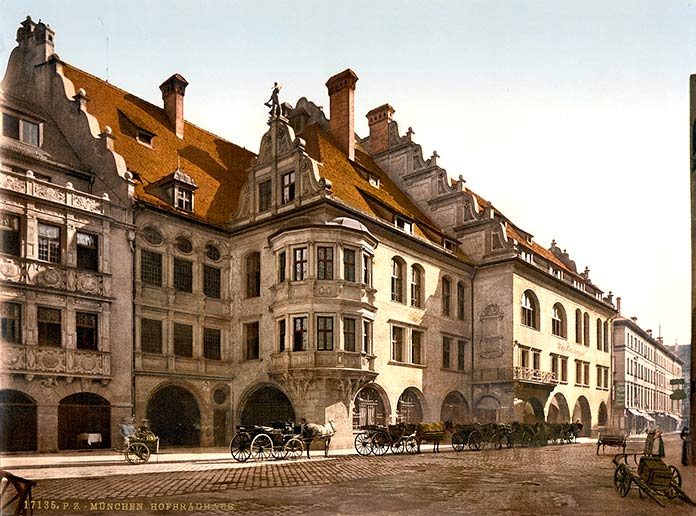
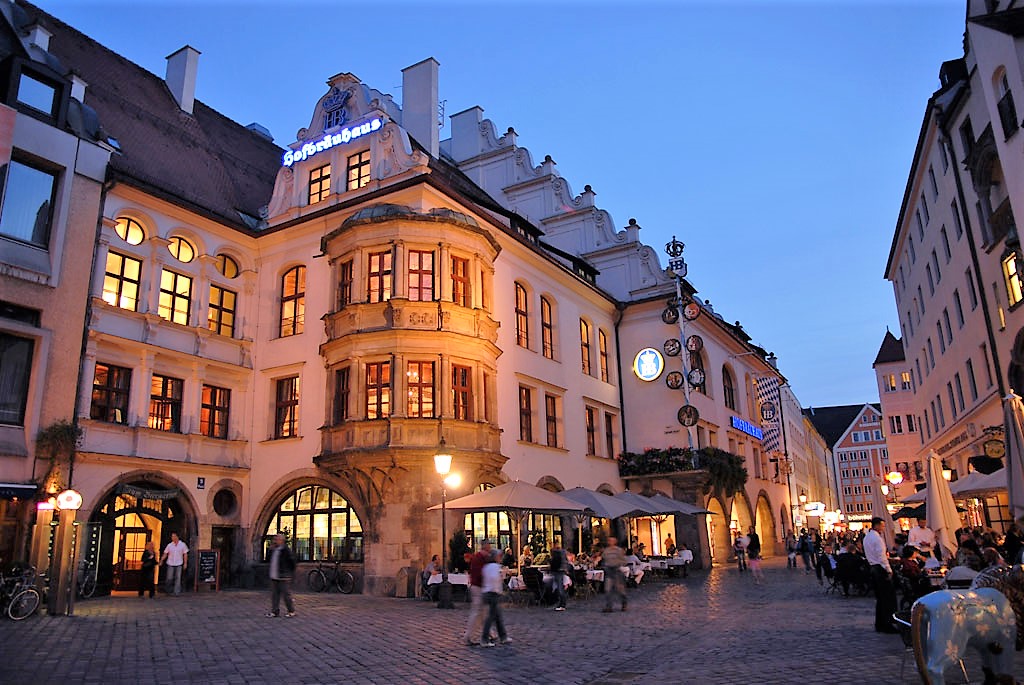
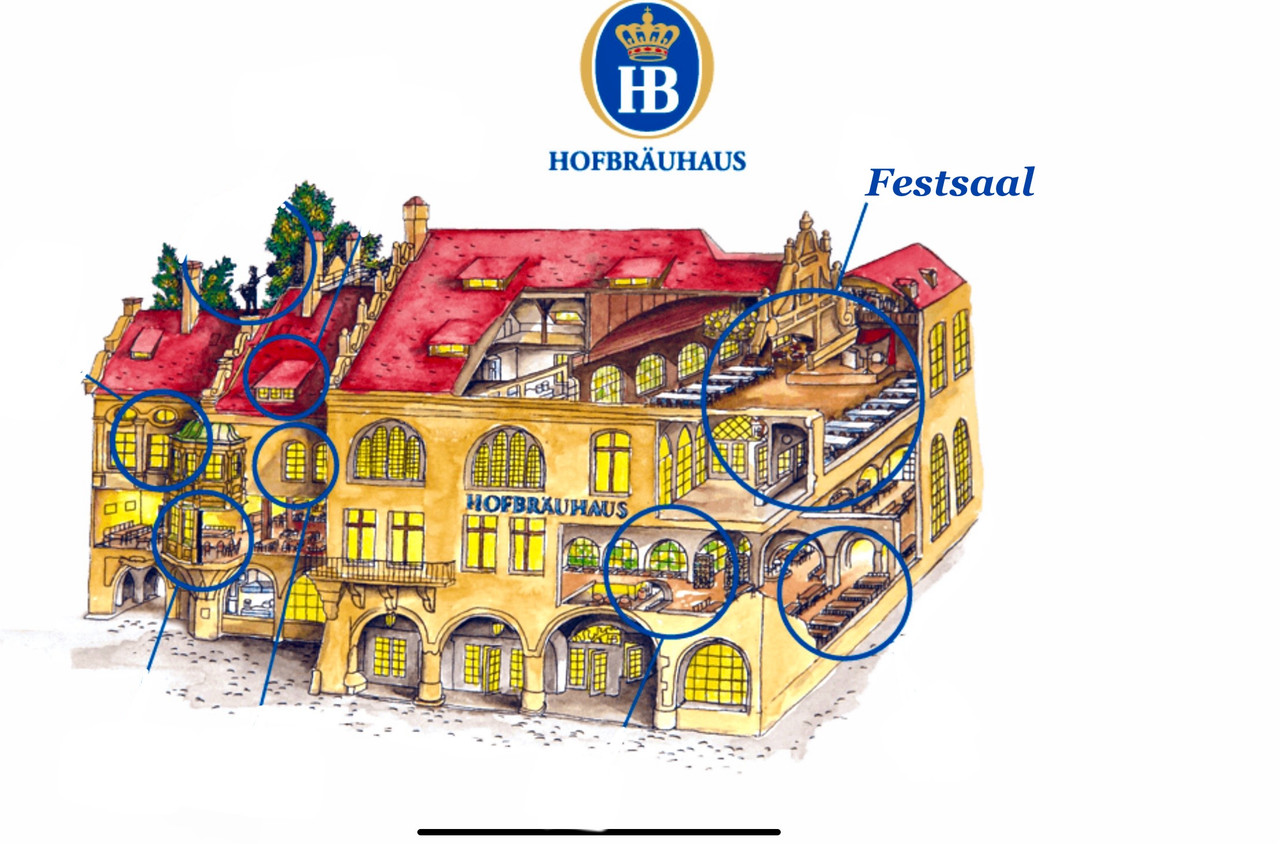
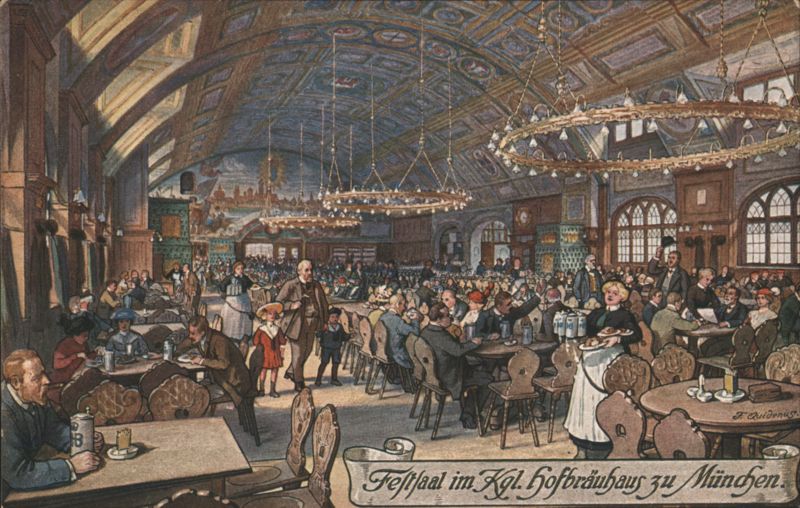
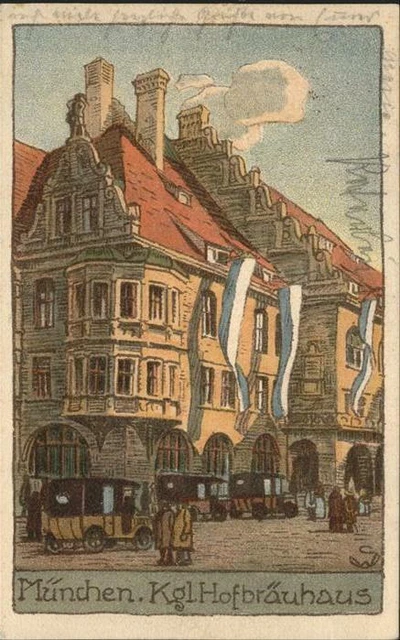
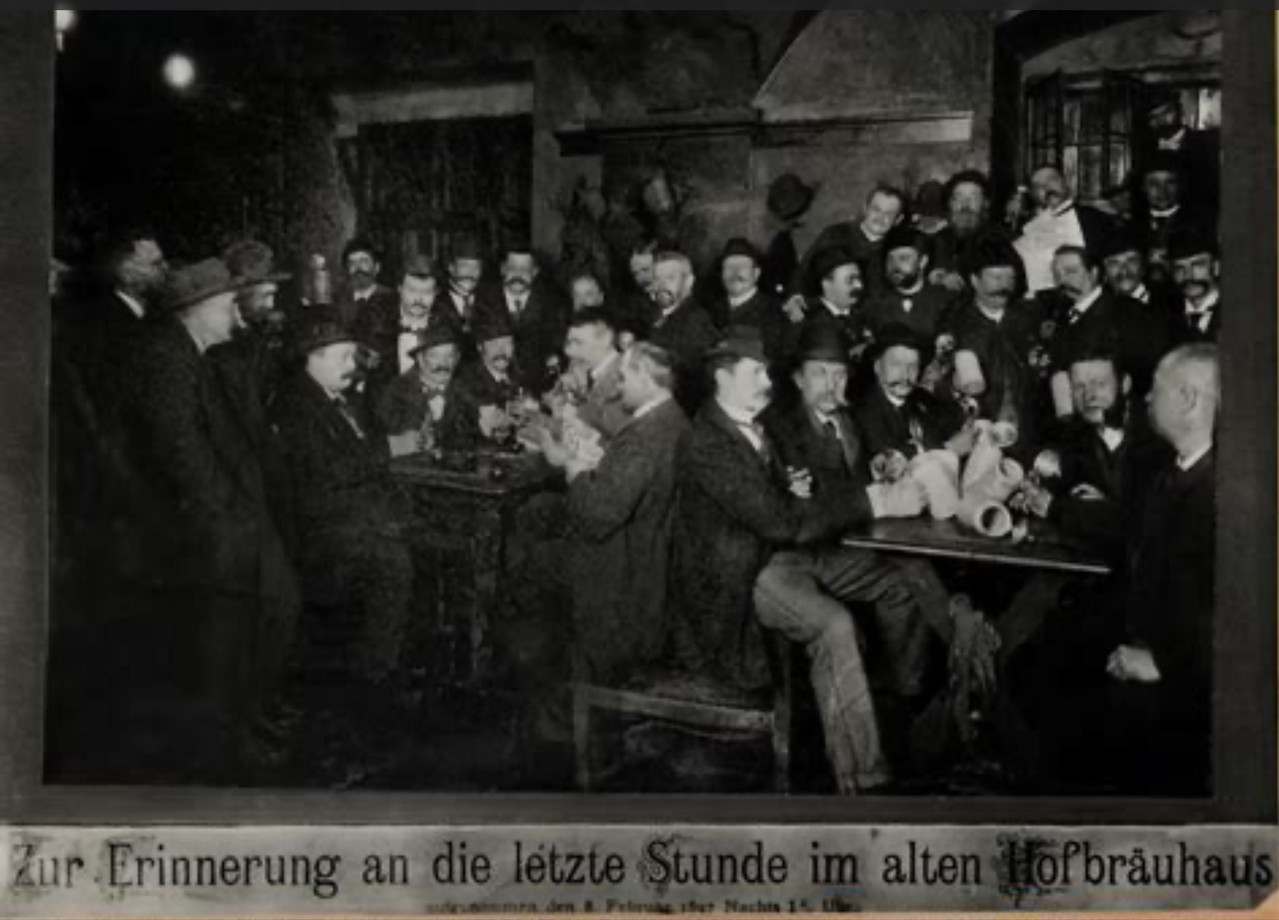
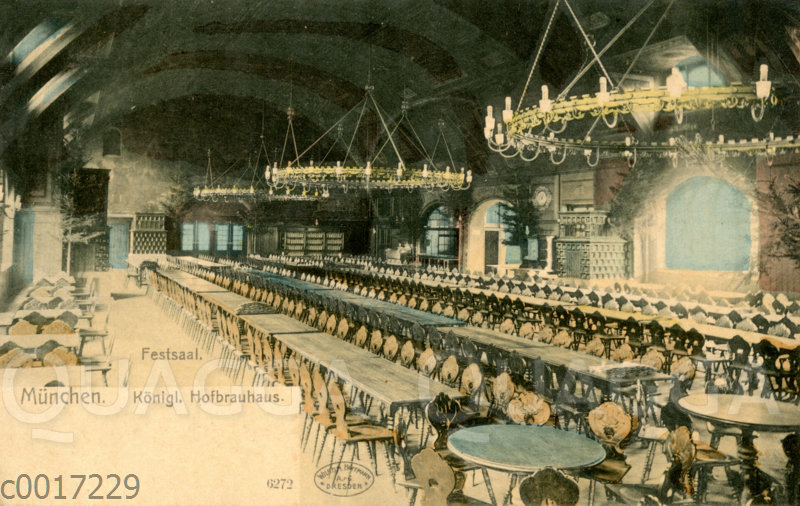
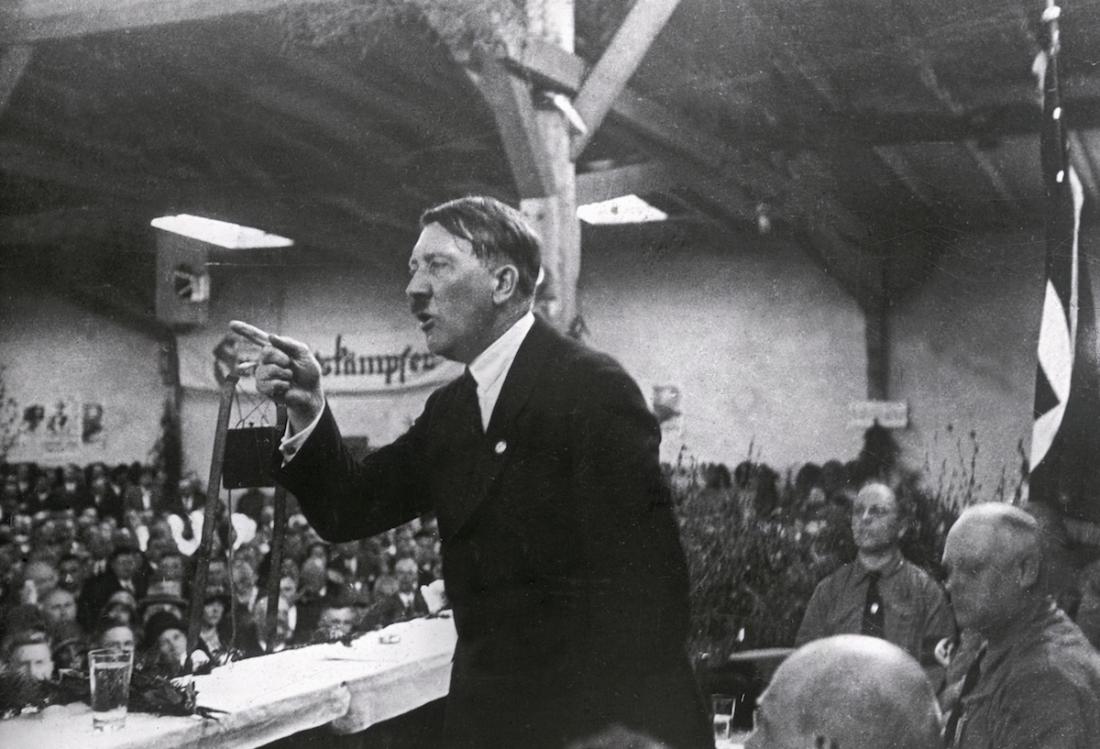
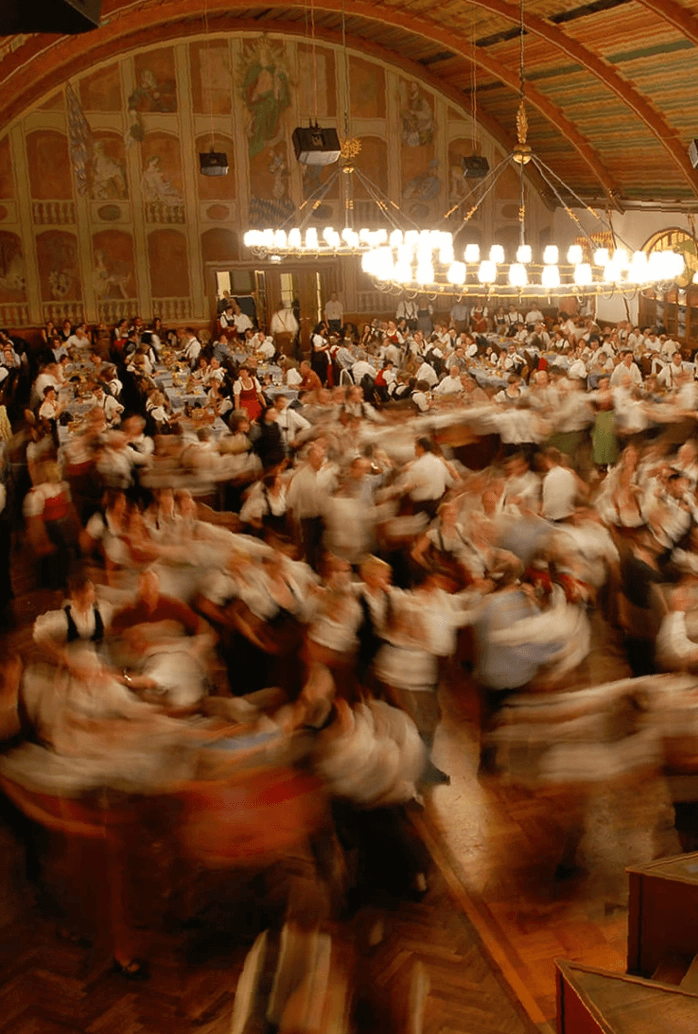
The ‘battle of the Hofbräuhaus’ started by Communist Jews on the 4th of November 1921 in München (Munich)

First, here is a condensed account of what occurred on the 4th of November 1921, given by a woman who had become an early member of the DAP (Deutsche Arbeiterpartei = German Worker Party) . She was a fruit-and-grocery shop owner at Thierschstraße 38, which was opposite Hitler’s lodging at number Thierschstraße 41. So they knew each other as he had been a regular customer in her shop since 1919.

Her account describes the violent, jewish attempt to silence and intimidate Hitler and those who attended his speeches. This particular attempt occurred early on in the rise of Hitler’s notoriety at a scheduled meeting/talk at Munich’s Hofbräuhaus.
Her account appears in a book called ‘Germany’s Hitler’ (1934), based on an interview by the book’s author Heinz A. Heinz.
. . . . . . .

Frau Magdalena Schweyer and several of her female neighbours (from the Thierschstraβe near the Isar River) arrived at the Hofbräuhaus a little before 8 pm on Friday night, the 4th of November 1921.

Image

Image

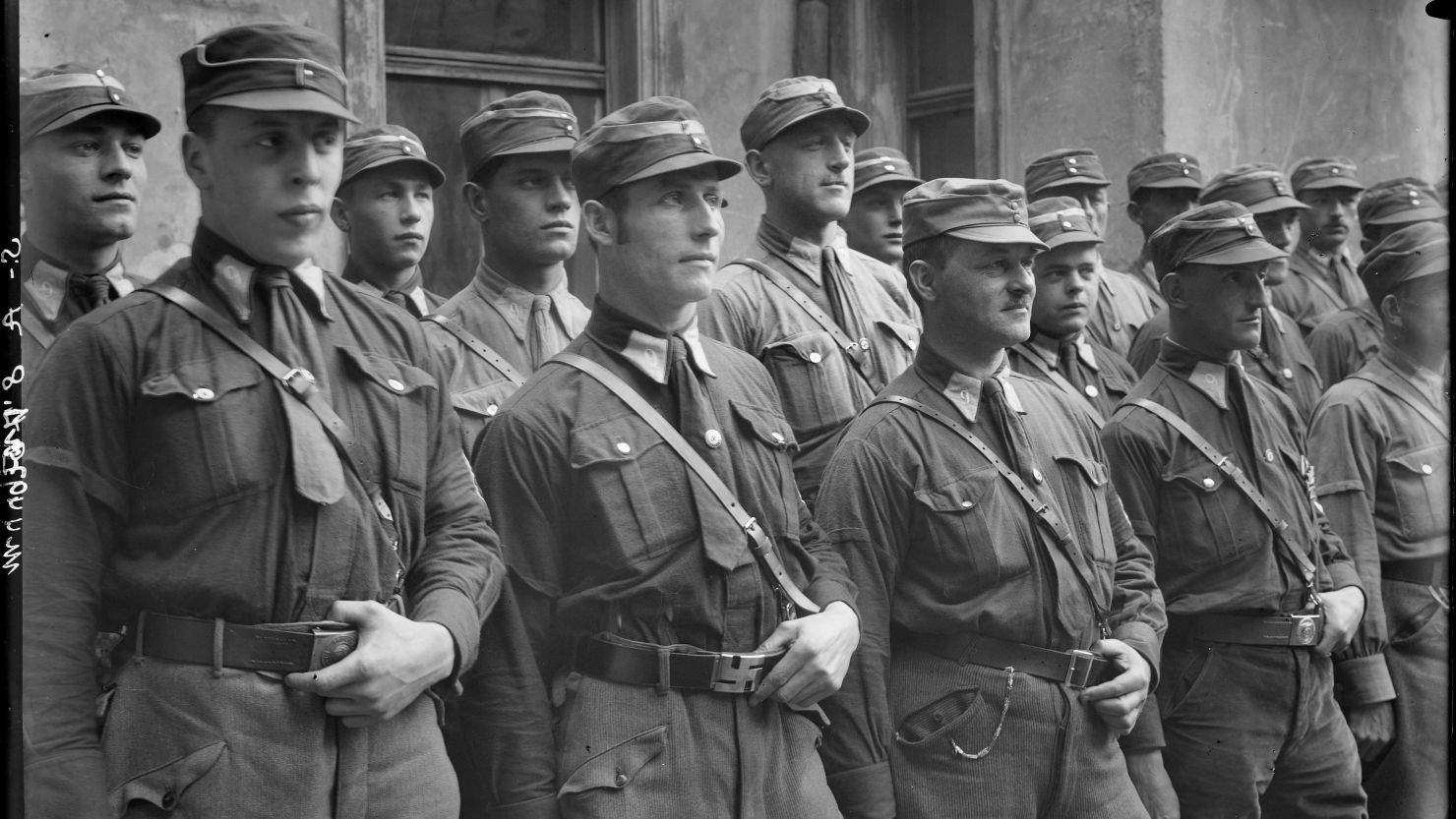
They were greeted by a group of young men all members of the new Sturmabteilung.

Image

The SA-men smiled at the women and directed them up the grand staircase to the Festsaal where their neighbour Adolf Hitler was to speak.

Image
Image

Hermann Esser, Hitler’s close friend and party comrade, recognised the women as soon as they entered the banquet hall, which was almost full. He directed them to a reserved table at the front.

Image
Herman Esser

While walking to her seat Frau Schweyer observed that half the people in the hall were Communists (‘Reds’) and it was plain to her that there was going to be trouble. She said she felt too excited to be frightened. There had been problems with the ‘Reds’ at most of Hitler’s beer hall meetings in Munich, and she had attended all of them since she joined the party a year ago after seeing Hitler speak in the Leiberzimmer of the Sterneckerbräu on the Tal.

Hitler started his speech at 8 pm sharp.
The audience of over 2,000 greeted him with a few negative shouts but overwhelmingly hearty cheers and rapturous applause. Hitler spoke for an hour without interruption, when — after Hitler had responded to a heckler — someone else shouted ‘Freiheit’ the Marxist battle cry, and four or five, large 1-litre beer stein were thrown at Hitler’s head followed by several more.

Image
Image

The next instant Hitler’s small group of SA-men surged forward into the crowd of beer-mug-throwing ‘Reds’. Frau Schweyer and her friends ducked the heads down at their table as mayhem consumed the Festsaal. An almighty battle raged for some twenty minutes before order was restored. Hitler had remained at the speaker’s rostrum throughout. Frau Schweyer later recalled that it was a miracle how Hitler never got hit: ‘The murderous heavy mugs flew at his head all the time’.
Despite being enormously outnumbered the SA-men, bloodied, bruised, and their jackets torn half off their backs, had driven hundreds of Reds out of the beer hall.

Once the fighting had ended Hermann Esser walked up beside Hitler and calmy announced the meeting would continue. Frau Schweyer always got quite excited when she retold the story. ‘That’s famous now. Everyone in Germany remembers the words: ‘ Die Versammlung geht weiter ... Der Redner wird fortfahren.’ (‘ The assembly goes on. The speaker will proceed.’).

There was also something like the light of battle flashing in her eyes every time she described the scene in the Festsaal afterwards, littered as it was with hundreds of smashed beer steins, overturned heavy oak tables, and piles of broken chairs. She praised the bravery of the forty-six SA-men and expressed great joy in their victory. She recalled. ‘Up to now they [the communists and jews] had had it all their own way. It was always them that did the smashing up and the storming of other people. People should have seen that fight and the room afterward to know how necessary they were. We would have been crushed completely, on the spot, without their protection of the hall. Because from now on, the movement had to fight and fight and fight, always initially under tremendous difficulties. Until then, the ‘Reds’ had been in complete control. They were always the ones smashing and storming other people: they had done enough damage here in Munich! Now they were to encounter a party that would no longer tolerate it..."!
Frau Schweyer sensed that the Battle of the Hofbräuhaus was a turning point, and that it had inaugurated a new era of politics in Munich. It was, she claimed, ‘the real beginning of our Party as a force and power.’

~ The quotations are from an interview with Magdalena Schweyer.
See H. A. H. Heinz, Germany’s Hitler, London: Hurst and Blackett, 1934, pp.136-138.


. . . . . .

Here is Adolf’s description of the same occurence:

Image

We still frequently met in the Festsaal of the Munich Hofbräuhaus, but more often in the larger city halls. In the autumn and winter of 1920-21, our meetings in the Bürgerbräu and Munich Kindl-Keller had become more massive, and the picture was always the same: NSDAP demonstrations were always overcrowded, so that the police had to close the doors before they even began…

Image

… It was eventually decided [by the ‘Reds’] to interrupt one of our meetings planned for the Munich Hofbräuhaus Festsaal, and at which I myself was to speak.

On the 4th of November 1921, between 6:00 and 7:00 pm, I received the first precise news that the meeting would definitely be broken up, and that to carry out this action, they decided to send in great masses of workers from certain ‘Red’ factories.
It was due to an unfortunate accident that we didn’t receive this news sooner. On that day, we had given up our old business office in the Sternecker Gasse in Munich158 and moved into other quarters – or rather, we had given up the old offices, and our new quarters weren’t yet in working order.
The telephone had been cut off by the former tenants and had not yet been reinstalled, and several attempts that day to inform us by telephone of the intended break-up didn’t reach us. Consequently our security troops were very weak at that meeting. Only one squad was present, which consisted only of about 46 men. And our warning apparatus wasn’t yet sufficiently organized to be able to bring enough reinforcements within an hour or so.
It must also be added that on several previous occasions we had been forewarned, but nothing special happened. The old saying, that announced revolutions rarely come off, had hitherto been proven true in our experience. Perhaps for this reason as well, we hadn't taken sufficiently strong precautions on that day to counter the brutal determination of our opponents to break up our meeting.
Finally, we didn’t believe that the Hofbräuhaus Festsaal in Munich was suitable for an attempted break-up. We were more afraid with the bigger halls, especially the Circus. But on this point, we learned a valuable lesson that day.

Later, we studied this whole question according to a scientific method and arrived at results – both interesting and incredible – and which subsequently were an essential factor in our organization's leadership and in the tactics of our storm troops.

When I arrived in the entrance hall of the Hofbräuhaus at 7:45 pm, there was no doubt of the intentions. The hall was filled, and therefore the police had it closed. Our opponents, who had arrived very early, were in the hall, and our followers were for the most part outside.

The small SA guard awaited me at the entrance. I had the doors leading to the main hall closed, and then asked the forty-five or forty-six men to come forward. I made it clear to the lads that perhaps on that evening, for the first time, they would have to show their unyielding loyalty to the movement, and that not one of us should leave the hall unless carried out dead; I myself would remain in the hall and I didn't believe that one of them would abandon me; and if I saw any one of them acting the coward, I myself would personally tear off his armband and badge.
Then I demanded that they should step forward if the slightest attempt were made to disrupt the meeting, and that they must remember that the best defence is always attack.
I was greeted with a triple Heil, which sounded more robust and violent than usual.

Image
Image

I then went into the hall and assessed the situation with my own eyes. Our opponents sat closely huddled together, piercing me with their eyes. Innumerable faces glowing with hatred were fixed on me, while others with sneering grimaces shouted at me in no uncertain terms. Today they would ‘finish us off’ we must ‘look out for our guts’, they would ‘smash our mouths’ and other such lovely phrases.
They knew that they had superior numbers and acted accordingly.
Yet we were able to open the meeting, and I began to speak. In the Hofbräuhaus Festsaal, I always stood on one of the long sides of the room, and my podium was a beer table. I was actually right in the midst of the people. Perhaps this circumstance was responsible for creating a certain mood that I never found elsewhere.

Before me, and especially to my left, there were only opponents seated or standing. They were mostly robust youths and men from the Maffei factory, from Kustermann’s, from the factories of the Isaria Meter Works, etc. Along the left wall, they were thickly massed quite close to my table, and began to collect beer mugs – that is, they were ordering beer and stashing the mugs under the table. Thus, whole batteries were collected, and it would have been a miracle if the meeting ended peacefully.

Image

After about an hour and a half — I was able to speak that long, amidst interruptions — it almost seemed as if I was going to master the situation. The leaders of the disrupters appeared to sense this themselves; they steadily became more uneasy, often left the hall, returned, and spoke to their men with obvious nervousness.
I then committed a small psychological error in replying to an interruption, which I myself realized the moment the words left my mouth, and this gave the sign for the outbreak.
There were a few angry shouts, and suddenly a man jumped on a chair and shouted: “Freedom!” At that signal, the freedom-fighters began their work.
In a few seconds, the entire hall was filled with a yelling and shrieking mob, above which flew – like howitzers – innumerable beer mugs; amid this uproar, one heard the smash of chair legs, the crashing of mugs, groans, and yells, and screams.
It was a crazy spectacle.
I stood my ground and observed my lads thoroughly doing their duty.
I would have liked to have seen a bourgeois meeting like this!

Image

The ‘dance’ had hardly begun when my storm troops — as they were called from that day forward — attacked. Like wolves they threw themselves on the enemy again and again, in packs of eight or ten, and began to steadily thrash them out of the hall. Even after five minutes, I saw hardly one of them that wasn't streaming with blood.

I really came to know those men that day; first of all, my brave Maurice, my current private secretary Hess and many others who, even though seriously wounded, attacked again and again, as long as their legs held out.

The pandemonium continued for twenty minutes, but then the opponents, who numbered 700 or 800, were mostly driven from the hall or thrown out headlong by my men, who numbered not even fifty.
Only in the left corner, a big crowd still held out against our men and put up a bitter fight.

Then two pistol shots suddenly rang out from the hall entrance toward the platform, and now a wild din of shooting broke out. One’s heart almost rejoiced at this spectacle that recalled old war memories.
At that moment it was impossible to identify who had fired the shots; but at any rate I could see that my lads renewed the attack with increased fury, until finally the last disturbers were overcome and driven out of the hall.

About 25 minutes had passed; the hall looked as if a bomb had exploded. Many of my comrades had to be bandaged, and others carried away, but we remained masters of the situation.

Hermann Esser, who was chairman this evening, declared: “The meeting will continue. The speaker has the floor.”
And so I went on with my speech.

Image

When we ourselves closed the meeting, an excited police officer rushed in, waved his hands and declared to the hall: “The meeting is dismissed”.
Spontaneously, I had to laugh at this late-comer to the event. Real police arrogance: the smaller they are, the greater they must always appear.

That evening we learned a lot, and our opponents never forgot the lesson they received.
As of the autumn of 1923, the Münchener Post [jewish-owned Munich newspaper] never again mentioned the fists of the proletariat.

~ Adolf Hitler. Mein kampf.

…….

Five days after the battle Hitler hosted a celebratory dinner for his SA-men at the Restaurant Adelmann on Herrnstraβe, not far from the Hofbräuhaus.
Many of the men sported cuts and bruises on their arms and faces, and some were still wearing bandages. Hitler saluted his victorious fighters. They had won the first great fight in a large hall where the party was meeting. Hitler told his SA-men that they had learned how to dominate the great halls of Munich.

By the end of 1921 paid-up membership in the party had doubled to over 4,000 members. Many — just like Magdalena Schweger and her friends on Thierschstraβe — joined the party because of the charisma and compelling arguments of Adolf Hitler. New members came from all age groups and all sections of society. And yet at this time the NSDAP remained a small and inconsequential, Munich-based party of grievance politics.
The SA also remained a small and cash-strapped organisation with around 800 members one year on from its inauguration in August 1921.

Aggressive tactics and involvement in major brawls with left-wing opponents increased the SA’s notoriety in Munich and helped the party cultivate useful connections with other ethnic-nationalist and völkisch paramilitary organisations.

Attaining political power, however, was a long way off, and by no means certain for Hitler and the NSDAP, but the formation of the SA and its victory at the Battle of the Hofbräuhaus ensured the existence of the party. Hitler devoted five pages to the Battle of the Hofbräuhaus in Mein Kampf.

Source: https://www.pen-and-sword.co.uk/blog/on ... 21-part-2/
A ‘holocaust’ believer’s problem is not technical, factual, empirical or archeological — their problem is psychological.
User avatar
Wahrheitssucher
Posts: 986
Joined: Mon May 19, 2025 2:51 pm

Re: Jews and communism

Post by Wahrheitssucher »

.
The jewish-communist ‘battle of the Hofbräuhaus’
— Magdalena Schewyer’s description in full


When Hitler was demobilised [in November 1918], he would have liked to return to his old apartment with Mrs. Popp, but since she no longer had a room available, he moved into equally modest quarters on a small street called Thierschstrasse near the Isar River. Directly opposite the house was a small shop, which is still there. You could buy everything there, from matches to a head of cabbage. The sign above the door read ‘Groceries, Fruits and Vegetables’, and below it was the name of the shopkeeper, ‘Magdalena Schweyer’.
Mrs. Schweyer still stands behind the old-fashioned little counter. She is an elderly woman now, short in stature, with grey hair.
When I entered one day, she came forward, looked at me keenly through her glasses, and smoothed her apron with her weary hands.
"I would like to know something about Mr. Hitler in the old days, in the beginning of it all..."
Her eyes lit up immediately. No one in Munich today is prouder than little old Mrs. Schweyer of her friendship with the Führer from the very beginning, and of the fact that she joined the party in 1919, when it was still completely opaque.
"How did I meet him?" she asked, lowering herself onto a small stool to delve deeper into the subject. I leaned against the counter and studied her lively, expressive face. Here was one of those working women who had befriended Hitler during some of the most difficult times he had to endure; here was one of the people to whom he wanted to convey his message so forcefully, so clearly and simply; here was one of the women whom he tried to place in the least dangerous positions at his meetings.

"Yes, yes, quite right," said Mrs. Schweyer, "it was in November 1919. A young man came in here to buy something small, probably fruit. He was rather poorly dressed: he never seemed to own more than one coat. I probably wouldn't have paid him any more attention than anyone else if he hadn't struck me as so pleasant. He was so polite. Somehow that didn't seem to match the shabby clothes. I watched him leave the shop and noticed that he went into the house opposite. So that's where he lived, l assumed.
For a while, I didn't notice him again and didn't think about him any further. One day, it was just around the turn of the year, a neighbor happened to tell me about him. She said his name was Adolf Hitler and that he had something to do with the German Workers' Party. From what I heard, he was a brilliant speaker; he spoke something amazing. My neighbor wanted me to go and hear him speak. She said that the next time there was a meeting, I had to go. She would take me with her. So we went.

One evening she came in and said that a meeting was being held in the Leiberzimmer (a room reserved for members of the Infantry Life Guards) at the Sterneckerbrau.
The name of the room meant it was dedicated to members of the Infantry Life Guards. I went and was quite excited. It was wonderful what he said, and everyone could understand every …well, every word. He seemed to believe there was a way out of all our worries and troubles. We should all join his party and help. I joined on the spot. They gave me a number: 90.

After that, I went to all of Hitler's rallies and got to know him personally. It didn't take much to find out how poor he was. I had more than a hunch that he often would have had nothing to eat if people hadn't given him something now and then. That gave me an idea. I thought I could help him by sending him a few things now and then — a pot of jam, or a piece of cheese, or a handful of apples. But it was crystal clear that he hated taking them. He only did it because he was so poor. He never failed to come over to thank me after I had sent him something. But often, when I thought that would last him until the next day, one or another of his mates would come in and tell me that Hitler had given every bite to them. They were so hungry, the whole gang! Anyway, he must have kept some for himself now and then, otherwise he wouldn't be where he is today!

Then sometimes a Mr. Esser, a friend of Mr. Hitler's, would come by and buy some radishes (large white radishes) for the two of them. That was their idea of ​​a dinner.
That must have been how it went for a month; they survived from people who remembered they had nothing inside them.
But the party began to grow a little, and as everyone helped as best they could, it became a little easier for Hitler. Even when I knew he needed to take a bit of something, I sent him apples now and then. That's because I knew he liked fruit.

It was wonderful how the party grew. I know this because I persevered through all those first hard months and went to every meeting and saw how each time they had to be held in a bigger room. The Sterneckerbräu was soon too small for us. After that, we went to the Hofbräukeller, then the Eberlkeller. Then Hitler rented a kind of small office, the Deutsches Reich. Things were really looking up.

But the meeting I remember best was the big meeting they held on the 4th of November 1921, in the assembly hall of the Hofbräuhaus, when that terrible confrontation with the Communists took place. It was a real battle! I will never forget it as long as I live. If I hadn't kept my head down on the table and folded my arms over it that evening, as we other women were instructed, it would certainly have been knocked off my shoulders. The beer mugs (steins) were flying dangerously that night!

Not long before this meeting, there had been an attempt on the life of one of the state parliamentarians, Mr. Auer. No one seems to have witnessed it. Auer himself seemed to believe that his own bravery had saved him. But the party he belonged to claimed that it was the new Hitler Party that had attempted it.”
. . .

Auer belonged to the Social Democratic Party, which at that time had a strong presence in the parliament in Munich. Dr. Gustav von Kahr had been appointed General State Commissioner with dictatorial powers. This regime was hostile to the Republic as represented in Berlin. It favoured the dispossessed Wittelsbachs. Its members swore an oath to the Bavarian state, not to the Reich.
It is necessary to recall these political facts so that the reader can form an idea of ​​what and who the ‘authorities’ in Munich were, with whom the newly founded National Socialists (Hitler's party) would soon come into conflict. From what has already been written about the bitterness of the party struggle in Munich, one can well understand the danger that the large assembly described by Ms. Schweyer was by no means negligible. The dispersal of a political meeting in Munich at that time could easily result in fatalities. It may be confusing for the reader to hear that Hitler's movement was opposed by workers (that it was some workers themselves who wanted to smash his meetings and his party), since it was the interests of the common people that were so important to him. However, if one bears in mind that these workers were Marxists and Communists, the matter becomes immediately clearer. Hitler was against Marxism and Communism (for reasons already mentioned in an earlier chapter). They did everything they could to incite the people and rouse other workers to strike a blow against the Nazis.
. . .

“Everyone knew, I mean every one of us, that something would be tried that night to disrupt our meeting. We didn't take it too seriously, because we were used to these kinds of threats, which hadn't gone any further so far. But this time it would be different!
It was supposed to start promptly at eight o'clock. My neighbour picked me up as usual. The first thing we saw when we went in was a group of young men standing around the entrance, each with a swastika armband. They were former soldiers, friends of Hitler from Traunstein. I heard him approach them and tell them to maintain order at all costs. He spoke sternly and soldierly, saying he would rip the armbands off their arms if so many as one of them showed the white feather. None of them should leave unless they died!
He smiled, however, and added that he knew perfectly well they wouldn't!

The place was quite crowded. We women were told to be right at the front, as it was safest there, far away from the doors. I was too excited to be really scared. It was clear there would be trouble: half the people there were ‘Reds’.

I found a table right at the front. Then they came and put another one next to it, and Herr Esser climbed onto it to open the meeting. No sooner had he jumped down than Herr Hitler took his place. They [the ‘reds’] greeted him with some boos and shouts, but after a while he had the enemy under his control too and spoke for a whole hour without interruption before things started to get threatening again.

The people were drinking and were all ears. Then I noticed that whenever more beer was requested, instead of handing over the empty mugs, new ones were brought, and the old ones were stacked under the tables, whole batteries of beer mugs growing up under the tables...

Hitler had been speaking for some time when the signal was given. Someone shouted 'Freedom,' and a beer mug shattered! That was the signal that it was going to start. Three, four, five heavy stoneware mugs (steins) flew past the speaker's head, within inches, and the next moment his young guards jumped forward and shouted to us women: 'Duck!'
We ducked quickly enough!
The noise was deafening. You've never heard anything like it in your life! A pandemonium had broken out; it's pointless trying to describe it. All you could hear was shouting, crashing beer mugs, stomping and scuffling, heavy oak tables being overturned, and wooden chairs being smashed. A veritable battle was raging in the room.

Hitler stayed at his post. He didn't get down from the table! He made no attempt to protect himself. He was the target of everything: it's a pure miracle he wasn't hit. The murderous, heavy cups were flying at his head the whole time. I know this because I kept looking around. He was standing there, still as a statue, waiting for his boys to bring the commotion under control.
Who knows how long it took, maybe twenty minutes, but it seemed endless.
The ‘Reds’ were five times as numerous as we Hitlerites. The boys with the armbands were vastly outnumbered.
Before order was restored, they were in good shape, their jackets ripped halfway down their backs, and their faces smeared with blood and stained. Anyway, they somehow got the ‘Reds’ outside, and then Herr Esser, all cool as a cucumber, stood up next to Herr Hitler and calmly announced that the meeting would continue: the speaker would proceed.
This is now famous.
Everyone in Germany remembers these words: “The assembly goes on. The speaker will continue”. (Die Versammlung geht weiter ... Der Redner wird fortfahren.)

The hall was simply devastated. Over four hundred shattered beer mugs lay scattered everywhere, and a pile of broken chairs.

That was the first time the ‘Reds’ got as good as they gave. That was the first time since the Revolution that someone stood up and confronted them, the first time they were beaten all around and beaten each one.
I say that was the real beginning of our party as a force and a power. After that, Hitler's young men, whom he assigned to maintain order, were called stormtroopers.

People should have seen that fight and the room afterward to know how necessary they were. We would have been crushed completely, on the spot, without their protection of the hall. Because from now on, the movement had to fight and fight and fight, always initially under tremendous difficulties. Until then, the ‘Reds’ had been in complete control. They were always the ones smashing and storming other people: but now they had done enough damage here in Munich! Now they were to encounter a party that would no longer tolerate it..."

. . .

Mrs. Schweyer had become quite agitated as she told the story. In her eyes, something like the light of battle flashed again. They were courageous women who had participated in Hitler's first meetings.

She added: "But then, you see, we knew him, what kind of person he was! I'll tell you just one small thing:
In mid-December of that year, after he had been imprisoned in Landsberg, we National Socialists in Munich learned that he was to be released. It was also just before Christmas, on the 20th. We were beside ourselves with joy! We hadn't expected it. We had thought how miserable everything would be that year. Then we had a brilliant idea to welcome him. He would be leaving the fortress just as desperately poor as he had gone in. So we organised a small collection in our neighbourhood so he could put some money in his pocket right away. In all, we scraped together about fifty marks. But not only that, on the day itself we filled his old room in the house across from my shop with flowers (even though it was winter), laid the poor table with good food, and made sure there was fruit and other things in the cupboard. We even got a bottle of wine for the occasion, even though we knew he never touched it.

It was the 20th of December 1924, a harsh, grey, miserable day. The hours dragged on, and I began to feel a kind of deathly fear that he wouldn't come after all. I kept running to the door and looking up and down our street. And then, sure enough, around two o'clock in the afternoon, a car pulled up in front of the house across the street. Hitler was sitting inside. I saw him through the window. He got out and was just about to go in the door when he turned around and saw me standing on the other side of the street, staring. He simply came over, extended his hand, and said, 'Good day, Frau Schweyer,' as if nothing at all had happened in the long, sad time since we had last seen each other.

His hand was ice-cold and his grip was like iron. Just thinking how cold and hard it was still gives me goosebumps. I remember the thought going through my head, how awful it is to incur the enmity of such a fist! I couldn't say a single word. My throat swelled and tears came to my eyes. It was such a joy to see him again.
So, he did come after all!
I went back into the shop, all flustered, thinking of him going up the stairs opposite and into his old room and finding the flowers and the food and our little preparations for his welcome. I could picture him sitting down amidst it all, thinking of nothing but how to get the political party going again.

An hour or two passed, then a neighbour of mine came into the shop and asked for a donation for the St. Anne's Church organ fund. She had a donation-form with her. I couldn't afford much, and apparently neither could anyone else. On the whole form, people had only been able to give a few pfennigs each. We were all poor people in the area, Mrs. Pfister agreed.

We chatted for a bit. She said what a terribly difficult job it was to get someone to donate for the organ, such were the hard times. And I suddenly said, 'Well, why don't you go and see Mr. Hitler and ask him if he'll give you something? I know he has a little something. Tell him what it's for. He's not the type to say no.'

Mrs. Pfister got up and crossed the street. I saw her go into the house opposite. After a few minutes, she came back beaming and held the form under my nose so I could see for myself what an incredible donation Mr. Hitler had given.
Fifty marks! There it was, right under his name, Adolf Hitler.
I could hardly believe my eyes. I stared at the number, stared at Mrs. Pfister, took off my glasses, and looked again — ‘Adolf Hitler, fifty marks’.

"Well, blow me!" I exclaimed, "if he hasn't given everything away...!"

Mrs. Pfister beamed: "He was so nice”, she said. “Listen! He opened the door himself and asked what I wanted. When I told him, he invited me in and to sit down. I did, and Mr. Hitler took a glass, filled it with wine, and gave it to me along with a bun, telling me to eat and drink. I didn't like to. I tried to excuse myself, saying that everything on the table was his. But he wouldn't budge: 'Now you'll do as I say,' he said, 'I don't drink wine, but this little drop won't hurt you.' Then he takes my slip of paper, glances at it, and scribbles something under his own name. He puts it down and goes to a small side table, pulls out a drawer, comes back, and slides fifty marks across the table to me.
'Here you are,' he says, 'I would give you more, but that's all I have. A few friends of mine just dabbed this on for me.'"
I was stunned and couldn't say a good word at that moment, but he read my face like a book, laughed, and added: ‘Believe it or not, I'm glad I can give it to you. It's a good cause. The priests don't particularly like me, but that doesn't matter’.
I wanted to thank him, but he silenced me. He didn't want to hear a word..."

Mrs. Schweyer concluded: “He came to the shop as long as he lived on our street, and often even afterward, when he had grown into a much greater man. He didn't forget me. When my husband died in 1929, Hitler was in Leipzig. But he sent me a beautiful wreath and as always wrote me such a nice letter to go with it.

People shouldn't be surprised why we love the Führer. He was always there for us little people. He never had the time or inclination to think about himself. He was always there for everyone, not just for himself...”

~ Heinz A. Heinz. ‘Germany’s Hitler!
A ‘holocaust’ believer’s problem is not technical, factual, empirical or archeological — their problem is psychological.
User avatar
Wahrheitssucher
Posts: 986
Joined: Mon May 19, 2025 2:51 pm

Re: Jews and communism

Post by Wahrheitssucher »

.
The history we are taught (brainwashed and programmed with) doesn’t tell us what Jewish communists did during WW2 and before.
It doesn’t tell us the reasons and causes of what occurred.
And it punishes and demonises those who do tell us.

E.g. 1. It doesn’t tell us that the creation of the NSDAP’s ‘stormtroopers’ was as a reaction to organised Jooish-communist violence, intimidation and disruption.
That is why we are not taught about the Battle of the Hoffbräuhaus. (see two previous posts).

Where such events are mentioned, invariably the violent, jooish disrupters are presented not as violent mobs but as either heroes or victims.

E.g. 2. The so-called ‘Battle of Cable Street’ in England is a classic example of that deceit. The illegal and violent Communist-jooish mob that fought the police to prevent a peaceful, political rally in London by Oswald Mosely is STILL TODAY presented to school-children as something to be celebrated and admired.

The hypocrisy and double-standard is phenomenal!!!

E.g.3. the same appears to be the case with the 1956 Hungarian uprising. I was only aware that it was an anti-soviet / anti-communist uprising. I had no idea it started as an anti-jooish-control resistance. I only heard this for the first time today, by seeing this clip of David Irving talking about it, appearing unbidden on my Instagram feed.

Same deceits we are all witnessing today with the jooish genocide of non-jooze in Gaza.
The jooish mass-murderers present their own psychopathic, sadistic, racist mass-murder of innocent Palestinians FOR THREE YEARS as “defence”.
And they managed to convince masses of gullible dupes that they again were the poor, innocent victims of unprovoked ‘terryrism’.

Even duped individuals here at CODOH appear to believe these deceits.


Image
1956 crises decimated two Jewish communities, in Hungary and Egypt
The second half of the 20th century was marked by crises that sparked waves of Jewish flight and immigration — but it was rare for two such crises to happen simultaneously, as happened in late 1956 with the Hungarian Revolution and the Suez Crisis.

Some Jews became members of the secret police. That reality, coupled with the fact that Hungary’s top four Communist leaders were of Jewish origin — including the dictator Matyas Rakosi, who reigned at the height of the Communist terror in the early 1950s — lent credibility to the idea of communism as Jewish…

https://www.jta.org/2006/10/25/lifestyl ... ommunities
A ‘holocaust’ believer’s problem is not technical, factual, empirical or archeological — their problem is psychological.
Post Reply