Hitler did not start ww2

Another Look at "the Good War"
User avatar
HansHill
Posts: 1613
Joined: Sun Oct 06, 2024 3:06 pm
Location: Arlen, TX

Re: Hitler did not start ww2

Post by HansHill »

Gonzalo wrote: ↑Fri Sep 25, 2026 1:09 pm
HansHill wrote: ↑Fri Sep 25, 2026 12:59 pm Glad to see you found some value in Tedor.
Yea, the value of Tedor’s work (I assume you’re referring to *Hitler’s Revolution*), in my opinion, lies in shedding light on National Socialist racial beliefs and on what high-ranking Nazis thought about various issues. For someone like me, who is interested in understanding Nazi ideology from its beginnings in Austria-Hungary to its end in the bunker, this has a certain value.
HansHill wrote: ↑Fri Sep 25, 2026 12:59 pmIt might be worth revisiting his work since you seemingly forgot this (quick search for the Danzig Port canard):
The Danzig
territory, encompassing 730 square miles, was under League of Nations,
not Polish, jurisdiction. Regarding the city’s value as a harbor, the Poles no
longer needed it for nautical export; further up the coast they had
constructed the port city of Gydnia, which opened in 1926. Offering
economic incentives to shippers, they had taken more than half of
Danzig’s commerce by 1930.

Ch 3

.
Danzig remained the most strategically important port, and Hitler, in the end, demanded Danzig plus the corridor—which wasn’t even entirely populated by Germans. The Poles weren’t going to let themselves be humiliated, especially after seeing what had happened to Czechoslovakia. Hitler made war inevitable. Danzig was just the excuse.
Let me remind you what you said:
ceding Danzig meant losing its access to the sea
You and I both understand that that is not true, you are walking that back to:
Danzig remained the most strategically important port
"strategically important" I can grant, even if it was not the most voluminous. In which case that just strengthens (amongst other reasons) why it would be sought to be reclaimed by the 3R from the LON.
G
Gonzalo
Posts: 36
Joined: Thu Sep 24, 2026 12:15 pm

Re: Hitler did not start ww2

Post by Gonzalo »

HansHill wrote: ↑Fri Sep 25, 2026 1:24 pm
Danzig remained the most strategically important port, and Hitler, in the end, demanded Danzig plus the corridor—which wasn’t even entirely populated by Germans. The Poles weren’t going to let themselves be humiliated, especially after seeing what had happened to Czechoslovakia. Hitler made war inevitable. Danzig was just the excuse.
Let me remind you what you said:
ceding Danzig meant losing its access to the sea
You and I both understand that that is not true, you are walking that back to:
Danzig remained the most strategically important port
"strategically important" I can grant, even if it was not the most voluminous. In which case that just strengthens (amongst other reasons) why it would be sought to be reclaimed by the 3R from the LON.
You're right about that correction. Danzig was the most important port, but not the only one. Still, in the grand scheme of things, it doesn’t really matter for two reasons: 1) Germany ended up demanding Danzig plus the corridor that was vital to Poland; the Nazis escalated their demands as the diplomatic crisis intensified; 2) Hitler, as he said in private conversations I sent you earlier, wanted all of Poland because he was seeking Lebensraum, and Poland was blocking Germany’s path to Russia. Danzig wasn’t important; living space was.

The diplomatic and personal documents proving how Hitler and Ribbentrop were steering the continent toward a war that would leave unprecedented destruction in its wake are overwhelming. This includes Italian diplomatic documents from Ciano, who was an ally of Germany.
User avatar
HansHill
Posts: 1613
Joined: Sun Oct 06, 2024 3:06 pm
Location: Arlen, TX

Re: Hitler did not start ww2

Post by HansHill »

Gonzalo wrote: ↑Fri Sep 25, 2026 2:41 pm Still, in the grand scheme of things, it doesn’t really matter
Wait hold up. Why does it not matter? You brought up the Danzig port so i assumed it mattered. Does it only "not matter" because you were corrected about it?

Is there anything else you said that "doesn't matter"? If there are any more of your points that don't matter you should say so now before I or anyone else commits the time to offering more corrections.
G
Gonzalo
Posts: 36
Joined: Thu Sep 24, 2026 12:15 pm

Re: Hitler did not start ww2

Post by Gonzalo »

HansHill wrote: ↑Fri Sep 25, 2026 3:45 pmWait hold up. Why does it not matter? You brought up the Danzig port so i assumed it mattered. Does it only "not matter" because you were corrected about it?

Is there anything else you said that "doesn't matter"? If there are any more of your points that don't matter you should say so now before I or anyone else commits the time to offering more corrections.
Wow, you’re acting all high and mighty just because you corrected me on a minor detail. If you think you won something because of that, it’s the same as believing that revisionists refuted the Holocaust because the story about Jewish soap is a lie. Come on… you’re a revisionist, so I wouldn’t be surprised if you think they “won.”

But getting back to the German-Polish crisis… Danzig was important to Poland, but not to Germany. Germany was going to continue to exist with or without Danzig, and besides, Chamberlain promised to pressure Poland to negotiate. If Hitler had waited, the chances of obtaining Danzig were high, but here’s the crux of the matter: Hitler wasn’t interested in Danzig in August 1939; what mattered to Hitler was waging a localized war with Poland and destroying the Polish state so he could later turn his attention to Russia. Hitler wanted to provoke a war that would leave millions of Aryan Slavs dead, and he didn’t care about the consequences or the cost.
Lastly, Burckhardt reported:

"Yet another thing was missing from the reports of Makins and Arnal, perhaps the most remarkable comment made to me by the Chancellor. Hitler had said to me on that August 11th:

'Everything I undertake is directed against Russia. If the West is too stupid and too blind to comprehend this I will be forced to reach an understanding with the Russians, turn and strike the West, and then after their defeat turn back against the Soviet Union with my collected strength. I need the Ukraine and with that no one can starve us out as they did in the last war.'"
f
fireofice
Posts: 334
Joined: Sun Sep 29, 2024 6:31 am

Re: Hitler did not start ww2

Post by fireofice »

Wow I can't believe Hitler was against poor innocent Russia that did absolutely nothing to provoke any aggression toward them. :lol:
G
Gonzalo
Posts: 36
Joined: Thu Sep 24, 2026 12:15 pm

Re: Hitler did not start ww2

Post by Gonzalo »

fireofice wrote: ↑Sat Sep 26, 2026 9:59 am Wow I can't believe Hitler was against poor innocent Russia that did absolutely nothing to provoke any aggression toward them. :lol:
Hitler wanted to destroy Russia because he wanted to replicate what the Americans did to the Native Americans in the Wild West with the Slavs in the East. There was no overt provocation from Russia. Stalin even helped Germany by sending them oil and grain at the start of the war. Hitler wanted to conquer Russia by fire and sword to enslave the Russians and take their lands, and he ended up shooting himself like the coward he always was. What are you going to say? That the deaths of millions of Slavs were justified because they were “Bolsheviks”?
User avatar
Wahrheitssucher
Posts: 1033
Joined: Mon May 19, 2025 2:51 pm

Re: Hitler did not start ww2

Post by Wahrheitssucher »

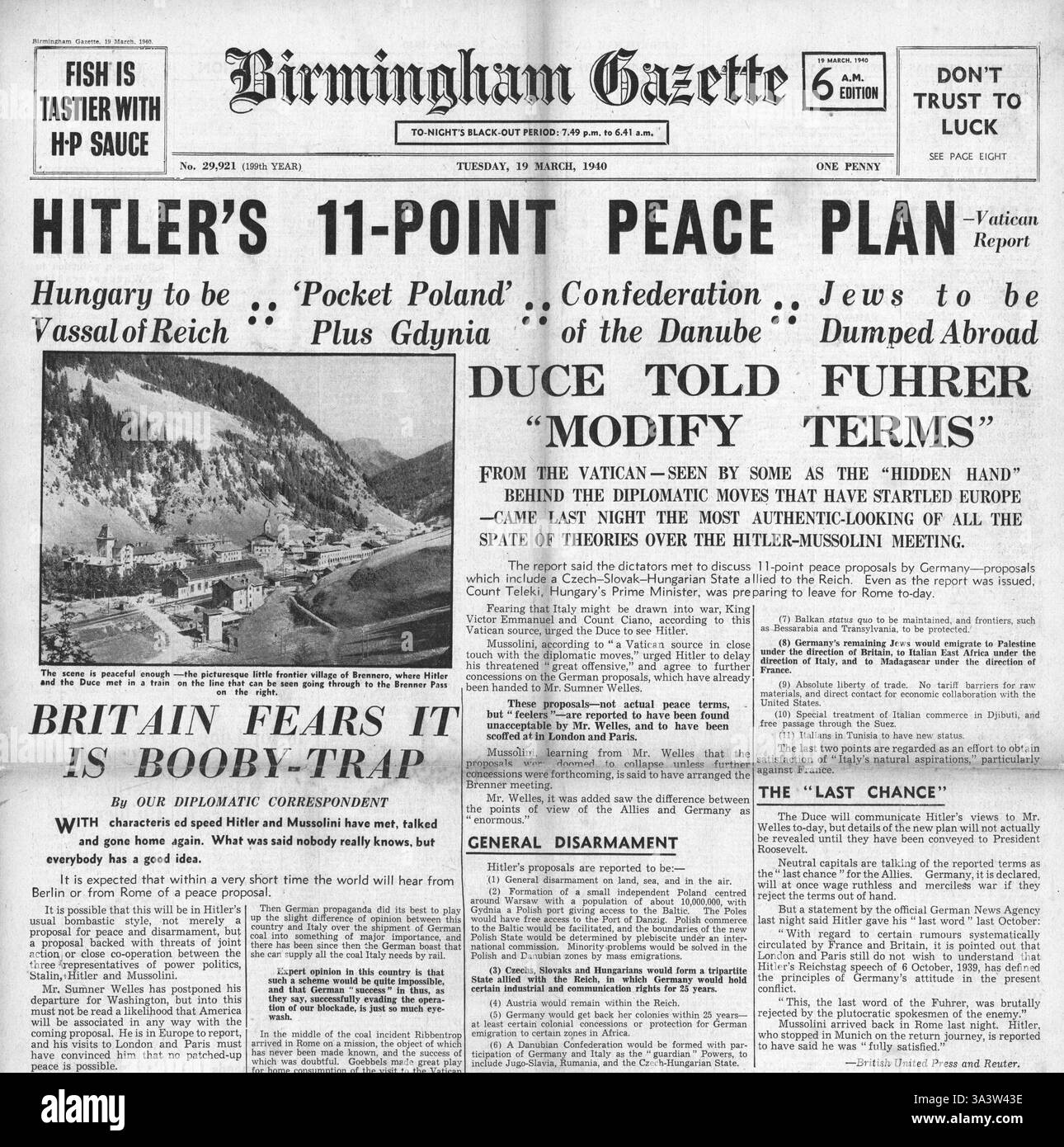
Gonzalo wrote: ↑Sat Sep 26, 2026 2:30 am…I provide evidence showing how Hitler deliberately started the war that killed more people than any other in history… [snip]
You appear to have not been informed of Hitler’s repeated attempts to avoid another world war.
That it is not your fault. Everyone has been ‘educated’ with histories that intentionally omit these facts.
But if you are even remotely interested in historical truth then you should be interested to learn and correct erroneous beliefs.

And the incontrovertible facts are that:
1.) ‘World Jewry’ declared a “holy war” of all jews worldwide against Germany in April 1933.
2.) Britain and France declared war against Germany (but not against the USSR) on the 3rd of September 1939.
3. Hitler had offered numerous peace terms to avoid war from 1933 to 1941.

For details read here: https://www.wintersonnenwende.com/scrip ... ecwar.html
and here: https://nationalvanguard.org/2018/06/di ... ral-times/
and here: https://der-fuehrer.org/bucher/english/ ... 3-1939.pdf

Image

Image

Image
A ‘holocaust’ believer’s problem is not technical, factual, empirical or archeological — their problem is psychological.
User avatar
HansHill
Posts: 1613
Joined: Sun Oct 06, 2024 3:06 pm
Location: Arlen, TX

Re: Hitler did not start ww2

Post by HansHill »

Gonzalo wrote: ↑Fri Sep 25, 2026 11:40 pm ...
I and most of the revisionist users here are familiar enough with this material to identify and correct your inaccuracies, however not everyone is going to be as familiar with this material as we are.

Should any visitor to this forum come looking for quality information on these topics and are unfortunate enough to stumble across your posts, its important for us to directly expose this rubbish and correct it where needed. You can complain about it being "high and mighty" all you want, but if you don't want to be directly challended on this these topics, maybe Reddit is more your speed.

Since you seem to have walked back the Danzig port canard, we can begin to go through these points one by one. I would like to start with your claim that Richard Tedor is mistaken about Polish agression:
However, he is completely wrong about that point.
I will list here some of the points that Tedor makes (truncated for brevity here, can be expanded upon if needed) and you should tell the forum why exactly Tedor is incorrect:
  • 1918-21 Polish secret military organization, Polska Organizacya Wojskova (POW) staged 3 insurrections attacking German villages.
  • The 3rd insurrection was supplied with French weapons the insurgents organised an army of 30,000 men. LoN awarded a third of the territory to Poland. Based on the plebiscite the entire region should have went to Germany. This violated point 5 of Wilson’s own 14 points
  • The LoN instituted policies hostile to the ethnic German population with a quarter of Germans fleeing. 1930-32 Poland began military maneuvers and amassing on the border, with invasion plans also being drafted. Polish newspapers began calling for war
  • Germany responded by refusing to renew compacts approaching expiry. Poland retaliated by sending combat divisions to Danzig, and fortifying garrisions. Between Feb and Apr 1933 Poland asked Paris twice to join in a “preventative war” to invade Germany.
  • In Nov, Adolf Hitler offered Poland a non-aggression pact. Only after a 3rd unsuccessful bid to enlist France for their war against Germany, did Poland agree.
  • Feb 1936, the German consulate reported the disproportionate transfer of German farms into Polish hands through state sponsored land reform: “As much German property as possible is to be broken up before expiration of the ten-year agreement."
    In March 1936, Beck informed France that Poland was ready to attack Germany. Rydz-Smigly visited Paris in September. France loaned Poland $500m and war materiel to upgrade the Polish army. RS ordered General Kutrzeba to draft a war plan against Germany to begin in 1939
  • Diplomaticaly, Germany offered for Poland to join Germany in the Anti-Commitern Pact to protect Poland against the dangers of Bolshevism. Poland refused the entire deal in October 1938, and called the 96% of Ethnic Germans in Danzing “the minority”
  • After this refusal, ethnic persecution of Germans continued, with the British ambassador to Poland, Sir Howard Kennard formally documented abuses, and called for moderation between Poland and the UK.
  • In Nov 1938 Memel (formerly Germany, but lost to Lithuania) voted 87% in favour to return to Germany. They previously voted 94% to return in 1925 but this was ignored. Rydz-Smigly accused Germany of attempting to invade Poland, and began military mobilizations.
  • Poland made a military threat to von Ribbentrop “Any further pursuit of these plans, especially as far as the return of Danzig to the Reich is concerned, will mean war." This threat, together with Rydz-Smigly’s partial mobilization against Germany, violated the 1934 treaty.
  • Off the back of this threat, England allied Poland, with Beck visiting London. One month later, Poland mobilised a further 334,000 military reserves, again in the absence of any German cause.
  • Because Poland broke the pact, Germany gave official notice it was now considered voided based on their actions. The press in Poland became more aggressive in pushing for war. Adolf Hitler maintained a strict policy of no warmongering in his Foreign Office
  • English Ambassador Henderson confirms to London, that German proposals were beyond reasonable, and that his colleagues in diplomatic circles agreed. He re-iterates that Polish rejection of these offers caused concern in diplomatic circles.
  • English Foreign Office report in June warmongering in Poland. English General Sir Edmund Ironside visits Poland. English Ambassador documents the severe abuse against Germans including castration. Germans were rounded up and send to concentration camps
  • Both Lord Halifax and Roger Makins in the British Foreign Office, in seperate letters and cables, confirm Germany’s intent to avoid hostilities.
  • The Polish military:
    -shut traffic & food entering into Danzig
    -opened fire on civilian planes over the Baltic Sea
    -fired on Germans attempting to flee
    -26 Aug launched an attack on Neidenburg in East Prussia and were repelled on sovereign German territory leaving 47 dead
  • Germany demanded Polish diplomats to begin negotiating peace talks. In Poland Beck, Rydz-Smigly and the defense minister, Tadeusz Kasprzycki instead decided to declare general mobilization of their full army.
  • August 30th 1939 Germany drafted the 16-point Marienwerder proposal to resolve the issue. Poland refused, with England commenting “Here was proof to the German Government of Poland’s delaying tactics and refusal to negotiate seriously”
  • Germany made two last attempts at a peaceful solution: Herman Goring met with Henderson, and Von Ribbentrop met with Lipski. Both negotiations failed.
  • Hitler cites 30 violations in his Reichstag speech on 1 Sep1939.

    “Aug 25 to Aug 31 inclusive, there occurred besides innumerable attacks on civilians of German blood, 44 perfectly authenticated acts of armed violence against German official persons and property
  • A Telegraph was seized from the German Foreign Office by the US military demonstrating two top Polish officials reveal Poland deliberately sought war because their belief in British military support (which never came). The significance of these admissions is obvious
User avatar
Wahrheitssucher
Posts: 1033
Joined: Mon May 19, 2025 2:51 pm

Re: Hitler did not start ww2

Post by Wahrheitssucher »

Gonzalo wrote: ↑Sat Sep 26, 2026 11:03 am Hitler wanted to destroy Russia because he wanted to replicate what the Americans did to the Native Americans in the Wild West with the Slavs in the East. There was no overt provocation from Russia.
If you are open-minded and willing to be corrected you will find reading this informative:
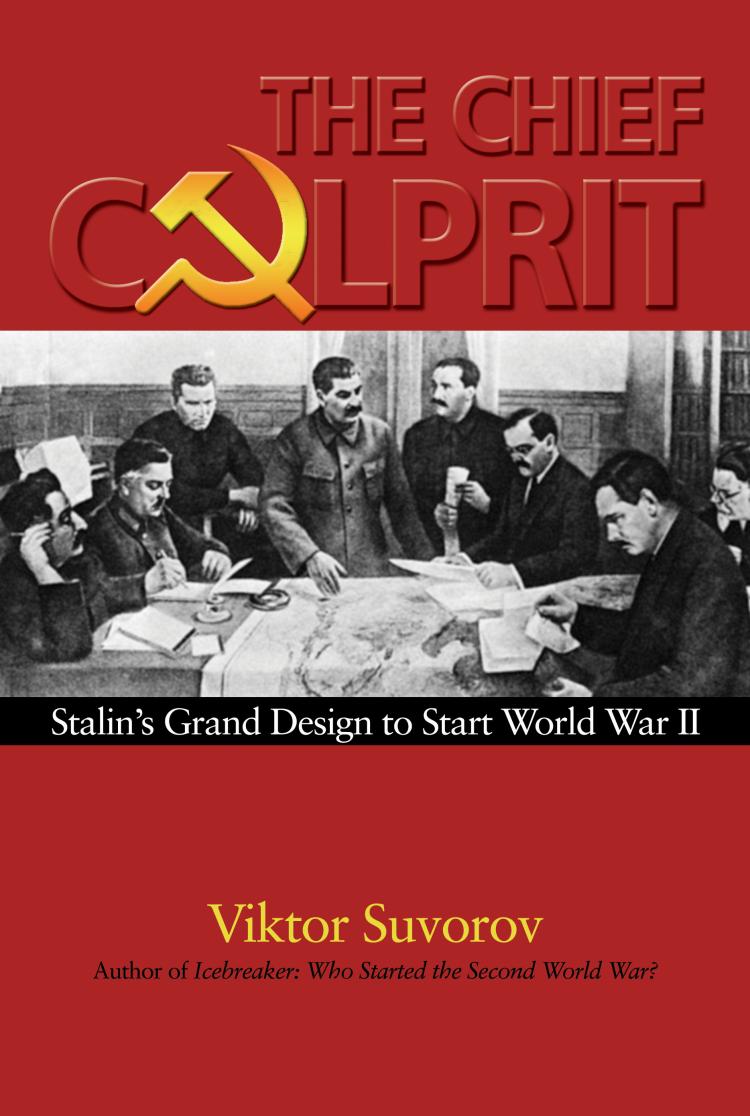
https://archive.org/details/chiefculpritstal00suvo
Viktor Suvorov is a notable author and former Soviet military intelligence officer.
His book ‘The chief culprit’ presents a perspective on Joseph Stalin's role in the lead-up to World War II.

Stalin's strategic intent:
Suvorov demonstrates with evidence that Stalin had a plan to instigate World War II, and he was not a passive victim of Nazi aggression.

Collaboration with Germany:
He shows how Stalin conspired with German leaders to bypass the Versailles Treaty, which restricted German rearmament. This included secretly training German military personnel and providing them with resources.

Implications of Suvorov's argument:
Suvorov's analysis challenges traditional historical narratives that depict Stalin as duped by Hitler. Instead, he suggests that Stalin was actively preparing for a major conflict, viewing Nazi Germany as a means to weaken capitalist nations, thereby facilitating Soviet expansion.

This perspective has sparked significant debate among historians regarding the true nature of Stalin's intentions and the dynamics of Soviet-German relations before the war.
Image
A ‘holocaust’ believer’s problem is not technical, factual, empirical or archeological — their problem is psychological.
G
Gonzalo
Posts: 36
Joined: Thu Sep 24, 2026 12:15 pm

Re: Hitler did not start ww2

Post by Gonzalo »

HansHill wrote: ↑Sat Sep 26, 2026 12:58 pmI will list here some of the points that Tedor makes (truncated for brevity here, can be expanded upon if needed) and you should tell the forum why exactly Tedor is incorrect:
  • 1918-21 Polish secret military organization, Polska Organizacya Wojskova (POW) staged 3 insurrections attacking German villages.
What does this have to do with the German-Polish conflict of 1938–39? The period immediately following World War I was marked by violence and ethnic cleansing. So? What's your point?
HansHill wrote: ↑Sat Sep 26, 2026 12:58 pm
  • The 3rd insurrection was supplied with French weapons the insurgents organised an army of 30,000 men. LoN awarded a third of the territory to Poland. Based on the plebiscite the entire region should have went to Germany. This violated point 5 of Wilson’s own 14 points
Germany occupied and divided Poland with Russia in 1793, and during the Wilhelmine era, it attempted to Germanize Poland by erasing its original identity. In 1918, after losing the war it had started, Germany was in no position to make any demands. And, in any case, it doesn’t matter because this isn’t about World War I.
HansHill wrote: ↑Sat Sep 26, 2026 12:58 pm
  • The LoN instituted policies hostile to the ethnic German population with a quarter of Germans fleeing. 1930-32 Poland began military maneuvers and amassing on the border, with invasion plans also being drafted. Polish newspapers began calling for war
Blatantly false. In 1932, there was only one diplomatic crisis because von Papen came close to signing an agreement with France that harmed Polish interests, but that crisis did not lead to anything more serious. Danzig was governed by the Nazi Party—do the names Forster and Hermann Rauschning ring a bell?

https://en.wikipedia.org/wiki/1935_Free ... y_election
HansHill wrote: ↑Sat Sep 26, 2026 12:58 pm
  • Germany responded by refusing to renew compacts approaching expiry. Poland retaliated by sending combat divisions to Danzig, and fortifying garrisions. Between Feb and Apr 1933 Poland asked Paris twice to join in a “preventative war” to invade Germany.
It has not been confirmed whether Pilsudski attempted to forge an alliance with France to wage a preemptive war against Germany, and in any case, it is irrelevant because Pilsudski died in 1935 and France simply did not accept such a proposal.
Poland signed the Soviet–Polish Non-Aggression Pact in 1932.[154] The Soviet–Polish Pact was considered at the time to be a major success of Polish diplomacy, which had been greatly weakened by the trade war with Germany, the renouncement of parts of the Treaty of Versailles and the loosened ties with France after it agreed to the Locarno Treaties. Critics of the pact stated that it allowed Stalin to eliminate his socialist opponents, primarily in Ukraine. The pacts were supported by advocates of Piłsudski's Promethean programme.[164] After Adolf Hitler rise to power in Germany in January 1933, Piłsudski is rumored to have proposed to France a preventive war against Germany.[165] Lack of French enthusiasm may have been a reason for Poland signing the German–Polish Non-Aggression Pact in 1934.[49][154][166][167] Little evidence has, however, been found in French or Polish diplomatic archives that such a proposal for preventive war was ever actually advanced.[168] Critics of Poland's pact with Germany accused Piłsudski of underestimating Hitler's aggressiveness,[169] and giving Germany time to re-arm.[170][171] Hitler repeatedly suggested a German–Polish alliance against the Soviet Union, but Piłsudski declined, instead seeking precious time to prepare for a potential war with either Germany or the Soviet Union. Just before his death, Piłsudski told Józef Beck that it must be Poland's policy to maintain neutral relatations with Germany, keep up the Polish alliance with France and improve relations with the United Kingdom.[154] The two non-aggression pacts were intended to strengthen Poland's position in the eyes of its allies and neighbors.[11] Piłsudski was probably aware of the weakness of the pacts, stating: "Having these pacts, we are straddling two stools. This cannot last long. We have to know from which stool we will tumble first, and when that will be".[172]
https://en.wikipedia.org/wiki/J%C3%B3zef_Pi%C5%82sudski
HansHill wrote: ↑Sat Sep 26, 2026 12:58 pm
  • In Nov, Adolf Hitler offered Poland a non-aggression pact. Only after a 3rd unsuccessful bid to enlist France for their war against Germany, did Poland agree.
Irrelevant
HansHill wrote: ↑Sat Sep 26, 2026 12:58 pm
  • Feb 1936, the German consulate reported the disproportionate transfer of German farms into Polish hands through state sponsored land reform: “As much German property as possible is to be broken up before expiration of the ten-year agreement."
Any evidence of this? In Poland, minorities such as Jews played a prominent role in commerce. Any evidence of discrimination against Germans?

And wait... what was the “Aryanization” of the economy? The Nazis did the same thing to other groups. If the 800,000 Germans living in Poland didn’t like it, they could simply pack their bags and leave.
HansHill wrote: ↑Sat Sep 26, 2026 12:58 pmIn March 1936, Beck informed France that Poland was ready to attack Germany. Rydz-Smigly visited Paris in September. France loaned Poland $500m and war materiel to upgrade the Polish army. RS ordered General Kutrzeba to draft a war plan against Germany to begin in 1939[/list]
Please provide the primary source that supports these claims
HansHill wrote: ↑Sat Sep 26, 2026 12:58 pm
  • Diplomaticaly, Germany offered for Poland to join Germany in the Anti-Commitern Pact to protect Poland against the dangers of Bolshevism. Poland refused the entire deal in October 1938, and called the 96% of Ethnic Germans in Danzing “the minority”
Poland did not join the anti-communist pact because it had no interest in going to war against the Soviet Union. Polish foreign policy consisted of maintaining its independence from the USSR and Germany by forging close ties with France and England. To preserve its independence, Poland had to avoid getting too close to either the Germans or the Russians.
HansHill wrote: ↑Sat Sep 26, 2026 12:58 pm
  • After this refusal, ethnic persecution of Germans continued, with the British ambassador to Poland, Sir Howard Kennard formally documented abuses, and called for moderation between Poland and the UK.
Oh, that old lie about the poor ethnic Germans being persecuted by the evil Poles. I'll let the AI do its job:
**No, there was no systematic or large-scale ethnic persecution (of the ethnic cleansing or state-organized pogrom type) against ethnic Germans (Volksdeutsche) in Poland before 1 September 1939.** There were interethnic tensions, administrative and cultural discrimination, isolated incidents of violence, and a growing climate of hostility in 1939—especially in the border regions (Polish Corridor, Pomerania, Upper Silesia, and former Prussian areas)—but the claims of “mass atrocities” or tens of thousands of deaths before the war were mainly exaggerated or fabricated Nazi propaganda used to justify the invasion.

### Interwar context (1918–1939)
After the Treaty of Versailles, Poland regained territories with significant German minorities (around 740,000–800,000 according to the 1931 census, ≈2.3% of the population). These communities (especially in the west) had previously been majorities or privileged under the German Empire and became a minority in a nationalist Polish state.

Polish policy toward the German minority was **restrictive and assimilationist**, not exterminatory:
- Restrictions on schools, the press, cultural organizations, and land ownership (especially in the “Corridor” and Pomerania).
- Preference for Poles in public employment and administration.
- Pressure for linguistic and cultural Polonization.
- In Upper Silesia (under the Geneva Statute until 1937) there were more international protections, but also friction.

Historians such as Winson Chu (*The German Minority in Interwar Poland*) and Albert S. Kotowski document “repressive policies” and administrative “Entdeutschung” (de-Germanization), but note that the German minority was internally fragmented, received subsidies and political support from Germany (especially after 1933), and that a large part remained loyal or pragmatic toward the Polish state until the late 1930s. This was not ethnic persecution comparable to what the Nazis later practiced against Poles and Jews.

### 1939: the pre-war climate
In the months leading up to the invasion (especially summer 1939), relations deteriorated rapidly due to:
- German demands regarding the Corridor and Danzig.
- Activity by German organizations in Poland (Jungdeutsche Partei, Deutsche Vereinigung, etc.) that collaborated with the Abwehr, SD, and NSDAP in espionage, sabotage, and the preparation of proscription lists of Poles (preparations for the *Selbstschutz* and Operation Tannenberg).
- Nazi propaganda accusing Poland of “terror” and “ethnic cleansing” against the Volksdeutsche.

There were real incidents of harassment, assaults, smashed shop windows of German businesses, and preventive arrests of suspected fifth columnists. Some ethnic Germans fled or were harassed. However, the death figures that German propaganda attributed to the months *before* 1 September (reaching claims of 62,000) are false. Later investigations (especially Karol Marian Pospieszalski’s *Sprawa 58 000 „Volksdeutschów”*, Instytut Zachodni, 1959) and postwar German revisions rejected them as propagandistic manipulation. Serious estimates of fatalities from interethnic violence *before* the war number in the dozens (not hundreds or thousands).

### What happened *after* 1 September (for context)
Mass violence against ethnic Germans occurred **during** the September campaign, not before:
- In the chaos of the Polish retreat, there were lynchings, arrests, and executions of suspected saboteurs (fifth column). The best-known case is Bydgoszcz/Bromberg (3–4 September, the so-called “Krwawa niedziela” / “Bromberger Blutsonntag”): IPN investigations and other historians confirm a German diversion/sabotage action (involving locals and agents sent from the Reich), followed by Polish reprisals. Deaths: approximately 100–300 Germans and 40–50 Poles according to moderate Polish estimates; Nazi figures were enormously inflated.
- Overall, during September 1939 roughly 3,000–4,500–5,000 ethnic German civilians died in Poland (many due to participation in sabotage actions or in combat; Pospieszalski calculated ≈3,257 civilians, of whom ≈2,000 were linked to diversion). Nazi propaganda raised this to 58,000 (12,857 identified + 45,000 “missing”), a figure rejected even by postwar German historians.

This real violence (though limited and in a wartime context) was propagandistically exploited to justify the invasion and, above all, the subsequent massacres of Poles by the Wehrmacht, Einsatzgruppen, and *Volksdeutscher Selbstschutz* (which killed tens of thousands of Poles in 1939–1940).

### Balanced conclusion
- **Before 1 September 1939**: state discrimination, assimilationist pressure, local incidents of violence, and a growing climate of hostility, but **no** systematic ethnic persecution or state-organized massacres by Poland. Nazi accusations of large-scale “ethnic cleansing” were propaganda.
- The German minority was not a homogeneous group of innocent victims: significant sectors actively collaborated with the Third Reich in subversive activities.
- After the invasion, violence was bidirectional in the first days, but the scale and systematic character of Nazi atrocities against Poles (and Jews) were incomparably greater.

Key sources for further reading: Winson Chu (*The German Minority in Interwar Poland*), Pospieszalski’s works (Instytut Zachodni), IPN research on Bydgoszcz, and analyses of Nazi propaganda (USHMM and historians such as Doris Bergen). Serious historiography (Polish, German, and Anglo-Saxon) agrees in rejecting the Nazi propagandistic figures and in placing the mass violence after the outbreak of war.
HansHill wrote: ↑Sat Sep 26, 2026 12:58 pm
  • In Nov 1938 Memel (formerly Germany, but lost to Lithuania) voted 87% in favour to return to Germany. They previously voted 94% to return in 1925 but this was ignored. Rydz-Smigly accused Germany of attempting to invade Poland, and began military mobilizations.
  • Poland made a military threat to von Ribbentrop “Any further pursuit of these plans, especially as far as the return of Danzig to the Reich is concerned, will mean war." This threat, together with Rydz-Smigly’s partial mobilization against Germany, violated the 1934 treaty.
  • Off the back of this threat, England allied Poland, with Beck visiting London. One month later, Poland mobilised a further 334,000 military reserves, again in the absence of any German cause.
  • Because Poland broke the pact, Germany gave official notice it was now considered voided based on their actions. The press in Poland became more aggressive in pushing for war. Adolf Hitler maintained a strict policy of no warmongering in his Foreign Office
Tedor is either lying or being extremely dishonest here. The Polish mobilization took place after Ribbentrop threatened Poland, saying that if Germany strengthened its ties with Russia, the Polish state might cease to exist.
Initially, Germany hoped to transform Poland into a satellite state, with Ribbentrop and Japanese military attache Hiroshi Ōshima trying to convince Poland to join the Anti-Comintern Pact.[131] By March 1939, German demands had been rejected by the Poles three times, which led Hitler to decide, with enthusiastic support from Ribbentrop, upon the destruction of Poland as the main German foreign policy goal of 1939.[132] On 21 March 1939, Hitler first went public with his demand that Danzig rejoin the Reich and for "extra-territorial" roads across the Polish Corridor. That marked a significant escalation of the German pressure on Poland, which until then had been confined to private meetings between German and Polish diplomats. The same day, on 21 March 1939, Ribbentrop presented a set of demands to the Polish Ambassador Józef Lipski about Poland allowing the Free City of Danzig to return to Germany in such violent and extreme language that it led the Poles to fear their country was on the verge of an immediate German attack. Ribbentrop had used such extreme language, particularly his remark that if Germany had a different policy towards the Soviet Union then Poland would cease to exist, that it led to the Poles ordering partial mobilisation and placing their armed forces on the highest state of alert on 23 March 1939.[133]

In a protest note at Ribbentrop's behaviour, Poland's Foreign Minister Józef Beck reminded him that Poland was an independent country and not some sort of German protectorate that Ribbentrop could bully at will.[134] Ribbentrop, in turn, sent out instructions to the German Ambassador in Warsaw, Count Hans-Adolf von Moltke, that if Poland agreed to the German demands, Germany would ensure that Poland could partition Slovakia with Hungary and be ensured of German support for annexing Ukraine. If the Poles rejected his offer, Poland would be considered an enemy of the Reich.[135] On 26 March, in a stormy meeting with the Polish Ambassador, Józef Lipski, Ribbentrop accused the Poles of attempting to bully Germany by their partial mobilisation and violently attacked them for offering consideration only of the German demand about the "extra-territorial" roads.[136] The meeting ended with Ribbentrop screaming that if Poland invaded the Free City of Danzig, Germany would go to war to destroy Poland.[136] When the news of Ribbentrop's remarks was leaked to the Polish press, despite Beck's order to the censors on 27 March, it caused anti-German riots in Poland with the local Nazi Party headquarters in the mixed town of Lininco destroyed by a mob. On 28 March, Beck told Moltke that any attempt to change the status of Danzig unilaterally would be regarded by Poland as a casus belli. Although the Germans were not planning an attack on Poland in March 1939, Ribbentrop's bullying behaviour towards the Poles destroyed any faint chance of Poland allowing Danzig to return to Germany.[137]

The German occupation of the Czech areas of Czecho-Slovakia on 15 March, in total contravention of the Munich Agreement, which had been signed less than six months before, infuriated British and French public opinion and lost Germany any sympathy.[138] Such was the state of public fury that it appeared possible for several days afterwards that the Chamberlain government might fall because of a backbench rebellion.[139]
Ribbentrop openly threatened the Poles, and the Poles reacted. A victim of a bully does not become a bully just because they put a stop to the bully's behavior.
HansHill wrote: ↑Sat Sep 26, 2026 12:58 pm
  • English Ambassador Henderson confirms to London, that German proposals were beyond reasonable, and that his colleagues in diplomatic circles agreed. He re-iterates that Polish rejection of these offers caused concern in diplomatic circles.
Henderson was on the verge of coming to blows with Ribbentrop because Henderson had done everything in his power to help Germany and Poland reach an agreement, and his efforts had been in vain due to the invasion on September 1. Henderson was simply trying to calm things down.
HansHill wrote: ↑Sat Sep 26, 2026 12:58 pm
  • English Foreign Office report in June warmongering in Poland. English General Sir Edmund Ironside visits Poland. English Ambassador documents the severe abuse against Germans including castration. Germans were rounded up and send to concentration camps
The anti-German incidents were the result of the German government's own actions, and as incidents, they were isolated and occasional. Nazi propaganda falsely exaggerated them.
HansHill wrote: ↑Sat Sep 26, 2026 12:58 pm
  • Both Lord Halifax and Roger Makins in the British Foreign Office, in seperate letters and cables, confirm Germany’s intent to avoid hostilities.
Provide the primary source that supports these claims
HansHill wrote: ↑Sat Sep 26, 2026 12:58 pm
  • The Polish military:
    -shut traffic & food entering into Danzig
    -opened fire on civilian planes over the Baltic Sea
    -fired on Germans attempting to flee
    -26 Aug launched an attack on Neidenburg in East Prussia and were repelled on sovereign German territory leaving 47 dead
  • Germany demanded Polish diplomats to begin negotiating peace talks. In Poland Beck, Rydz-Smigly and the defense minister, Tadeusz Kasprzycki instead decided to declare general mobilization of their full army.
  • August 30th 1939 Germany drafted the 16-point Marienwerder proposal to resolve the issue. Poland refused, with England commenting “Here was proof to the German Government of Poland’s delaying tactics and refusal to negotiate seriously”
  • Germany made two last attempts at a peaceful solution: Herman Goring met with Henderson, and Von Ribbentrop met with Lipski. Both negotiations failed.
  • Hitler cites 30 violations in his Reichstag speech on 1 Sep1939.

    “Aug 25 to Aug 31 inclusive, there occurred besides innumerable attacks on civilians of German blood, 44 perfectly authenticated acts of armed violence against German official persons and property
There is nothing unusual about Poland’s behavior, considering that Europe was a powder keg during those days in August due to the unrest in Germany.

Ribbentrop read the 16 points to Henderson but REFUSED to hand him the document, and by the time the British were rushing to Warsaw to try to salvage the situation, it was already too late because Hitler had begun the invasion. Since April 1939, Ribbentrop had been giving Polish diplomats the cold shoulder because he didn’t want an agreement—he wanted war.
HansHill wrote: ↑Sat Sep 26, 2026 12:58 pm
  • A Telegraph was seized from the German Foreign Office by the US military demonstrating two top Polish officials reveal Poland deliberately sought war because their belief in British military support (which never came). The significance of these admissions is obvious
Can you share that magical revisionist document that exonerates Hitler for his actions and will make us “see the truth”?

User avatar
Wahrheitssucher
Posts: 1033
Joined: Mon May 19, 2025 2:51 pm

Re: Hitler did not start ww2

Post by Wahrheitssucher »

Gonzalo wrote: ↑Sat Sep 26, 2026 1:57 pm…Can you share that magical revisionist document that exonerates Hitler for his actions and will make us “see the truth”?
1.) People who require ‘magic’ to convince them of things are often self-deluded people unable to think independently.

2.) Intelligent, mature, open-minded people merely require credible evidence.

Such as that given previously to you and yet ignored by you.

Maybe this will help you.
It is from the correspondence of the Polish Ambassador to Washington in 1939, Count Jerzy Potocki:
A ‘holocaust’ believer’s problem is not technical, factual, empirical or archeological — their problem is psychological.
G
Gonzalo
Posts: 36
Joined: Thu Sep 24, 2026 12:15 pm

Re: Hitler did not start ww2

Post by Gonzalo »

Wahrheitssucher wrote: ↑Sat Sep 26, 2026 12:50 pmYou appear to have not been informed of Hitler’s repeated attempts to avoid another world war.
That it is not your fault. Everyone has been ‘educated’ with histories that intentionally omit these facts.
Quite the opposite. As a teenager, I believed in revisionism and was a white nationalist until I realized, through reason, that I was wrong.
Wahrheitssucher wrote: ↑Sat Sep 26, 2026 12:50 pmBut if you are even remotely interested in historical truth then you should be interested to learn and correct erroneous beliefs.

And the incontrovertible facts are that:
1.) ‘World Jewry’ declared a “holy war” of all jews worldwide against Germany in April 1933.
No

Jews in the United States and England declared an economic boycott in response to Nazi abuses of the rights of German Jews, which is not equivalent to a declaration of war; nor could the Jews have “declared war” because they did not have a country of their own, and the Allies were not dominated by Jews either. If tomorrow the United States were to begin openly discriminating against integrated Italian-Americans and the Italian government were to protest or impose economic sanctions, there would be nothing strange about it; people defend themselves when they are attacked.
Wahrheitssucher wrote: ↑Sat Sep 26, 2026 12:50 pm2.) Britain and France declared war against Germany (but not against the USSR) on the 3rd of September 1939.
They did so after repeatedly warning Germany that invading Poland would mean war (they had already let Germany get away with the annexation of Czechoslovakia and the resulting breach of the Munich Agreement). The reason they did not declare war on the Soviets was that they considered it likely that Germany and Russia would end up destroying each other, as ultimately happened. Churchill wanted to carry out the “unthinkable” operation in 1945, and Truman said the following in 1941:
If we see that Germany is winning we ought to help Russia and if Russia is winning we ought to help Germany, and that way let them kill as many as possible, although I don't want to see Hitler victorious under any circumstances.
Wahrheitssucher wrote: ↑Sat Sep 26, 2026 12:50 pm3. Hitler had offered numerous peace terms to avoid war from 1933 to 1941.
Between 1933 and 1939, there was no war underway, so Hitler could not propose any peace offer. What you’re referring to are Hitler’s speeches from his early years, in which he spoke incessantly of peace. Those speeches were propaganda. Germany was weak in 1933, and Hitler pretended to be a harmless kitten while he was rearming to launch a war of conquest and extermination in the East.

Hitler’s only real “peace proposals” were those of October 1939 and July 1940. On both occasions, Hitler acted with great arrogance and failed to make clear what he really wanted, so his proposals [to end the war he himself had started] were vague and frivolous.

https://en.wikipedia.org/wiki/6_October ... tag_speech

https://www.upi.com/amp/Archives/1940/0 ... 834310388/
G
Gonzalo
Posts: 36
Joined: Thu Sep 24, 2026 12:15 pm

Re: Hitler did not start ww2

Post by Gonzalo »

HansHill wrote: ↑Sat Sep 26, 2026 12:58 pmI and most of the revisionist users here are familiar enough with this material to identify and correct your inaccuracies, however not everyone is going to be as familiar with this material as we are.

Should any visitor to this forum come looking for quality information on these topics and are unfortunate enough to stumble across your posts, its important for us to directly expose this rubbish and correct it where needed. You can complain about it being "high and mighty" all you want, but if you don't want to be directly challended on this these topics, maybe Reddit is more your speed.

Since you seem to have walked back the Danzig port canard, we can begin to go through these points one by one.
I'm going to bring you to your knees using primary Polish sources from that period. Listen;
[After 26 January].
Unsigned note on the talks in Warsaw between the Polish and German Ministers of Foreign Affairs

First draft of the report from the discussions between Minister Beck and Minister von Ribbentrop during the latter's visit to Warsaw on 26 January 1939

[...]
The Chancellor himself stressed the importance of access to the sea for Poland. This access is narrow and each metre of the coastline is valuable to us. Perhaps Mr. von Ribbentrop has some idea.
In any event, technicalities aside, it would seem that the mood in Poland is such that it is considered here that the Germans have had it so easy elsewhere that they are now trying their hand in Poland. The Chancellor talked of arrangements beneficial for both sides, whereas German proposals represent a unilateral change of the existing state for the sole benefit of Germany. The German guarantee is highly valuable, but who can say that some future German government won't revise its stand on this issue?
In general - if we were to go ahead with the German suggestions - Poles will be asking their government why this is done. Where is the Gegenleistung?
Mr. von Ribbentrop remembers the days when Danzig belonged to Germany. Poles remember the days when it belonged to Poland. Minister Beck then said that since Mr. von Ribbentrop speaks of the matter openly, he also prefers to treat it entirely openly, because it is preferable to speak frankly than to engage in false courtesy. When Ribbentrop attempted to suggest compensation in the Ukraine, Minister Beck replied that what he was proposing was not an object of compensation, as Minister Beck wouldn't even know what to do with such an object.
If Germany were to propose a truely balanced arrangement, Minister Beck would not fear to present it to the public opinion in Poland.

The following day, i.e., on 27 January, Ribbentrop asked once again for more precision on this point, to which Minister Beck observed that he thought he had no right to make unilateral concessions and he advised Ribbentrop not to present the matter to the Chancellor in too optimistic a fashion.

from: Polish Documents on Foreign Policy. 24 October 1938 – 30 September 1939
+
Prime Minister Chamberlain raises the issue of Danzig and asks if any discussions are being conducted on this issue between the German and Polish governments.

Minister Beck replies that no negotiations are being conducted, although discussions on this subject have been underway for a long time, in fact since the Polish Government found out that the League Council wished to withdraw its High Commissioner from Danzig. The subject of these discussions was the question of instituting a system in which Danzig would not weigh down on Polish-German relations, of course assuming in principle that the situation of Danzig as a free city would be maintained. For eight centuries, Danzig, even though it has a mostly German population, has lived off the Polish hinterland.
Minister Beck does not know if we will reach an understanding with the Germans easily, though this is his intention.
In any case, if Germany wanted to create a fait accompli, Poland would certainly react.

Lord Halifax asks what settlement of the Danzig problem Poland has in mind.

Minister Beck replies that he has in mind a bilateral Polish-German guarantee arrangement which, while guaranteeing the freedom of the local population to govern itself, would, at the same time, protect existing Polish rights in Danzig. The German government has never denied Poland's rights in Danzig and has lately been confirming them.

Prime Minister Chamberlain asks if the arrangement would also contain stipulations about the motorway through Polish Pomerania.

Minister Beck replies that Poland would never tolerate any extraterritorial system in connection with such a motorway. On the other hand, it is ready for transit facilitations affecting visas, customs fees, etc.

Minister Chamberlain asks if the Germans have asked for a motorway.

Minister Beck replies that all these issues have remained at the stage of discussions and that no formal demands have been made towards the Polish Government.
Undoubtedly, there are people in Germany who would want to demand these things of Poland, though he has doubts whether Germany would risk a conflict in matters of this type, matters of local significance.
Minister Beck adds privately and confidentially that the possible architect of this way of thinking might be Ribbentrop. He doubts, however, that this thinking has the full approval of his chief.
Lord Halifax notes that HMG would be naturally glad if the possibility of an understanding between Poland and Germany in the matter of Danzig could be found.

ISBN 978-83-89607-72-0. Polish Documents on Foreign Policy. 24 October 1938 – 30 September 1939
For Poland, the access to the sea that Danzig provided was important, and both the Polish and British governments wanted a peaceful resolution to the conflict with Germany. Poland was not willing to cede Danzig unconditionally, but it was willing to negotiate a condominium or something similar. England, for its part, wanted a peaceful settlement between the two sides. The only ones who longed for war were Hitler and Ribbentrop—whether that hurts the revisionists who defend a murderer of Slavic children or not.
User avatar
Eye of Zyclone
Posts: 613
Joined: Fri Apr 04, 2025 3:12 pm

Re: Hitler did not start ww2

Post by Eye of Zyclone »

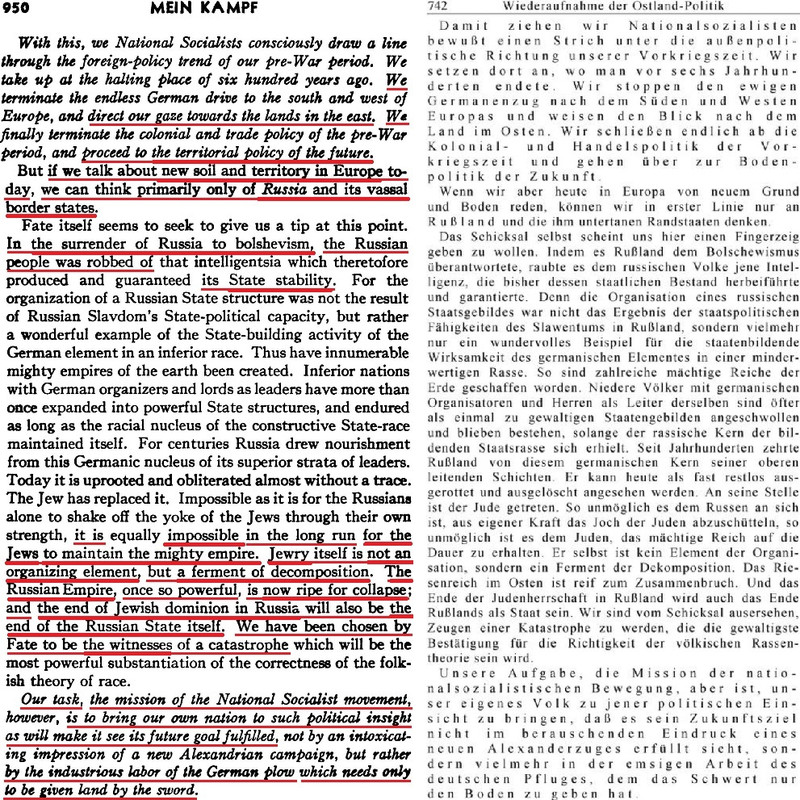
Gonzalo wrote: ↑Sat Sep 26, 2026 11:03 am Hitler wanted to destroy Russia because he wanted to replicate what the Americans did to the Native Americans in the Wild West with the Slavs in the East. There was no overt provocation from Russia. Stalin even helped Germany by sending them oil and grain at the start of the war. Hitler wanted to conquer Russia by fire and sword to enslave the Russians and take their lands
That's nothing but Soviet poppycock concocted through a misleading decontextualization of Mein Kampf. Mein Kampf was written in 1924, when Hitler and many well-informed people in the world believed that the brand-new Soviet Empire was about to collapse (because, in Hitler's words, Jewry is "not an organizing element but a ferment of decomposition") and be divided among the surrounding powers that would be able to take these lands. Operation Barbarossa took place in 1941, not in 1924, when Hitler had considered the idea of gaining more living space in the east. In 1941, Hitler and everyone else knew that the Soviet Union was armed to the teeth and far from being about to collapse. Using that quote from Mein Kampf to explain the reason for Operation Barbarossa is therefore absurd and anachronistic. Operation Barbarossa was a German preemptive strike carried out to thwart the imminent invasion of Central and Western Europe by Stalin's armies.

Image

Moreover, YOU mentioned the Heim ins Reich program in several former comments and the Heim ins Reich program invalidates that Soviet narrative. Who can believe that the Third Reich would have wasted a significant amount of resources during the most titanic war ever fought only to de-Germanize an area it was allegedly planning to Germanize after the war? WTF?!? :?
"Holocaust deniers are very slick people. They justify everything they say with facts and figures."
User avatar
HansHill
Posts: 1613
Joined: Sun Oct 06, 2024 3:06 pm
Location: Arlen, TX

Re: Hitler did not start ww2

Post by HansHill »

Gonzalo wrote: ↑Sat Sep 26, 2026 1:57 pm
HansHill wrote: ↑Sat Sep 26, 2026 12:58 pmI will list here some of the points that Tedor makes (truncated for brevity here, can be expanded upon if needed) and you should tell the forum why exactly Tedor is incorrect:
  • 1918-21 Polish secret military organization, Polska Organizacya Wojskova (POW) staged 3 insurrections attacking German villages.
What does this have to do with the German-Polish conflict of 1938–39? The period immediately following World War I was marked by violence and ethnic cleansing. So? What's your point?
Because according to your own worldview, analysing past events and using them as a predictor of the future, is a viable mechanism for assessing later motives and actions. And its just common sense when anlysing the past. Remember when you said:

"The Poles weren’t going to let themselves be humiliated, especially after seeing what had happened to Czechoslovakia"

Its kinda the same as that. Besides, you are speaking about Versailles-era conflict between the exact two ethnic groups in question as inconsequential when in reality, Versailles practically was the backdrop to the later conflict.
Gonzalo wrote: ↑Sat Sep 26, 2026 1:57 pm
HansHill wrote: ↑Sat Sep 26, 2026 12:58 pm
  • The 3rd insurrection was supplied with French weapons the insurgents organised an army of 30,000 men. LoN awarded a third of the territory to Poland. Based on the plebiscite the entire region should have went to Germany. This violated point 5 of Wilson’s own 14 points
Germany occupied and divided Poland with Russia in 1793, and during the Wilhelmine era, it attempted to Germanize Poland by erasing its original identity. In 1918, after losing the war it had started, Germany was in no position to make any demands. And, in any case, it doesn’t matter because this isn’t about World War I.
"By losing the war it started" - You mean WW1? There is another book to add to your growing list of homework - "Origins of the World War" by Sidney Bradshaw Fay. But I digress and agree in principle that pre-WW1, espeically this era is a separate topic.
Gonzalo wrote: ↑Sat Sep 26, 2026 1:57 pm
HansHill wrote: ↑Sat Sep 26, 2026 12:58 pm
  • The LoN instituted policies hostile to the ethnic German population with a quarter of Germans fleeing. 1930-32 Poland began military maneuvers and amassing on the border, with invasion plans also being drafted. Polish newspapers began calling for war
Blatantly false. In 1932, there was only one diplomatic crisis because von Papen came close to signing an agreement with France that harmed Polish interests, but that crisis did not lead to anything more serious. Danzig was governed by the Nazi Party—do the names Forster and Hermann Rauschning ring a bell?
What exactly are you challenging here? Hostile policies from the LON? Polish military maneouvers? Polish newspapers warmongering? Please be clear in what you are challenging.

https://en.wikipedia.org/wiki/1935_Free ... y_election
Gonzalo wrote: ↑Sat Sep 26, 2026 1:57 pm
HansHill wrote: ↑Sat Sep 26, 2026 12:58 pm
  • Germany responded by refusing to renew compacts approaching expiry. Poland retaliated by sending combat divisions to Danzig, and fortifying garrisions. Between Feb and Apr 1933 Poland asked Paris twice to join in a “preventative war” to invade Germany.
It has not been confirmed whether Pilsudski attempted to forge an alliance with France to wage a preemptive war against Germany, and in any case, it is irrelevant because Pilsudski died in 1935 and France simply did not accept such a proposal.
Poland signed the Soviet–Polish Non-Aggression Pact in 1932.[154] The Soviet–Polish Pact was considered at the time to be a major success of Polish diplomacy, which had been greatly weakened by the trade war with Germany, the renouncement of parts of the Treaty of Versailles and the loosened ties with France after it agreed to the Locarno Treaties. Critics of the pact stated that it allowed Stalin to eliminate his socialist opponents, primarily in Ukraine. The pacts were supported by advocates of Piłsudski's Promethean programme.[164] After Adolf Hitler rise to power in Germany in January 1933, Piłsudski is rumored to have proposed to France a preventive war against Germany.[165] Lack of French enthusiasm may have been a reason for Poland signing the German–Polish Non-Aggression Pact in 1934.[49][154][166][167] Little evidence has, however, been found in French or Polish diplomatic archives that such a proposal for preventive war was ever actually advanced.[168] Critics of Poland's pact with Germany accused Piłsudski of underestimating Hitler's aggressiveness,[169] and giving Germany time to re-arm.[170][171] Hitler repeatedly suggested a German–Polish alliance against the Soviet Union, but Piłsudski declined, instead seeking precious time to prepare for a potential war with either Germany or the Soviet Union. Just before his death, Piłsudski told Józef Beck that it must be Poland's policy to maintain neutral relatations with Germany, keep up the Polish alliance with France and improve relations with the United Kingdom.[154] The two non-aggression pacts were intended to strengthen Poland's position in the eyes of its allies and neighbors.[11] Piłsudski was probably aware of the weakness of the pacts, stating: "Having these pacts, we are straddling two stools. This cannot last long. We have to know from which stool we will tumble first, and when that will be".[172]
https://en.wikipedia.org/wiki/J%C3%B3zef_Pi%C5%82sudski
The source cited by Tedor for these plans is: Schultze-Rhonhof, Gerd, Der Krieg, der viele Väter hatte, p. 405.

I understand you want to sweep these claims away as mere "rumours", but you don't get to ignore the impact that episodes like this have on German opinions towards Poland (even if just rumours), and subsequently, policy formulated against this backdrop - in fact, here is Lazar Kaganovich speaking of this exact thing:
Lazar Kaganovich, the Soviet Politburo leader and
brother-in-law of Stalin, announced in Izvestia (The News) on January 27, 1934, that a new Franco-
German war would promote the interests of the Soviet Union.
You do not simply get to sidestep this as inconsequential as much as you are desperately trying to.

"B-b-but he didn't mean it" - Come join us in the real world please.
Gonzalo wrote: ↑Sat Sep 26, 2026 1:57 pm
HansHill wrote: ↑Sat Sep 26, 2026 12:58 pm
  • In Nov, Adolf Hitler offered Poland a non-aggression pact. Only after a 3rd unsuccessful bid to enlist France for their war against Germany, did Poland agree.
Irrelevant
o.O

How is citing Polish aggression irrelevant to demonstrating Polish aggression?
Gonzalo wrote: ↑Sat Sep 26, 2026 1:57 pm
HansHill wrote: ↑Sat Sep 26, 2026 12:58 pm
  • Feb 1936, the German consulate reported the disproportionate transfer of German farms into Polish hands through state sponsored land reform: “As much German property as possible is to be broken up before expiration of the ten-year agreement."
Any evidence of this? In Poland, minorities such as Jews played a prominent role in commerce. Any evidence of discrimination against Germans?

And wait... what was the “Aryanization” of the economy? The Nazis did the same thing to other groups. If the 800,000 Germans living in Poland didn’t like it, they could simply pack their bags and leave.
Source as per Tedor = Preradovich, Nikolaus, Deutschland und Polen
Gonzalo wrote: ↑Sat Sep 26, 2026 1:57 pm
HansHill wrote: ↑Sat Sep 26, 2026 12:58 pmIn March 1936, Beck informed France that Poland was ready to attack Germany. Rydz-Smigly visited Paris in September. France loaned Poland $500m and war materiel to upgrade the Polish army. RS ordered General Kutrzeba to draft a war plan against Germany to begin in 1939[/list]
Please provide the primary source that supports these claims
Sources as per Tedor: Klüver, Max, Die Kriegstreiber and Schultze-Rhonhof, Gerd, Der Krieg, der viele Väter hatte
Gonzalo wrote: ↑Sat Sep 26, 2026 1:57 pm
HansHill wrote: ↑Sat Sep 26, 2026 12:58 pm
  • Diplomaticaly, Germany offered for Poland to join Germany in the Anti-Commitern Pact to protect Poland against the dangers of Bolshevism. Poland refused the entire deal in October 1938, and called the 96% of Ethnic Germans in Danzing “the minority”
Poland did not join the anti-communist pact because it had no interest in going to war against the Soviet Union. Polish foreign policy consisted of maintaining its independence from the USSR and Germany by forging close ties with France and England. To preserve its independence, Poland had to avoid getting too close to either the Germans or the Russians.
More rubbish.

As per Dr David Hoggan, p 180:
Both Germany and Poland were
opposed to the Soviet Union and its policies, but no attempt had been made to coordinate permanently
the anti-Soviet orientation of the two states along the lines advocated by Göring during his many visits
to Poland. The Poles had obtained a promise of German support against Russia during the 1938 Czech
crisis, but the question of the more permanent German attitide, in the event of an attack on Poland by the
Soviet Union during the months after Munich, had not been resolved. The Poles were concerned about
the possibility of a Russian attack. They maintained a permanent military alliance with Rumania
directed exclusively against Russia.
Gonzalo wrote: ↑Sat Sep 26, 2026 1:57 pm
HansHill wrote: ↑Sat Sep 26, 2026 12:58 pm
  • After this refusal, ethnic persecution of Germans continued, with the British ambassador to Poland, Sir Howard Kennard formally documented abuses, and called for moderation between Poland and the UK.
Oh, that old lie about the poor ethnic Germans being persecuted by the evil Poles. I'll let the AI do its job:
I'm not reading your A.I. slop. I've given you the courtesy of human output and primary and secondary sources, I would appreciate likewise in return.
Gonzalo wrote: ↑Sat Sep 26, 2026 1:57 pm
HansHill wrote: ↑Sat Sep 26, 2026 12:58 pm
  • In Nov 1938 Memel (formerly Germany, but lost to Lithuania) voted 87% in favour to return to Germany. They previously voted 94% to return in 1925 but this was ignored. Rydz-Smigly accused Germany of attempting to invade Poland, and began military mobilizations.
  • Poland made a military threat to von Ribbentrop “Any further pursuit of these plans, especially as far as the return of Danzig to the Reich is concerned, will mean war." This threat, together with Rydz-Smigly’s partial mobilization against Germany, violated the 1934 treaty.
  • Off the back of this threat, England allied Poland, with Beck visiting London. One month later, Poland mobilised a further 334,000 military reserves, again in the absence of any German cause.
  • Because Poland broke the pact, Germany gave official notice it was now considered voided based on their actions. The press in Poland became more aggressive in pushing for war. Adolf Hitler maintained a strict policy of no warmongering in his Foreign Office
Tedor is either lying or being extremely dishonest here. The Polish mobilization took place after Ribbentrop threatened Poland, saying that if Germany strengthened its ties with Russia, the Polish state might cease to exist.
Initially, Germany hoped to transform Poland into a satellite state, with Ribbentrop and Japanese military attache Hiroshi Ōshima trying to convince Poland to join the Anti-Comintern Pact.[131] By March 1939, German demands had been rejected by the Poles three times, which led Hitler to decide, with enthusiastic support from Ribbentrop, upon the destruction of Poland as the main German foreign policy goal of 1939.[132] On 21 March 1939, Hitler first went public with his demand that Danzig rejoin the Reich and for "extra-territorial" roads across the Polish Corridor. That marked a significant escalation of the German pressure on Poland, which until then had been confined to private meetings between German and Polish diplomats. The same day, on 21 March 1939, Ribbentrop presented a set of demands to the Polish Ambassador Józef Lipski about Poland allowing the Free City of Danzig to return to Germany in such violent and extreme language that it led the Poles to fear their country was on the verge of an immediate German attack. Ribbentrop had used such extreme language, particularly his remark that if Germany had a different policy towards the Soviet Union then Poland would cease to exist, that it led to the Poles ordering partial mobilisation and placing their armed forces on the highest state of alert on 23 March 1939.[133]

In a protest note at Ribbentrop's behaviour, Poland's Foreign Minister Józef Beck reminded him that Poland was an independent country and not some sort of German protectorate that Ribbentrop could bully at will.[134] Ribbentrop, in turn, sent out instructions to the German Ambassador in Warsaw, Count Hans-Adolf von Moltke, that if Poland agreed to the German demands, Germany would ensure that Poland could partition Slovakia with Hungary and be ensured of German support for annexing Ukraine. If the Poles rejected his offer, Poland would be considered an enemy of the Reich.[135] On 26 March, in a stormy meeting with the Polish Ambassador, Józef Lipski, Ribbentrop accused the Poles of attempting to bully Germany by their partial mobilisation and violently attacked them for offering consideration only of the German demand about the "extra-territorial" roads.[136] The meeting ended with Ribbentrop screaming that if Poland invaded the Free City of Danzig, Germany would go to war to destroy Poland.[136] When the news of Ribbentrop's remarks was leaked to the Polish press, despite Beck's order to the censors on 27 March, it caused anti-German riots in Poland with the local Nazi Party headquarters in the mixed town of Lininco destroyed by a mob. On 28 March, Beck told Moltke that any attempt to change the status of Danzig unilaterally would be regarded by Poland as a casus belli. Although the Germans were not planning an attack on Poland in March 1939, Ribbentrop's bullying behaviour towards the Poles destroyed any faint chance of Poland allowing Danzig to return to Germany.[137]

The German occupation of the Czech areas of Czecho-Slovakia on 15 March, in total contravention of the Munich Agreement, which had been signed less than six months before, infuriated British and French public opinion and lost Germany any sympathy.[138] Such was the state of public fury that it appeared possible for several days afterwards that the Chamberlain government might fall because of a backbench rebellion.[139]
Ribbentrop openly threatened the Poles, and the Poles reacted. A victim of a bully does not become a bully just because they put a stop to the bully's behavior.
Did you read the wikipedia passage that you cited? It supports Tedor's point of mobilization and escalation of military activity on the part of the Poles. You don't get to say "b-b-but they started in", especially since Germany has specifically not mobilized against Poland by this point. In fact, its even worse for you in that at around this exact period the German army was mobilizing elsewhere (Memel - 23rd March), which in and of itself was utlized by Rydz-Smigly as further justification for Polish aggression against Germany.
Gonzalo wrote: ↑Sat Sep 26, 2026 1:57 pm
HansHill wrote: ↑Sat Sep 26, 2026 12:58 pm
  • English Ambassador Henderson confirms to London, that German proposals were beyond reasonable, and that his colleagues in diplomatic circles agreed. He re-iterates that Polish rejection of these offers caused concern in diplomatic circles.
Henderson was on the verge of coming to blows with Ribbentrop because Henderson had done everything in his power to help Germany and Poland reach an agreement, and his efforts had been in vain due to the invasion on September 1. Henderson was simply trying to calm things down.
Yes thank you for explaining to me that diplomats are diplomatic. Do you have anything substantive to say about the merit of his statement that Germany's position was beyond reasonable? And that Polish obstruction of peace was alarming to diplomatic circles?
Gonzalo wrote: ↑Sat Sep 26, 2026 1:57 pm
HansHill wrote: ↑Sat Sep 26, 2026 12:58 pm
  • English Foreign Office report in June warmongering in Poland. English General Sir Edmund Ironside visits Poland. English Ambassador documents the severe abuse against Germans including castration. Germans were rounded up and send to concentration camps
The anti-German incidents were the result of the German government's own actions, and as incidents, they were isolated and occasional. Nazi propaganda falsely exaggerated them.
Except i'm not citing German propaganda, I'm citing British embassy findings (although i certainly could cite German propaganda because it would be in alignment with the British findings).
Gonzalo wrote: ↑Sat Sep 26, 2026 1:57 pm
HansHill wrote: ↑Sat Sep 26, 2026 12:58 pm
  • Both Lord Halifax and Roger Makins in the British Foreign Office, in seperate letters and cables, confirm Germany’s intent to avoid hostilities.
Provide the primary source that supports these claims
I will in fact add another:
On May 16, Henderson summarized a
conversation with Weizsäcker in a letter to Sir Miles Cadogan, the
undersecretary in the Foreign Office: “He like all Germans feels bitterly
about the Poles. They grabbed what they could after Vienna and Munich
and then bit the hand that fed them on these occasions. That is the
German view nor is there a single German who does not regard Hitler’s
offer to Poland as excessively generous and broadminded."

Tedor, citing Klüver, Max, Die Kriegstreiber, p. 404
As for the other diplomats echoding these sentiments, see also:

Halifax & Makins:
Halifax, certainly
no friend of Germany, cabled Kennard on August 15, “I have the
impression that Hitler is still undecided and anxious to avoid war." The
day before, Roger Makins in the British Foreign Office wrote England’s
delegate in Geneva, Frank Walter, that the Führer wanted to open
negotiations to prevent an armed clash.

- Tedor, citing BD VII, Third Series, 4 (BD = British Documents on Foreign Policy)
Gonzalo wrote: ↑Sat Sep 26, 2026 1:57 pm
HansHill wrote: ↑Sat Sep 26, 2026 12:58 pm
  • The Polish military:
    -shut traffic & food entering into Danzig
    -opened fire on civilian planes over the Baltic Sea
    -fired on Germans attempting to flee
    -26 Aug launched an attack on Neidenburg in East Prussia and were repelled on sovereign German territory leaving 47 dead
  • Germany demanded Polish diplomats to begin negotiating peace talks. In Poland Beck, Rydz-Smigly and the defense minister, Tadeusz Kasprzycki instead decided to declare general mobilization of their full army.
  • August 30th 1939 Germany drafted the 16-point Marienwerder proposal to resolve the issue. Poland refused, with England commenting “Here was proof to the German Government of Poland’s delaying tactics and refusal to negotiate seriously”
  • Germany made two last attempts at a peaceful solution: Herman Goring met with Henderson, and Von Ribbentrop met with Lipski. Both negotiations failed.
  • Hitler cites 30 violations in his Reichstag speech on 1 Sep1939.

    “Aug 25 to Aug 31 inclusive, there occurred besides innumerable attacks on civilians of German blood, 44 perfectly authenticated acts of armed violence against German official persons and property
There is nothing unusual about Poland’s behavior, considering that Europe was a powder keg during those days in August due to the unrest in Germany.
Great, finally some acknowledgement on the facts of the matters. Your justification of these hostilities however, rings hollow in light of everything I have been teaching you.
Gonzalo wrote: ↑Sat Sep 26, 2026 1:57 pm Ribbentrop read the 16 points to Henderson but REFUSED to hand him the document, and by the time the British were rushing to Warsaw to try to salvage the situation, it was already too late because Hitler had begun the invasion. Since April 1939, Ribbentrop had been giving Polish diplomats the cold shoulder because he didn’t want an agreement—he wanted war.
This is pure obfuscation from you - The 16 points were issued directly to the Poles - you have blatantly ignored the critical failure in these negotiations, being the Polish refusal (despite all encouragement to the contrary) to simply engage with the Germans.

Via Tedor again:
The radio monitoring station in the Reich’s Air Ministry intercepted
Beck’s transmission ordering Lipski not to accept a copy of Germany’s
Marienwerder proposals.
And via Hoggan:
The Germans, in offering to negotiate with Poland, were announcing to the world that they favored a
diplomatic settlement over war with Poland. The Poles, in refusing to negotiate, were announcing that
they favored war.
Gonzalo wrote: ↑Sat Sep 26, 2026 1:57 pm
HansHill wrote: ↑Sat Sep 26, 2026 12:58 pm
  • A Telegraph was seized from the German Foreign Office by the US military demonstrating two top Polish officials reveal Poland deliberately sought war because their belief in British military support (which never came). The significance of these admissions is obvious
Can you share that magical revisionist document that exonerates Hitler for his actions and will make us “see the truth”?

Image

The overarching theme of German pacification attempts in the face of Polish aggression is underscored by Dr David Hoggan:
Hitler’s strategy in dealing with the Poles at this point was entirely the product of his own analysis
and conviction. The German military leaders wondered why they were not allowed to prepare plans for a
possible war with the Poles. It was extremely unusual that Germany possessed no plans of any kind for
such a conflict. It was customary for European nations to have operational plans for a possible struggle
against a neighbor with whom relations were on an insecure footing. For instance, Germany had plans
for possible military operations against Austria-Hungary throughout the 1870’s, and these were allowed
to lapse only after the conclusion of the formal German-Austro-Hungarian alliance of 1879
I don't see how you reconcile this reality against your claims of muh-moustache man bad.
Post Reply