
Transport records indicate that trains frequently stopped at intermediate Jewish labour camps and junctions before reaching Treblinka, which itself consisted of three separate subcamps. These operational pauses mean that population flows were not continuous, adding uncertainty to any estimate of daily arrivals or total throughput.
Observations from locals, including Marion Olszuk who walked past Treblinka daily and could see into the camp, provide additional constraints on possible activity and volumes. Taken together, the logistical and observational evidence demonstrates that precise numerical claims—such as 700,000 deaths—are not substantiated by independent evidence.
This is not a statement that deaths did not occur, but a recognition that the available data leave a substantial margin of uncertainty, making high-precision totals methodologically unsupportable.
The argument that train stops at Jewish labour camps imply that no one disembarked is not supported by historical evidence. For example, at Skaz Kammiena, a recorded muster of 8,000 Jews arrived entirely by train, demonstrating that trains stopping en route routinely delivered people to camps.
Transport pauses alone cannot be used to infer that passengers remained on board or that deaths at downstream sites did not occur. Logistical and eyewitness evidence indicates that disembarkation at labour or processing points was standard, making claims to the contrary methodologically unsound.
The (10) facts that prove the Holocaust is a hoax
Re: The (10) facts that prove the Holocaust is a hoax
Veritas paucis
Re: The (10) facts that prove the Holocaust is a hoax
The point is that, due to the collapse of the Reich, concerns about non-extermination camps located within the Reich were irrelevant to the Nazis, while it is assumed that as long as the war had not reached horrific proportions, they still had the resources and time to conceal millions of mass murders.
In other words, it is a question that only serves the exterminationists and not a contradiction of orthodoxy.
- borjastick
- Posts: 390
- Joined: Sat Sep 28, 2024 11:49 am
- Location: Europe
Re: The (10) facts that prove the Holocaust is a hoax
No, TisMS93, that is not the point at all.
Of the four million jews under German control, six million died and five million survived!

Re: The (10) facts that prove the Holocaust is a hoax
The argument of NS-leaders using harsh words like Ausrottung should be addressed. Exterminationists love to use them, being void of any hard evidence. Here is a text attributed to Rosenberg:

Terms like "biologische Ausmerzung" are used and they are indeed sounding harsh enough to mean physical killing on face value. But the text rather unequivocally states that this means moving Jews out of Germany or Europe... "over the Ural" or otherwise.
Now we just need to formulate a fact in this regard. Proposal:
1X. Harsh terms like Ausmerzung in documents on scrutiny, turn out to mean physical removal from territory.
Terms like "biologische Ausmerzung" are used and they are indeed sounding harsh enough to mean physical killing on face value. But the text rather unequivocally states that this means moving Jews out of Germany or Europe... "over the Ural" or otherwise.
Now we just need to formulate a fact in this regard. Proposal:
1X. Harsh terms like Ausmerzung in documents on scrutiny, turn out to mean physical removal from territory.
-
Eye of Zyclone

- Posts: 587
- Joined: Fri Apr 04, 2025 3:12 pm
Re: The (10) facts that prove the Holocaust is a hoax
Could AI even possibly fail at facial recognition?Joe Splink wrote: ↑Sun Feb 08, 2026 8:53 pm The photo on the top is a published photo of Anne Frank, the bottom photo is clipped from a screenshot from Memory of The Camps, you can see on PBS Frontline. I asked Grok to compare the two pics, and you can see the response.



"Holocaust deniers are very slick people. They justify everything they say with facts and figures."
-
Eye of Zyclone
- Posts: 587
- Joined: Fri Apr 04, 2025 3:12 pm
Re: The (10) facts that prove the Holocaust is a hoax
Not only NS-leaders did that. Has anyone else noticed what happened when Brother Nathanael Kapner (a Jew by birth who converted to Orthodox Christianity) angrily said "I live to see the Jews destroyed" during the 2026 ARMREG Holocaust Academy Summit? Germar Rudolf immediately interrupted him and said: "I may intervene here. We don't want to destroy anyone. We don't do any physical threats to anyone." And Brother Nathanael replied that he was only talking about eliminating the power of the Jews. A very Ausrottung/Vernichtung moment (without the usual mistranslation thing).

Misunderstanding angry talks is very easy. Even truer when politically-motivated deliberate distortions are involved, as they often are in Holohoax atrocity propaganda.
"Holocaust deniers are very slick people. They justify everything they say with facts and figures."
-
Eye of Zyclone
- Posts: 587
- Joined: Fri Apr 04, 2025 3:12 pm
Re: The (10) facts that prove the Holocaust is a hoax
Doesn't the Israeli "biologischen Ausmerzung" of Palestinians over the past 8 decades demonstrate that?Hektor wrote: ↑Fri Feb 13, 2026 9:32 am
Terms like "biologische Ausmerzung" are used and they are indeed sounding harsh enough to mean physical killing on face value. But the text rather unequivocally states that this means moving Jews out of Germany or Europe... "over the Ural" or otherwise.
Now we just need to formulate a fact in this regard. Proposal:
1X. Harsh terms like Ausmerzung in documents on scrutiny, turn out to mean physical removal from territory.
No one accuses the Israelis of wanting to kill all Palestinians, but fewer and fewer people are unable to see that the Israelis have been biologically eradicating Palestinians (by unceremoniously and even brutally kicking them out of their homeland) from the area they always wanted to seize for themselves. The most outspoken Zionists are more about justifying it nowadays.
As you correctly said, killing all the members of a people is not the only way to completely eradicate that people from a given area. A general forced removal leads to the same result.
"Holocaust deniers are very slick people. They justify everything they say with facts and figures."
Re: The (10) facts that prove the Holocaust is a hoax
The goal of the Israeli state seems indeed to be expelling Palestinians and have them go preferable to Europe.
-
Wahrheitssucher

- Posts: 1017
- Joined: Mon May 19, 2025 2:51 pm
Re: The (10) facts that prove the Holocaust is a hoax
.
Here is a personal anecdote regarding how the ‘holy’ hoax (of there having been a WW2 genocide of over 4 million jooze in gas-chambers) actually works.
I once met a person (Tobias Rawet) who is presented as a ‘holocaust survivor’. He is sponsored and permitted to give lectures to young school children and their parents on the holyH.
I have read numerous of his lectures online AFTER I attended one.
So I can say from study and experience that in the course of his lectures he says many things that he personally had no experience of but only learnt later AFTER the war and AFTER he achieved adulthood.
Yet he presented them AS IF he was a personal eye-witness to those things.
That is therefore a calculated deception.
And this type of deception of people falsely being presented as ‘eye-witnesses’ of things they never saw so did NOT ‘witness’ is permitted all over Europe and north America.
It is not only permitted but is actively promoted.
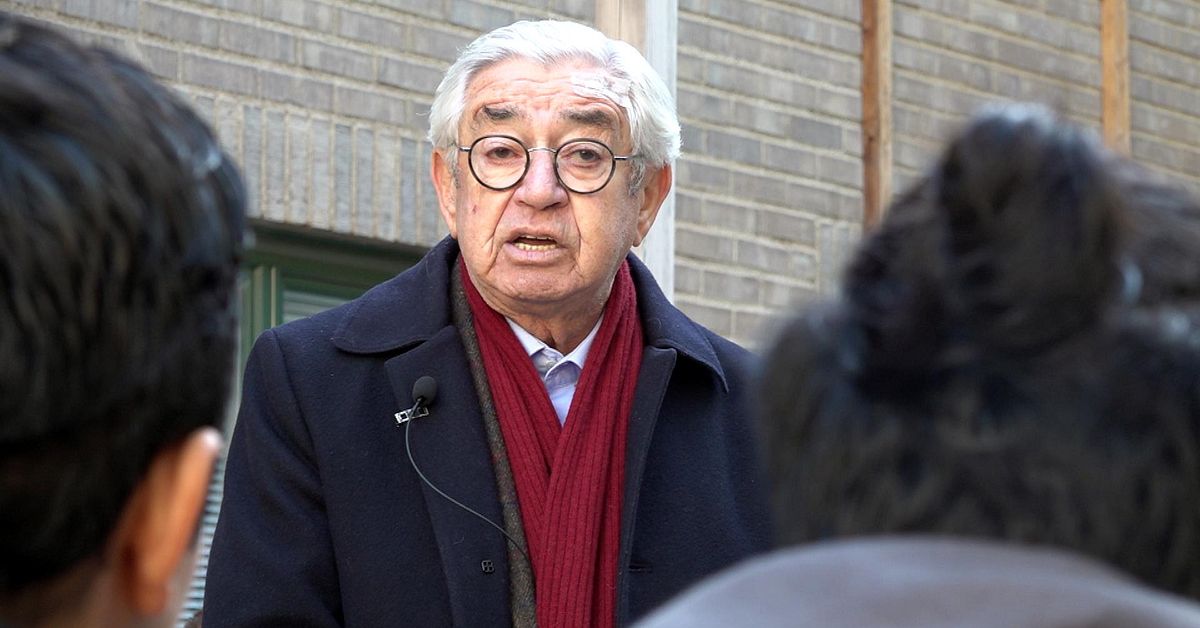
Tobias Rawet — one of many so-called ‘survivors’ permitted to tell lies and indoctrinate school-children
This Jewish ‘child survivor’ from Poland who I met and briefly talked with twice, has lived all his adult life in Sweden. He was only allowed to talk at schools BECAUSE of the credibility that having been in numerous concentration camps lends to the H mythology he was promoting.
BUT the very fact that he as a Polish Jewish child (he was eleven years old when the war ended) and BOTH his parents survived internment in numerous camps, is ACTUALLY PROOF OF THE EXACT OPPOSITE of what he was claiming to be an eyewitness too!!!
The irony is humongous!
It is huge!
He is presented as a witness to a genocide of ALL Jews. But the FACT that he and both his parents were kept alive in numerous concentration camps makes him living proof refuting this allegation.
He is ACTUALLY THE LIVING PROOF OF THE EXACT OPPOSITE of the alleged ‘final solution’ mass-gassing genocide of ALL jews in death camps.
The disconnect from obvious reality is a collossal one!
When I attended one of his lectures with a slide-show, he was then an old man. He related how, as a very young child, he had been in Ravensbruck and other camps. Consequently the school children forced to listen to him (and also their parents who could attend the same lecture AFTER school), were — and still are — expected to believe anything and everything he said unquestioningly.
Yet he not only claimed the opposite of what he was the living proof of, but he ignorantly BELIEVED the illogicality of what he was telling!
And presumably no-one had ever pointed this out to him.
Until he gave his usual lecture when I was in his audience.
I asked him a rather basic and reasonable question publicly.
At the end of his talk, when he invited questions from the audience, I waited till all the other questioners had finished and there was a silence. Then I respectfully asked him something presumably no-one had dared to ask him before (such is the irrational ‘Emperor’s-new-clothes’ reverence that everyone learns to adopt).
I asked him how he explained the indisputable fact that he himself as a small child HAD survived internment in numerous camps, IF — as he claimed — there had been a policy to kill ALL Jews, especially ones who could not work.
He became slightly angry and with visible outrage told me the numbers of Jews living in Poland before the war and then the diminished numbers still living there AFTER the war. By this reply he was illogically implying that all those Jews no longer there after the war had been gassed/mass-murdered.
The convenor of the lecture then stood up and ended the meeting saying the ‘holyH survivor’ was probably tired and needed to rest before travelling home. So I had no opportunity to point out the OBVIOUS FACT to him that he himself and his parents were Polish Jews who survived internment, emigrated to Sweden AND WERE NO LONGER LIVING IN POLAND!!!! So here again he himself and his parents were living examples of the opposite of the narrative he was promoting. He is a living example of why the numbers of Jews in Poland were diminished!
Perhaps the teacher who abruptly ended the meeting, had on some level realised that what the so-called ‘survivor’ was saying and claiming did not make logical sense and that if the conversation had been allowed to continue others would realise that fact.
This is just one example of the many so-called ‘survivors’ who are spreading this ‘mass-gassing’ mythology, who are themselves believing it, and promoting it, yet can not calmly answer questions that respectfully but critically analyse it.
. . . . . .
I spoke to him one-to-one AFTER his lecture and made, friendly, respectful small talk with which he engaged. But then I asked him another question about something he had said in his lecture.
In response to this one he turned 180°on the spot and stood with his back to me. He chose to remain like this in the almost empty hall (we were about five people left stacking the chairs). This is not only incredibly rude behaviour it is also mildly psychotic.
SUMMARY: This behaviour is representative of the lack of credibility of this holy hoax of an alleged genocide supposedly in homicidal gas-chambers that is almost totally based upon alleged ‘eye-witness’ testimony — it cannot withstand even the mildest, respectful enquiry or scrutiny.
Here is a personal anecdote regarding how the ‘holy’ hoax (of there having been a WW2 genocide of over 4 million jooze in gas-chambers) actually works.
I once met a person (Tobias Rawet) who is presented as a ‘holocaust survivor’. He is sponsored and permitted to give lectures to young school children and their parents on the holyH.
I have read numerous of his lectures online AFTER I attended one.
So I can say from study and experience that in the course of his lectures he says many things that he personally had no experience of but only learnt later AFTER the war and AFTER he achieved adulthood.
Yet he presented them AS IF he was a personal eye-witness to those things.
That is therefore a calculated deception.
And this type of deception of people falsely being presented as ‘eye-witnesses’ of things they never saw so did NOT ‘witness’ is permitted all over Europe and north America.
It is not only permitted but is actively promoted.
Tobias Rawet — one of many so-called ‘survivors’ permitted to tell lies and indoctrinate school-children
This Jewish ‘child survivor’ from Poland who I met and briefly talked with twice, has lived all his adult life in Sweden. He was only allowed to talk at schools BECAUSE of the credibility that having been in numerous concentration camps lends to the H mythology he was promoting.
BUT the very fact that he as a Polish Jewish child (he was eleven years old when the war ended) and BOTH his parents survived internment in numerous camps, is ACTUALLY PROOF OF THE EXACT OPPOSITE of what he was claiming to be an eyewitness too!!!
The irony is humongous!
It is huge!
He is presented as a witness to a genocide of ALL Jews. But the FACT that he and both his parents were kept alive in numerous concentration camps makes him living proof refuting this allegation.
He is ACTUALLY THE LIVING PROOF OF THE EXACT OPPOSITE of the alleged ‘final solution’ mass-gassing genocide of ALL jews in death camps.
The disconnect from obvious reality is a collossal one!
When I attended one of his lectures with a slide-show, he was then an old man. He related how, as a very young child, he had been in Ravensbruck and other camps. Consequently the school children forced to listen to him (and also their parents who could attend the same lecture AFTER school), were — and still are — expected to believe anything and everything he said unquestioningly.
Yet he not only claimed the opposite of what he was the living proof of, but he ignorantly BELIEVED the illogicality of what he was telling!
And presumably no-one had ever pointed this out to him.
Until he gave his usual lecture when I was in his audience.
I asked him a rather basic and reasonable question publicly.
At the end of his talk, when he invited questions from the audience, I waited till all the other questioners had finished and there was a silence. Then I respectfully asked him something presumably no-one had dared to ask him before (such is the irrational ‘Emperor’s-new-clothes’ reverence that everyone learns to adopt).
I asked him how he explained the indisputable fact that he himself as a small child HAD survived internment in numerous camps, IF — as he claimed — there had been a policy to kill ALL Jews, especially ones who could not work.
He became slightly angry and with visible outrage told me the numbers of Jews living in Poland before the war and then the diminished numbers still living there AFTER the war. By this reply he was illogically implying that all those Jews no longer there after the war had been gassed/mass-murdered.
The convenor of the lecture then stood up and ended the meeting saying the ‘holyH survivor’ was probably tired and needed to rest before travelling home. So I had no opportunity to point out the OBVIOUS FACT to him that he himself and his parents were Polish Jews who survived internment, emigrated to Sweden AND WERE NO LONGER LIVING IN POLAND!!!! So here again he himself and his parents were living examples of the opposite of the narrative he was promoting. He is a living example of why the numbers of Jews in Poland were diminished!
Perhaps the teacher who abruptly ended the meeting, had on some level realised that what the so-called ‘survivor’ was saying and claiming did not make logical sense and that if the conversation had been allowed to continue others would realise that fact.
This is just one example of the many so-called ‘survivors’ who are spreading this ‘mass-gassing’ mythology, who are themselves believing it, and promoting it, yet can not calmly answer questions that respectfully but critically analyse it.
. . . . . .
I spoke to him one-to-one AFTER his lecture and made, friendly, respectful small talk with which he engaged. But then I asked him another question about something he had said in his lecture.
In response to this one he turned 180°on the spot and stood with his back to me. He chose to remain like this in the almost empty hall (we were about five people left stacking the chairs). This is not only incredibly rude behaviour it is also mildly psychotic.
SUMMARY: This behaviour is representative of the lack of credibility of this holy hoax of an alleged genocide supposedly in homicidal gas-chambers that is almost totally based upon alleged ‘eye-witness’ testimony — it cannot withstand even the mildest, respectful enquiry or scrutiny.
A ‘holocaust’ believer’s problem is not technical, factual, empirical or archeological — their problem is psychological.
- borjastick
- Posts: 390
- Joined: Sat Sep 28, 2024 11:49 am
- Location: Europe
Re: The (10) facts that prove the Holocaust is a hoax
The above post about Tobias Rawet is very eye opening because it shows yet again that these people present their story as fact, case closed, no questions, do not stop to doubt it. This is very common of course because they have the upper hand, the law in many countries and the arrogant belief that not only is it true but we must believe them, or else...
You laid bare his rather odd claims and proved once again that much of the holocaust story is made up, make believe, or to be blunt well prepared political bullshit. It legitimises the evil state of israel (that shitty little country) and aids them in hiding behind it to then carry out truly monstrous crimes against muslims in that region yet complaining when similar responses happen to them in the mother of all deceptions.
You laid bare his rather odd claims and proved once again that much of the holocaust story is made up, make believe, or to be blunt well prepared political bullshit. It legitimises the evil state of israel (that shitty little country) and aids them in hiding behind it to then carry out truly monstrous crimes against muslims in that region yet complaining when similar responses happen to them in the mother of all deceptions.
Of the four million jews under German control, six million died and five million survived!
-
Eye of Zyclone
- Posts: 587
- Joined: Fri Apr 04, 2025 3:12 pm
Re: The (10) facts that prove the Holocaust is a hoax
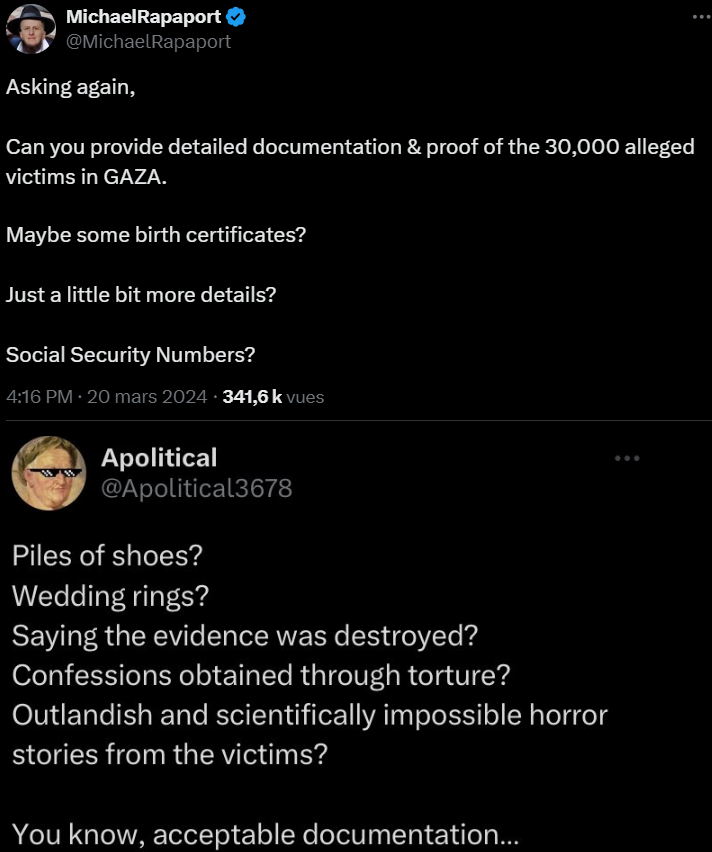
But tell them about those monstrous crimes and you'll see them angrily respond that those crimes are just Hamas propaganda and that the testimonies of Palestinian prisoners and the like (AKA "notorious liars," as they usually put it) prove nothing. Oh, the irony!borjastick wrote: ↑Tue Apr 07, 2026 8:26 am The above post about Tobias Rawet is very eye opening because it shows yet again that these people present their story as fact, case closed, no questions, do not stop to doubt it. This is very common of course because they have the upper hand, the law in many countries and the arrogant belief that not only is it true but we must believe them, or else...
You laid bare his rather odd claims and proved once again that much of the holocaust story is made up, make believe, or to be blunt well prepared political bullshit. It legitimises the evil state of israel (that shitty little country) and aids them in hiding behind it to then carry out truly monstrous crimes against muslims in that region yet complaining when similar responses happen to them in the mother of all deceptions.

"Holocaust deniers are very slick people. They justify everything they say with facts and figures."