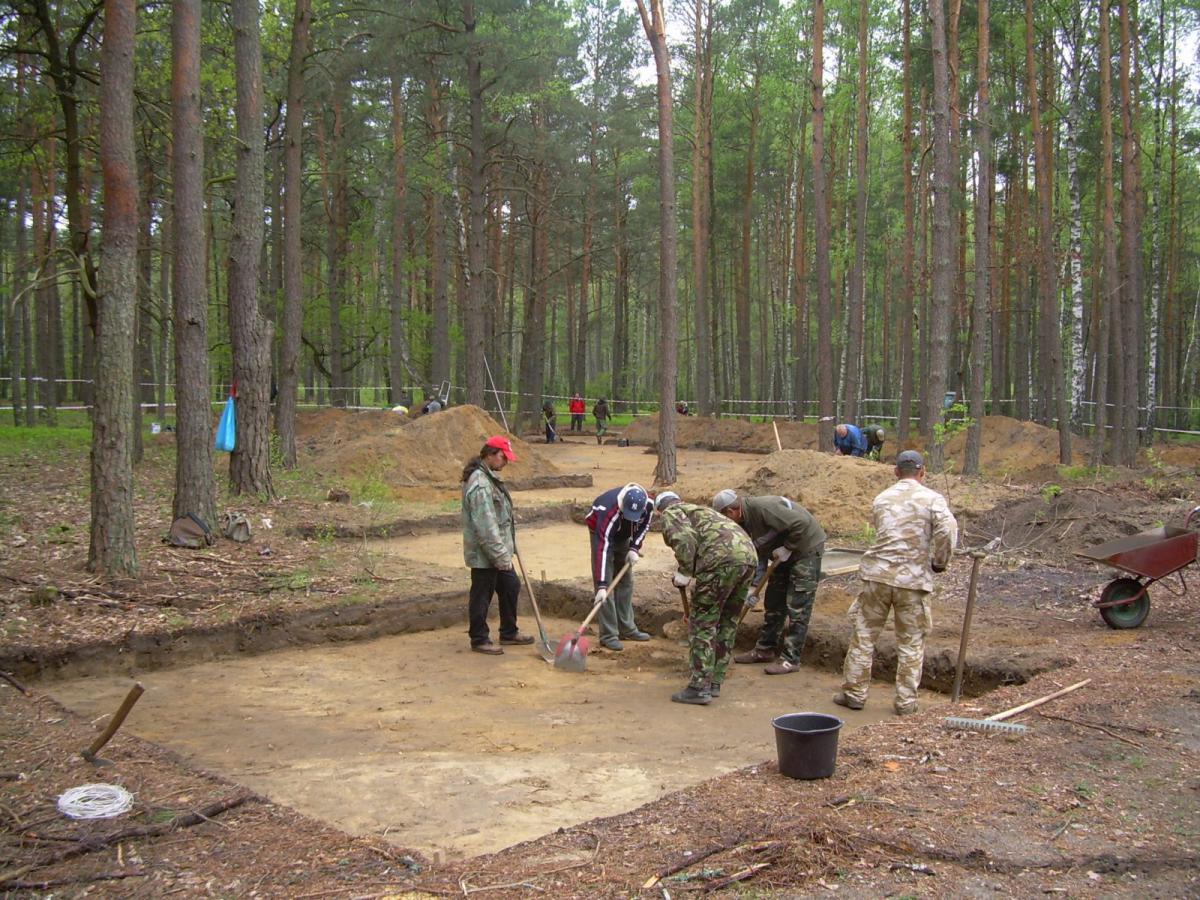
Sobibór: Kola-Mazurek Discrepancies and Implications

For more adversarial interactions
User avatar
Nessie
Posts: 3297
Joined: Sat Sep 28, 2024 7:41 am

Re: Sobibór: Kola-Mazurek Discrepancies and Implications

Post by Nessie »

Callafangers wrote: Sat Dec 06, 2025 11:47 pm
Nessie wrote: Sat Dec 06, 2025 8:21 am
Callafangers wrote: Fri Dec 05, 2025 6:24 pm ...There was only a 6% hit rate (positive drills) per hectare, and only a 69% hit rate even within the "graves" drawn. Mazurek consistently shows sparse remains where Kola had indicated dense saturation, explicitly documenting findings as 'patchy', 'barren', 'thin layers', etc., across all major graves....
Interesting use of the word "only". I get only 6%, but not only 69%.
Yes, Nessie, that's how this works. Core-drilling a grid pattern is not a form of legitimate mapping (as is excavation) -- it is a form of reconnaissance. Kola went about sampling the Sobibor Camp III site on a per-hectare basis and of his drills per hectare, he is at about a 7% hit rate (correction from 6%; 128/1805 = ~7%). In other words, only 7% of the areas he chose to reconnoiter had drill positives -- his reconnaissance had a 7% success rate.
As I said, I get only 7%, as it is a low number.
As for his 69%, you are missing the point.
You are missing my point, 69% is a high number, so referring to it as only, is deceptive and inaccurate.
Kola drew his grave boundaries arbitrarily around perceived clusters
How do you know that? How arbitrary, is conducting bore hole samples in the area of the camp, witnesses stated the mass graves were located?
.. for which their total number of drills was 185. Given the spacing of 5m apart and the fact Kola biases the sampling/positive rate by conducting extra drills in positive areas, this is already a stretch (or violation) in terms of extrapolation to a certain grave density. But taking it a step further, Kola simply omits the fact that almost one-third (31%, or 57 drills) of his samples within those "graves" were completely negative!
Conducting extra drills in areas where remains were found, is reasonable, to more accurately determine the size of those areas. Were the 31% of negative drills, within areas of positive ones, or were they clustered?

How is 69% "only"? In any exam, 69% is a good pass.
Nessie wrote:
Nessie, you know better than this: none of these claims from Mazurek are evidenced. The inferences he draws here are based on his assumptions of the orthodox history, having nothing to do with his findings.
Wrong, his assumptions are based on what he found. The Nazis dug a huge pit and then left little to nothing in it. Of course, you are not interested in what that is, or at least trying to evidence a chronological narrative that explains it. You are only interested in reinforcing your desired belief, that far fewer people were buried at the camp, than the evidence from eyewitnesses, documents and circumstances proves.
Only you would say that an empty pit is evidence of a full pit. Ridiculous. Even if one accepts your absurd logic (empty pit as evidence), you still need to explain where the emptied contents actually ended up, since they are not in the grave.
That is your invented logic, that you falsely attributed to me. Straw man. Now, deal with my actual point, of your claim that an empty pit is evidence few were buried at the camp, whilst failing to provid a history of that pit. Why was it dug? Was anything buried in it and then removed? Was it dug to take corpses, that were then cremated instead?
Nessie wrote:
...No -- it is a fact that Kola uses the blanket description of Grave 2 as a "crematory grave" (direct quote), only for Mazurek to audit this via excavation and determine only scattered remains. There is no ambiguity here.
Is a crematory grave, one that cremains were buried in, or one when cremations took place?
Kola's full description of Grave 2:
Grave No. 2. Located in the western part of hectare XVII, south of the monument-mound. It was marked by 28 holes. Its horizontal grid is irregular, with an area of ​​at least 20 x 25 m – with the longer edge aligned north-west – and a depth of approximately 4.00 m. It is a cremation grave.
There are no reports of cremation pyres therein. He is describing it as being of human cremation contents.
There is nothing in the quote to support your conclusion.
Nessie wrote:
'Disturbed ground' is hardly accounted for by anyone, since it proves nothing. It only matters to you, for some strange reason (?).
It also matters to Mazurek, as he suggests potential reasons why the Nazis dug large pits, that now have little to nothing in them. You are not interested in an open minded research into the purpose of and activity inside the camp, you are only interested in finding reasons to believe there are few remains there.
Nessie, this is more goofy nonsense. Mazurek can 'suggest' whatever he wants, you can too -- no one cares. We are studying the forensics, here. I am not "finding reasons to believe" anything other than what is described and documented in the forensic investigations. You are deflecting onto witness narratives and the like because you know the forensic case is failing you, 100%.
How is open minded research, that takes all evidence into account, to produce a chronological narrative of what took place, "goofy nonsense"? Your methodology, of looking only at the forensic evidence, and ignoring the rest of the evidence and then failing to explain what took place and why, is "goofy nonsense". It is unique to so-called revisionism, to conduct enquiries that fail to establish and prove what happened, and instead, produced a negative non-history. It is why you really are just a denier.
Nessie wrote:69% is not "only".
69% is definitely "only" when the graves are drawn in such a way that presents them as 100% -- which is exactly what Kola did. Anything less than 100% suggests incontiguity. Being far less than 100% (e.g. 69%) confirms sparseness/patchiness at most (completely invalidating the larger 'grave' drawing, especially given postwar mixing/dilution).
It depends on where the negative drills were, compared to the positive ones. If they are intermingled, then yes, the buried cremains are patchy. At 69% positive, they are not sparse.

If a grave full of corpses, has all the corpses removed and then cremated and the cremains are mixed with the earth that had been removed to make the pit and it is refilled, I would expect it to be patchy. I would expect some drills would be negative.
Nessie wrote:
If the Nazis 'mixed cremains' then you are extra-screwed, since now you are admitting that all corpse remains throughout the area will be a volume that is only partly crematory remains, always diluted by other materials. Is this your final answer?
It is my final answer.
Okay, your final answer is that the Nazis mixed all cremains with sand. What percentage are you conceding, here? Did they do a 50/50 mix? If so, that is 50% of the grave volume gone, unavailable for 'grave' (corpse/ash) calculations -- *poof*.
I would expect it to be more like 70-80% earth and 20-30% cremains, to refill the grave pit. That would mean and explain why, some drills came back negative for cremains.
Nessie wrote:
...How biased am I, Nessie? Care to quantify it? Actually, we can even visualize it: how many of the graves in the heat map should be red or orange instead of gray and blue/green? Please refer to the excavation reports and show how they support your assessment.

You are very biased, your aim is to minimise what has been found and pretend it is not significant, as you ignore the eyewitness, documentary and circumstantial evidence of mass murders. The excavation reports corroborate the witness claims that the Nazis dug a series of large pits (which you do not dispute), buried and then exhumed corpses (hence the pits with no corpses in them) and then cremated corpses (hence areas with 69% of boreholes finding traces of human remains). Mazurek's excavations did not find huge quantities, because it was avoiding digging areas where there were signs of huge quantities.
I asked you to quantify it. Please quantify just how inaccurate my estimates are. I provided the 'heat map' precisely to aid these sort of discussions. Which areas should be orange/red instead of gray/blue?
You are 100% biased as you are determined to conclude few corpses were were buried at Sobibor. You called an open minded, evidenced based chronology, "goofy". But that is how all criminal and historical investigations work, gathering evidence to find out what happened. You refer to 69% inaccurately as "only" and you do not bother to look for reasons and evidence as to why some drills are negative. It is evidenced that the Nazis dug big pits. It is evidenced many are empty or have little in them. It is evidenced they were exhuming and cremating corpses and mixing that back into the pits. You fail to say why that happened, and how many died there.
User avatar
Callafangers
Administrator
Posts: 1029
Joined: Tue Sep 24, 2024 6:25 am

Re: Sobibór: Kola-Mazurek Discrepancies and Implications

Post by Callafangers »

Nessie wrote: Sun Dec 07, 2025 1:03 pm
Callafangers wrote: Sat Dec 06, 2025 11:47 pm
Nessie wrote: Sat Dec 06, 2025 8:21 am

Interesting use of the word "only". I get only 6%, but not only 69%.
Yes, Nessie, that's how this works. Core-drilling a grid pattern is not a form of legitimate mapping (as is excavation) -- it is a form of reconnaissance. Kola went about sampling the Sobibor Camp III site on a per-hectare basis and of his drills per hectare, he is at about a 7% hit rate (correction from 6%; 128/1805 = ~7%). In other words, only 7% of the areas he chose to reconnoiter had drill positives -- his reconnaissance had a 7% success rate.
As I said, I get only 7%, as it is a low number.
As for his 69%, you are missing the point.
You are missing my point, 69% is a high number, so referring to it as only, is deceptive and inaccurate.
The word "high" is a relative term. What's it relative to in this case, Nessie?

It's relative to Kola's portrayal of 100%.

Are you going to pretend there is no difference between the following images?:

differ.jpg
differ.jpg (42.86 KiB) Viewed 101 times
Nessie wrote:
Kola drew his grave boundaries arbitrarily around perceived clusters
How do you know that? How arbitrary, is conducting bore hole samples in the area of the camp, witnesses stated the mass graves were located?
Witnesses have no place in the question of physical/forensic evidence (other than to point out where to start digging). Again, you keep leaning on witnesses because you know the forensic case has failed you.

Yet another cringe-worthy, embarrassing defeat for you.
Nessie wrote: Conducting extra drills in areas where remains were found, is reasonable, to more accurately determine the size of those areas. Were the 31% of negative drills, within areas of positive ones, or were they clustered?
Conducting extra drills in an area found "positive" inflates the number of total positives per hectare and per "grave". Kola did not map the negatives, which is a flaw in his study, further reinforcing the evidence of his incompetence or deceit. But yes, these 57 negative drills were within the areas of positive ones -- they were within the boundaries of his drawn "graves" (185 total drilled, just 128 positive therein).
Nessie wrote:
Only you would say that an empty pit is evidence of a full pit. Ridiculous. Even if one accepts your absurd logic (empty pit as evidence), you still need to explain where the emptied contents actually ended up, since they are not in the grave.
That is your invented logic, that you falsely attributed to me. Straw man. Now, deal with my actual point, of your claim that an empty pit is evidence few were buried at the camp, whilst failing to provid a history of that pit. Why was it dug? Was anything buried in it and then removed? Was it dug to take corpses, that were then cremated instead?
It is not a straw man, Nessie -- you are insisting that a pit found empty still counts as evidence of a full pit. You are saying the fact that a pit exists is evidence it was filled with corpses, dismissing the issue that you are missing hundreds of thousands of corpses, crematory ash/charcoal, etc.

There is nothing to address here until you explain where the corpses are at.
Nessie wrote:
Kola's full description of Grave 2:
Grave No. 2. Located in the western part of hectare XVII, south of the monument-mound. It was marked by 28 holes. Its horizontal grid is irregular, with an area of ​​at least 20 x 25 m – with the longer edge aligned north-west – and a depth of approximately 4.00 m. It is a cremation grave.
There are no reports of cremation pyres therein. He is describing it as being of human cremation contents.
There is nothing in the quote to support your conclusion.
Irrelevant, Nessie. Either way, we now know (and perhaps agree) that Grave 2 does not contain the remains of a 'Holocaust'. Next question.
Nessie wrote:
Nessie, this is more goofy nonsense. Mazurek can 'suggest' whatever he wants, you can too -- no one cares. We are studying the forensics, here. I am not "finding reasons to believe" anything other than what is described and documented in the forensic investigations. You are deflecting onto witness narratives and the like because you know the forensic case is failing you, 100%.
How is open minded research, that takes all evidence into account, to produce a chronological narrative of what took place, "goofy nonsense"? Your methodology, of looking only at the forensic evidence, and ignoring the rest of the evidence and then failing to explain what took place and why, is "goofy nonsense". It is unique to so-called revisionism, to conduct enquiries that fail to establish and prove what happened, and instead, produced a negative non-history. It is why you really are just a denier.
You put 'chronological narrative' over physical evidence. If the bloody knife is in my hand as I kneel over the corpse of the person I swore I'd kill, does my "chronological narrative of what really happened" matter? No, because my holding the knife and standing over the corpse is superior evidence.
Nessie wrote:
69% is definitely "only" when the graves are drawn in such a way that presents them as 100% -- which is exactly what Kola did. Anything less than 100% suggests incontiguity. Being far less than 100% (e.g. 69%) confirms sparseness/patchiness at most (completely invalidating the larger 'grave' drawing, especially given postwar mixing/dilution).
It depends on where the negative drills were, compared to the positive ones. If they are intermingled, then yes, the buried cremains are patchy. At 69% positive, they are not sparse.
They are sparse because it wasn't just that they are patchy by area (m2) -- they are also diffuse and sparse by depth/volume (m3) as well, as confirmed repeatedly by Mazurek and his findings relative to Kola.
Nessie wrote:If a grave full of corpses, has all the corpses removed and then cremated and the cremains are mixed with the earth that had been removed to make the pit and it is refilled, I would expect it to be patchy. I would expect some drills would be negative.
If you admit to patchiness or "mixing", then you are screwed on volume.
Nessie wrote:
Okay, your final answer is that the Nazis mixed all cremains with sand. What percentage are you conceding, here? Did they do a 50/50 mix? If so, that is 50% of the grave volume gone, unavailable for 'grave' (corpse/ash) calculations -- *poof*.
I would expect it to be more like 70-80% earth and 20-30% cremains, to refill the grave pit. That would mean and explain why, some drills came back negative for cremains.
Then you are absolutely [even more] screwed on volume.

Nessie, this is basic 5th grade math. How are you not getting this? You need the 'graves' to be absolutely packed-full of Jewish cremains (bone chips), otherwise, you come nothing close to your 250,000 figure.

If you're saying there is ~75% sand/soil, you have disproven the 'Holocaust', full-stop.
Nessie wrote:
I asked you to quantify it. Please quantify just how inaccurate my estimates are. I provided the 'heat map' precisely to aid these sort of discussions. Which areas should be orange/red instead of gray/blue?
You are 100% biased as you are determined to conclude few corpses were were buried at Sobibor. You called an open minded, evidenced based chronology, "goofy". But that is how all criminal and historical investigations work, gathering evidence to find out what happened. You refer to 69% inaccurately as "only" and you do not bother to look for reasons and evidence as to why some drills are negative. It is evidenced that the Nazis dug big pits. It is evidenced many are empty or have little in them. It is evidenced they were exhuming and cremating corpses and mixing that back into the pits. You fail to say why that happened, and how many died there.
Nessie, please quantify what you are saying.

This is easy work. The fact that you do not do it is transparent to anyone reading this thread. You are making the 'Holocaust' establishment look very weak and indefensible by your inability or unwillingness to even attempt to quantify, here.
Forensics lack both graves and chambers—only victors' ink stains history's page.
User avatar
Nessie
Posts: 3297
Joined: Sat Sep 28, 2024 7:41 am

Re: Sobibór: Kola-Mazurek Discrepancies and Implications

Post by Nessie »

Callafangers wrote: Sun Dec 07, 2025 11:08 pm ...

As for his 69%, you are missing the point.

You are missing my point, 69% is a high number, so referring to it as only, is deceptive and inaccurate.
The word "high" is a relative term. What's it relative to in this case, Nessie?

It's relative to Kola's portrayal of 100%.
No. Kola's alleged portrayal of 100%, of which you are yet to quote him claiming, is closer to 69% than your portrayal of it being low, like 7%.

Witnesses have no place in the question of physical/forensic evidence (other than to point out where to start digging). Again, you keep leaning on witnesses because you know the forensic case has failed you.

Yet another cringe-worthy, embarrassing defeat for you.
You have contradicted yourself. You say witnesses have no place, and then you explain the crucial role they play! If a witness says dig there and undisturbed ground is found, the witness is wrong. If witnesses say dig there and a series of large pits are found, the witness is corroborated. You want to exclude the witness evidence, because they all say there were mass graves.

Your contradiction and cherry-picking of evidence, is yet another embarrassing defeat for you.
Nessie wrote: Conducting extra drills in areas where remains were found, is reasonable, to more accurately determine the size of those areas. Were the 31% of negative drills, within areas of positive ones, or were they clustered?
Conducting extra drills in an area found "positive" inflates the number of total positives per hectare and per "grave". Kola did not map the negatives, which is a flaw in his study, further reinforcing the evidence of his incompetence or deceit. But yes, these 57 negative drills were within the areas of positive ones -- they were within the boundaries of his drawn "graves" (185 total drilled, just 128 positive therein).
That is explained by the refilling of the pits and the cremains were not evenly spread around.
Nessie wrote:
Only you would say that an empty pit is evidence of a full pit. Ridiculous. Even if one accepts your absurd logic (empty pit as evidence), you still need to explain where the emptied contents actually ended up, since they are not in the grave.
That is your invented logic, that you falsely attributed to me. Straw man. Now, deal with my actual point, of your claim that an empty pit is evidence few were buried at the camp, whilst failing to provid a history of that pit. Why was it dug? Was anything buried in it and then removed? Was it dug to take corpses, that were then cremated instead?
It is not a straw man, Nessie -- you are insisting that a pit found empty still counts as evidence of a full pit. You are saying the fact that a pit exists is evidence it was filled with corpses, dismissing the issue that you are missing hundreds of thousands of corpses, crematory ash/charcoal, etc.
I quoted Mazurek and agree with him, that an empty pit could be due to it never having had any corpses buried in it, they were buried and exhumed, or it was used to cremate corpses. You are wrong to say I said it was evidence of a full pit. It is only evidence that the Nazis dug a big pit, something that you cannot fit into an evidenced chronological narrative.
There is nothing to address here until you explain where the corpses are at.
They are buried in the ground, primarily in the areas where Kola found a higher density of cremated remains with the bore holes and Mazurek avoided digging into, or areas that have not been surveyed at all, because of the trees.

There is now nothing for me to address, until you evidence c250,000 people leaving the camp.
Nessie wrote:
Kola's full description of Grave 2:


There are no reports of cremation pyres therein. He is describing it as being of human cremation contents.
There is nothing in the quote to support your conclusion.
Irrelevant, Nessie. Either way, we now know (and perhaps agree) that Grave 2 does not contain the remains of a 'Holocaust'. Next question.
Why are you unable to evidence and explain why the Nazis dug so many pits in such a small area, some of which lie empty, or with a few cremated remains in them?
Nessie wrote:
Nessie, this is more goofy nonsense. Mazurek can 'suggest' whatever he wants, you can too -- no one cares. We are studying the forensics, here. I am not "finding reasons to believe" anything other than what is described and documented in the forensic investigations. You are deflecting onto witness narratives and the like because you know the forensic case is failing you, 100%.
How is open minded research, that takes all evidence into account, to produce a chronological narrative of what took place, "goofy nonsense"? Your methodology, of looking only at the forensic evidence, and ignoring the rest of the evidence and then failing to explain what took place and why, is "goofy nonsense". It is unique to so-called revisionism, to conduct enquiries that fail to establish and prove what happened, and instead, produced a negative non-history. It is why you really are just a denier.
You put 'chronological narrative' over physical evidence. If the bloody knife is in my hand as I kneel over the corpse of the person I swore I'd kill, does my "chronological narrative of what really happened" matter? No, because my holding the knife and standing over the corpse is superior evidence.
Did you pick the knife up, after finding the corpse, or did you use the knife to murder, or was it self-defence? According to you, none of that matters! You would convict for murder, only on the basis of a tiny part of the evidence.

You are not a serious, genuine investigator. You want to exclude obviously important evidence and you are not interested in finding out what happened. That is yet another embarrassing defeat for you.
Nessie wrote:
69% is definitely "only" when the graves are drawn in such a way that presents them as 100% -- which is exactly what Kola did. Anything less than 100% suggests incontiguity. Being far less than 100% (e.g. 69%) confirms sparseness/patchiness at most (completely invalidating the larger 'grave' drawing, especially given postwar mixing/dilution).
It depends on where the negative drills were, compared to the positive ones. If they are intermingled, then yes, the buried cremains are patchy. At 69% positive, they are not sparse.
They are sparse because it wasn't just that they are patchy by area (m2) -- they are also diffuse and sparse by depth/volume (m3) as well, as confirmed repeatedly by Mazurek and his findings relative to Kola.
So the fill is not even.
Nessie wrote:If a grave full of corpses, has all the corpses removed and then cremated and the cremains are mixed with the earth that had been removed to make the pit and it is refilled, I would expect it to be patchy. I would expect some drills would be negative.
If you admit to patchiness or "mixing", then you are screwed on volume.
There is the volume of ground originally dug by the Nazis and the volume of cremains. The former is easier to establish than the latter, especially since the latter is being disturbed as little as possible.
Nessie wrote:
Okay, your final answer is that the Nazis mixed all cremains with sand. What percentage are you conceding, here? Did they do a 50/50 mix? If so, that is 50% of the grave volume gone, unavailable for 'grave' (corpse/ash) calculations -- *poof*.
I would expect it to be more like 70-80% earth and 20-30% cremains, to refill the grave pit. That would mean and explain why, some drills came back negative for cremains.
Then you are absolutely [even more] screwed on volume.

Nessie, this is basic 5th grade math. How are you not getting this? You need the 'graves' to be absolutely packed-full of Jewish cremains (bone chips), otherwise, you come nothing close to your 250,000 figure.
The Nazis dug more graves than they needed, as they switched to cremation earlier than otherwise thought, so many corpses were never buried in the graves and instead, the cremains were mixed unevenly with the earth dug out of the pits and thrown back in. That narrative is backed by witness evidence.
If you're saying there is ~75% sand/soil, you have disproven the 'Holocaust', full-stop.
No, since much of Sobibor has never been excavated, since as soon as cremains are found beyond small amounts, the excavations stop and because of the trees. You then cherry-pick that much of the excavating did not find much in the way of cremains and allege that applies across the entire rest of the site. You then fail to evidence what the pits were for.
Nessie wrote:
I asked you to quantify it. Please quantify just how inaccurate my estimates are. I provided the 'heat map' precisely to aid these sort of discussions. Which areas should be orange/red instead of gray/blue?
You are 100% biased as you are determined to conclude few corpses were were buried at Sobibor. You called an open minded, evidenced based chronology, "goofy". But that is how all criminal and historical investigations work, gathering evidence to find out what happened. You refer to 69% inaccurately as "only" and you do not bother to look for reasons and evidence as to why some drills are negative. It is evidenced that the Nazis dug big pits. It is evidenced many are empty or have little in them. It is evidenced they were exhuming and cremating corpses and mixing that back into the pits. You fail to say why that happened, and how many died there.
Nessie, please quantify what you are saying.

This is easy work. The fact that you do not do it is transparent to anyone reading this thread. You are making the 'Holocaust' establishment look very weak and indefensible by your inability or unwillingness to even attempt to quantify, here.
I do not think it is possible to quantify how many buried corpses there are, from the physical evidence available. I say that was the Nazis intention, as they cremated and scattered cremains, to make a body count impossible. Please quantify how many corpse worth of remains you say have been found at the site and then evidence how they died and what happened to the rest?
User avatar
Callafangers
Administrator
Posts: 1029
Joined: Tue Sep 24, 2024 6:25 am

Re: Sobibór: Kola-Mazurek Discrepancies and Implications

Post by Callafangers »

Nessie wrote: Mon Dec 08, 2025 7:46 am No. Kola's alleged portrayal of 100%, of which you are yet to quote him claiming, is closer to 69% than your portrayal of it being low, like 7%.
Nessie, if I say, "the bowl consists of oatmeal" and mention nothing else per my official report on this bowl, should it not be interpreted that the bowl is mostly or entirely filled with oatmeal?

You miss the point: regardless of how specific Kola was, we now know that his graves were sparse/patchy (or sometimes totally empty), with vast barren areas, thanks to Mazurek.

Your evasion gets you nowhere.
Nessie wrote:I quoted Mazurek and agree with him, that an empty pit could be due to it never having had any corpses buried in it, they were buried and exhumed, or it was used to cremate corpses. You are wrong to say I said it was evidence of a full pit. It is only evidence that the Nazis dug a big pit [...]
For once, you are partly correct! It is only evidence that the Nazis dug a big pit or that a big pit was dug postwar. Every other inference you make from it is your own conjecture. The witnesses said corpses should be expected there, and we have confirmed corpses are not there.
Nessie wrote:That is explained by the refilling of the pits and the cremains were not evenly spread around.

[...]

They are buried in the ground, primarily in the areas where Kola found a higher density of cremated remains with the bore holes and Mazurek avoided digging into, or areas that have not been surveyed at all, because of the trees.

There is now nothing for me to address, until you evidence c250,000 people leaving the camp.
The entire area has been reconnoitered by Kola and all areas of witness testimony relevance have been excavated. It is purely your imagination that there must be other areas of mass burial. There is zero evidence of this.

I do not need to prove 250,000 people 'left the camp' -- you have not evidenced that even 10% of them actually off-boarded a train there. All of your narratives that they did set foot there require them being burned/buried underground, which we have confirmed they are not.

They are not underground, Nessie, based on the best available evidence. Do you think you are a more competent archaeologist and researcher than Mazurek? Do you think you're familiar with 'witnesses' and claims of specific burial locations which he is not?
Nessie wrote: There is the volume of ground originally dug by the Nazis and the volume of cremains. The former is easier to establish than the latter, especially since the latter is being disturbed as little as possible.
[...]
The Nazis dug more graves than they needed, as they switched to cremation earlier than otherwise thought, so many corpses were never buried in the graves and instead, the cremains were mixed unevenly with the earth dug out of the pits and thrown back in. That narrative is backed by witness evidence.
This makes no difference. You need to explain where the corpses are, Nessie. What was "originally dug" has nothing to do with you explaining where the volume of corpse remains actually are.

Why do you keep deflecting? You admit that its only a ~20% mixture of all crematory contents within the graves generally, so then where are the hundreds of thousands of KG of corpse ash and millions of KG of wood charcoal?

Did the Nazis send these materials to Siberia? Are they in Berlin? Did the Germans eat them with sauerkraut?
Nessie wrote:No, since much of Sobibor has never been excavated, since as soon as cremains are found beyond small amounts, the excavations stop and because of the trees. You then cherry-pick that much of the excavating did not find much in the way of cremains and allege that applies across the entire rest of the site. You then fail to evidence what the pits were for.
Nessie, why do you lie like a rug? Mazurek and his team consistently describe routine clearing of vegetation (including trees, shrubs, acacias, branches) as a standard preparatory step before or during excavations, and they explicitly note excavating in and through wooded/thicketed areas without interruption. They worked with forestry firm "Zakład Usług Leśnych Zbigniew Marciniak" to clear the forested areas before/throughout excavation (see Mazurek 2012/2013).

Even at face value, it is absurd to claim that Kola and Mazurek spent a decade excavating Sobibor, only to apparently ignore key areas where you feel there must be millions of KG of ash/cremains. Did they just ignore the witnesses, then, and ignore Kola's positive drills?

Finally, we revisit your most predictable "whopper" of all:
Nessie wrote: I do not think it is possible to quantify how many buried corpses there are, from the physical evidence available. I say that was the Nazis intention, as they cremated and scattered cremains, to make a body count impossible. Please quantify how many corpse worth of remains you say have been found at the site and then evidence how they died and what happened to the rest?
:lol:

You don't think it's possible to even attempt to quantify an approximate range? Of course you don't -- you have zero evidence to infer an "acceptable" range (i.e. one that fits your needed estimates at or near ~250,000). Any attempt to quantify a range would lead to supporting the revisionist position.

There is no other explanation for why you would not attempt to explain a plausible range. You are 100% transparent.

Even now that you are called-out directly, you still will not attempt this. Readers will notice.
Forensics lack both graves and chambers—only victors' ink stains history's page.
User avatar
Stubble
Posts: 2796
Joined: Sun Dec 08, 2024 10:43 am
Location: 5th Circle of Hell

Re: Sobibór: Kola-Mazurek Discrepancies and Implications

Post by Stubble »

Perhaps if we put the problem in a form a child could understand that will help.

OH MY HEAVENS, I DON'T KNOW!

BY STUBBLE (with some assistance from everyone's favorite LLM)

Where’d they go? At Camp Concentration by the Bug River’s bend,
Where the wiggle-fish woggle and the breezy trees bend,
The counselors all counted, but the count didn’t flow
Oh my heavens, we don’t know!

Where’d they go? We looked by the flip-dock where flip-boats flop,
And the Zibble-weed ziggles with a zop-ziggity zop.
We asked every flounder and floppy-tailed roe—
Oh my heavens, we don’t know!

Where’d they go? We searched through the Stumpery, stumping each stump,
And rode a tall Hoppit who gave us a bump.
We followed its hoppity, poppity show
Oh my heavens, we don’t know!

Where’d they go? We zipped into Toodle-Town, windy and wide,
Where the breezes blow backward and loop-de-loo glide.
We called for our campers through high and through low
Oh my heavens, we don’t know!

Where’d they go? We paddled Bug River in a bubble-boat bright,
That bobbled and wobbled with wide-water fright.
We swirled in a whirl with a bubbly blow
Oh my heavens, we don’t know!

Where’d they go? Through the Whirly-Wards spinning, we spun round and ‘round,
Where a Spinspout’s spinnery song could be found.
We twirled after echoes that shimmer and glow
Oh my heavens, we don’t know!

Where’d they go? Up Clattercliff clatter we clambered with care,
With the wind in our pockets and leaves in our hair.
We called through the crags, “Are you above? Are you below?”
Oh my heavens, we don’t know!

Where’d they go? Across Rumple-Ridge rumbling with rumblings galore,
Past Snapperbirds snapping from treetop to floor.
We searched for small footprints in zig-zaggy snow
Oh my heavens, we don’t know!

Where’d they go? We peered in the Pebble-Pit, poked in each nook,
We opened tree doorways with each secret knock-knook.
We whispered and whistled a call soft and low
Oh my heavens, we don’t know!

Where’d they go? Back to camp we returned with our hearts in a heap,
Too puzzled to ponder, too weary to sleep.
We wondered aloud, “Have they found a new show?”
Oh my heavens, we don’t know!

Where’d they go? Then a giggle a wiggle a snicker so slight,
Came drifting and drifting from somewhere out of sight.
It rustled the treetops in a zig-zaggy flow
Oh my heavens, we don’t know!

Where’d they go? If you spot silly campers with leaves in their hair,
With mud-splotches splattered just everywhere,
Please send them back gently, wherever they go
Oh my heavens, we don’t know!
If I were to guess why no t4 personnel were chosen to perform gassing that had experience with gassing, it would be because THERE WERE NONE.
Post Reply