Historians v revisionists, methodology.

A containment zone for disruptive posters
User avatar
Archie
Site Admin
Posts: 1616
Joined: Thu Sep 12, 2024 6:54 am

Re: Historians v revisionists, methodology.

Post by Archie »

Nessie wrote: Tue Apr 14, 2026 10:51 am A history of the Holocaust is not going to include details about methodology, as that is a separate subject.
False. Analysis of sources is common and essential on controversial historical topics. Your idea of "history book" seems to be something like a textbook for school children where everything is smoothed out into a simple narrative/story. Serious history isn't like that.
I have seen revisionists quoting historians who have commented on the credibility of certain witnesses.
Ha. You admit that you have to get it secondhand from revisionists because you DON'T READ THE ACTUAL BOOKS. If you did, you would know that these sorts of critical comments are atypical of the H literature. On the rare occasions when H historians are a little bit honest, revisionists highlight those comments.
Incredulity Enthusiast
User avatar
Nessie
Posts: 3881
Joined: Sat Sep 28, 2024 7:41 am

Re: Historians v revisionists, methodology.

Post by Nessie »

Archie wrote: Tue Apr 14, 2026 1:11 pm
Nessie wrote: Tue Apr 14, 2026 10:51 am A history of the Holocaust is not going to include details about methodology, as that is a separate subject.
False. Analysis of sources is common and essential on controversial historical topics. Your idea of "history book" seems to be something like a textbook for school children where everything is smoothed out into a simple narrative/story. Serious history isn't like that.
I have seen revisionists quoting historians who have commented on the credibility of certain witnesses.
Ha. You admit that you have to get it secondhand from revisionists because you DON'T READ THE ACTUAL BOOKS. If you did, you would know that these sorts of critical comments are atypical of the H literature. On the rare occasions when H historians are a little bit honest, revisionists highlight those comments.
Wetzelrad said "In all the narrative-aligned Holocaust history books I've read and referenced, I haven't seen a single one make an assessment of that kind. I realize this is one of your favorite talking points, but where is it in the literature?". Then he gave two perfect examples of witnesses historians have assessed, "I would say most of the historians were utterly irresponsible with their witness assessments. Hilberg for example repeatedly cited Hoss and Gerstein."

His issue is not that they were assessed, as he admits they have been, so contradicting his claim he has not seen a single assessment. His issue is that he thinks they were assessed inaccurately. This thread and much of what I post about on this forum, is why do revisionists think that and how is their methodology better than the one used by historians (and journalists, the police, lawyers or other investigators)?

Historians, as you known, have assessed Hoess and Gerstein and found that their main claims are corroborated, therefore they are being truthful, gassings did happen. But, there are issues over their credibility, accuracy and reliability. Even Wikipedia acknowledges that;

https://en.wikipedia.org/wiki/Kurt_Gers ... 9_analysis

"In 1999, historian Christopher Browning, serving as an expert witness for the defense in the libel case brought by David Irving against Penguin Books and Deborah Lipstadt, assessed Gerstein’s testimony in detail. Browning concluded that while several aspects of Gerstein’s account contained exaggerations or inaccuracies—particularly regarding statements attributed to Globocnik and figures outside Gerstein’s direct observation..."

In this article, Prof John Zimmerman discusses the reliability of Hoess;

https://web.archive.org/web/20120505135 ... s-memoirs/

"One of the issues that has arisen in connection with the Holocaust is the reliability of eyewitness testimony. Holocaust deniers are forever attacking eyewitnesses as liars or people prone to exaggeration. There can be no doubt that not all eyewitness testimony is reliable. Also, it is true that some witnesses lie or exaggerate.
The main problem with such testimony, however, is that there will often be inconsistencies with regard to details. This is not unusual."

That must by now sound familiar to you, as it is something I regularly state. Zimmerman quotes another Holocaust historian, Lucy Dawidowicz;

"Many thousands of oral histories by survivors recounting their experiences exist in countries and archives around the world. Their quality and usefulness vary significantly according to the informant's memory, grasp of events, insights and of course accuracy. The longer the time lapsed [between the event and the testimony] the less likely the informant has retained freshness of recollection. The transcribed testimonies I have examined have been full of errors in dates, names of participants, and places, and there are evident misunderstandings of the events themselves."

With no difficulty at all, I have found examples of three Holocaust historians discussing the issues around assessing witnesses. The reason why you are attacking my supposedly lack of reading, is because it distracts from your inability to describe and defend the methodology you use to assess witnesses accurately.
Sanity Check - "Thus, currently revisionists can console themselves by affirming their incredulity..."
W
Wetzelrad
Posts: 612
Joined: Wed Feb 26, 2025 6:35 am

Re: Historians v revisionists, methodology.

Post by Wetzelrad »

Nessie wrote: Tue Apr 14, 2026 10:51 am Holocaust historians have gathered the evidence left behind by the Nazis to determine the narrative of what took place [...]
No, they haven't. The historians only came in after the Soviet show trials, after the camps had been ransacked and their guards killed, and after the IMT had made a joke of international law. The historians then took the evidence produced by the Allies and the narrative produced in large part by propagandist authors, and they gave it a seal of legitimacy. This is evident from the fact that Hilberg's history was basically the same as the IMT indictment, which was basically the same as what the newspapers and resistance fighters wrote while the war was still ongoing.

The idea that any historian approached this independently or relied primarily on evidence that they "gathered" themselves is wrong and dishonest.
Nessie wrote: Tue Apr 14, 2026 10:51 am Their opinion has had little to do with the narrative.
Who would ever believe this? Do Holocaust historians choose to write about the Holocaust just out of purely academic interest? When so many of them uncritically cited the Soviet claim of 4 million dead at Auschwitz, you think that's because they're unbiased robots?
Nessie wrote: Tue Apr 14, 2026 10:51 am
Nessie wrote: Thu Apr 02, 2026 6:47 am The historian's methodology is evidence based and designed to produce a history of events and reach a proven conclusion. They assess witnesses using the studies of memory, recall and estimation and corroboration.
Totally ridiculous. In all the narrative-aligned Holocaust history books I've read and referenced, I haven't seen a single one make an assessment of that kind. I realize this is one of your favorite talking points, but where is it in the literature? Which historians have you seen cite a study about memory, estimation, or corroboration?
A history of the Holocaust is not going to include details about methodology, as that is a separate subject. I have seen revisionists quoting historians who have commented on the credibility of certain witnesses. Historians tend not to use certain witnesses [...]
Therefore your statement above was false. It does not actually describe any historian. It's just something you made up to defend them.
Nessie wrote: Tue Apr 14, 2026 10:51 am Kurt Gerstein is another who is widely acknowledged by historians to have credibility issues. That is because their recollection of events is not considered to be that accurate, or reliable.
Nessie wrote: Tue Apr 14, 2026 10:51 am What you then fail to take into account, is that Hoess and Gerstein are corroborated.
Oh, brother.

Putting aside most of this, my point is that Hilberg cited Gerstein repeatedly but did nothing to note those credibility issues. Is it not maybe relevant to inform the innocent reader that Gerstein claimed 25 million were killed in camps alone? Or some summary words to that effect? Why didn't he?
Nessie wrote: Tue Apr 14, 2026 10:51 am Has the witness got a reason to lie? Why would Gerstein lie about gassings? What would his motive be and can that motive be proved?
Yes, and not only for the usual reasons of wanting favorable treatment from prosecutors. You should read A Spy For God by Pierre Joffroy. In conversation with Baron Goran von Otter in 1942, Gerstein claimed he joined the SS to investigate the Nazis, and he presented his idea on how to bring down Hitler:
Gerstein's idea was that the Allied air forces, acting on Swedish information, should drop millions of leaflets into Germany, telling the German people what was going on, so that then they would rebel against Hitler.
A witness who claimed to have been an anti-Nazi infiltrator should be properly understood by historians to have cause to lie against the Nazis. He especially demonstrated this motive in suggesting the distribution of propaganda leaflets carrying his invented gassing story. Gerstein also had a long history of anti-Nazi offences prior to the war, which includes spreading propaganda and treason. Despite all this, historians did and still do take his confessions very seriously.
Nessie wrote: Tue Apr 14, 2026 10:51 am Revisionists take witness claims about the gas chambers, over how many people fitted inside, what gas was used, how long the process took and the limited information we have about the ventilation and declare the gas chambers were a physical impossibility, the witnesses lied. They ignore the evidenced fact that the Nazis did build and operate numerous gas chambers for delousing clothing, so it stands to reason they could build one that could be used to kill people.
Don't let me/us discourage you from making this argument. I suspect it is very helpful in persuading neutral observers.
Nessie wrote: Tue Apr 14, 2026 10:51 am I have just defenced Gerstein as a witness and explained that he is corroborated and that he is not reliable or credible on the details, as he made mistakes. I can do the same with any other witness you care to name.
Well, I'm not going to name more witnesses here, but you're welcome to do that where appropriate.

I do take amusement from your dual-sided approach to Gerstein. In the world outside the Holocaust, all people agree that mass killing of innocents is an abominable crime, and an accusation thereof is not to be made lightly. Were such an accusation to be made, the greatest skepticism and doubt would be applied not to minor details but to the act of killing itself. Where minor details are found to be wrong, it would only tend to support that the major claim is also wrong. If the accuser majorly erred in describing the murder weapon, the number of dead, and other parts of his story, third parties would naturally accuse him of being a liar. This is an assessment you can make of Gerstein even without any consideration of his person.

For strange reasons you choose to say the accuser is wrong in all these provable ways but still truthful about the part of his story that is the least likely to be true and most deserving of skepticism. He is "corroborated"? I would say that he discredits his corroborators.

W
Wetzelrad
Posts: 612
Joined: Wed Feb 26, 2025 6:35 am

Re: Historians v revisionists, methodology.

Post by Wetzelrad »

Nessie wrote: Tue Apr 14, 2026 1:44 pm With no difficulty at all, I have found examples of three Holocaust historians discussing the issues around assessing witnesses. The reason why you are attacking my supposedly lack of reading, is because it distracts from your inability to describe and defend the methodology you use to assess witnesses accurately.
I have to agree with Archie. All three of these were historians writing in response to the witness assessments of revisionists (called "deniers"), because revisionists had rightly pointed out that they were negligent in this respect. You can also add Hilberg, who agreed that Gerstein was a "madman", but only in response to cross examination by Zundel's lawyer, some 24 years after his book was first published.

As above, what you are saying and quoting is post-hoc justification for bad history, and none of these historians have used "studies" like you claim.
User avatar
Archie
Site Admin
Posts: 1616
Joined: Thu Sep 12, 2024 6:54 am

Re: Historians v revisionists, methodology.

Post by Archie »

Nessie wrote: Tue Apr 14, 2026 1:44 pm The reason why you are attacking my supposedly lack of reading, is because it distracts from your inability to describe and defend the methodology you use to assess witnesses accurately.
There's no "supposed" about it. You have not read the work of the historians you are attempting to discuss. I attack your lack of reading because it annoys me that you insist on offering such incompetent commentary on material you've never read. And you don't seem to read history on non-Holocaust topics either because whenever I ask you for examples from other contexts (which you really should discuss if you want to establish that revisionism is as methodologically aberrant as you claim) you can't do it.

The techniques revisionists use to evaluate witnesses are no different from what everyone else uses to evaluate witnesses in non-Holocaust contexts. In reality, the key distinction between the two sides is that the orthodox side operates under the a priority constraint that the Holocaust must be true whereas revisionists do not.
Incredulity Enthusiast
User avatar
Nessie
Posts: 3881
Joined: Sat Sep 28, 2024 7:41 am

Re: Historians v revisionists, methodology.

Post by Nessie »

Wetzelrad wrote: Tue Apr 14, 2026 10:17 pm
Nessie wrote: Tue Apr 14, 2026 10:51 am Holocaust historians have gathered the evidence left behind by the Nazis to determine the narrative of what took place [...]
No, they haven't. The historians only came in after the Soviet show trials, after the camps had been ransacked and their guards killed, and after the IMT had made a joke of international law. The historians then took the evidence produced by the Allies and the narrative produced in large part by propagandist authors, and they gave it a seal of legitimacy. This is evident from the fact that Hilberg's history was basically the same as the IMT indictment, which was basically the same as what the newspapers and resistance fighters wrote while the war was still ongoing.

The idea that any historian approached this independently or relied primarily on evidence that they "gathered" themselves is wrong and dishonest.
You say historians have not based their history on gathered evidence and then you describe sources, such as the war crimes trials investigations, of the evidence they use!

Then you are critical of the sources of the evidence, but what have you so-called revisionists done to gather evidence? Very little is the answer. That is why you are not really revisionists. Instead, you deny the gathered evidence, claiming it is lies, or forged, or it somehow means something different.
Nessie wrote: Tue Apr 14, 2026 10:51 am Their opinion has had little to do with the narrative.
Who would ever believe this? Do Holocaust historians choose to write about the Holocaust just out of purely academic interest? When so many of them uncritically cited the Soviet claim of 4 million dead at Auschwitz, you think that's because they're unbiased robots?
When a historian finds that 100% of the Nazis and Jews who worked inside a Krema state it was used for gassings, evidence, not opinion leads to the conclusion it was used for gassings.

The majority of historians did not uncritically cite the Soviet 4 million death toll, hence as soon as Soviet influence over the Polish government ended, the death toll for the camp was switched to that used by Western historians.
Nessie wrote: Tue Apr 14, 2026 10:51 am

Totally ridiculous. In all the narrative-aligned Holocaust history books I've read and referenced, I haven't seen a single one make an assessment of that kind. I realize this is one of your favorite talking points, but where is it in the literature? Which historians have you seen cite a study about memory, estimation, or corroboration?
A history of the Holocaust is not going to include details about methodology, as that is a separate subject. I have seen revisionists quoting historians who have commented on the credibility of certain witnesses. Historians tend not to use certain witnesses [...]
Therefore your statement above was false. It does not actually describe any historian. It's just something you made up to defend them.
No, since I am both a trained historian and police officer, I know how witnesses are assessed. You, with your lack of experience and training, have no idea. In any case, I provide three examples of historians using that very training in a response to Archie.
Nessie wrote: Tue Apr 14, 2026 10:51 am Kurt Gerstein is another who is widely acknowledged by historians to have credibility issues. That is because their recollection of events is not considered to be that accurate, or reliable.
Nessie wrote: Tue Apr 14, 2026 10:51 am What you then fail to take into account, is that Hoess and Gerstein are corroborated.
Oh, brother.

Putting aside most of this, my point is that Hilberg cited Gerstein repeatedly but did nothing to note those credibility issues. Is it not maybe relevant to inform the innocent reader that Gerstein claimed 25 million were killed in camps alone? Or some summary words to that effect? Why didn't he?
That you ignore corroboration, is important to your lack of understanding. Maybe Hilberg should be criticised for not emphasising Gerstein's unreliability more, but he is still corroborated in his main claims.
Nessie wrote: Tue Apr 14, 2026 10:51 am Has the witness got a reason to lie? Why would Gerstein lie about gassings? What would his motive be and can that motive be proved?
Yes, and not only for the usual reasons of wanting favorable treatment from prosecutors. You should read A Spy For God by Pierre Joffroy. In conversation with Baron Goran von Otter in 1942, Gerstein claimed he joined the SS to investigate the Nazis, and he presented his idea on how to bring down Hitler:
Gerstein's idea was that the Allied air forces, acting on Swedish information, should drop millions of leaflets into Germany, telling the German people what was going on, so that then they would rebel against Hitler.
A witness who claimed to have been an anti-Nazi infiltrator should be properly understood by historians to have cause to lie against the Nazis. He especially demonstrated this motive in suggesting the distribution of propaganda leaflets carrying his invented gassing story. Gerstein also had a long history of anti-Nazi offences prior to the war, which includes spreading propaganda and treason. Despite all this, historians did and still do take his confessions very seriously.
That is because of corroboration, the methodology used by all trained investigators, that you, for reasons you cannot explain or justify, want to dismiss.
Nessie wrote: Tue Apr 14, 2026 10:51 am Revisionists take witness claims about the gas chambers, over how many people fitted inside, what gas was used, how long the process took and the limited information we have about the ventilation and declare the gas chambers were a physical impossibility, the witnesses lied. They ignore the evidenced fact that the Nazis did build and operate numerous gas chambers for delousing clothing, so it stands to reason they could build one that could be used to kill people.
Don't let me/us discourage you from making this argument. I suspect it is very helpful in persuading neutral observers.
It is helpful for neutrals to see how obviously flawed a primary argument you use is.
Nessie wrote: Tue Apr 14, 2026 10:51 am I have just defenced Gerstein as a witness and explained that he is corroborated and that he is not reliable or credible on the details, as he made mistakes. I can do the same with any other witness you care to name.
Well, I'm not going to name more witnesses here, but you're welcome to do that where appropriate.

I do take amusement from your dual-sided approach to Gerstein. In the world outside the Holocaust, all people agree that mass killing of innocents is an abominable crime, and an accusation thereof is not to be made lightly. Were such an accusation to be made, the greatest skepticism and doubt would be applied not to minor details but to the act of killing itself. Where minor details are found to be wrong, it would only tend to support that the major claim is also wrong. If the accuser majorly erred in describing the murder weapon, the number of dead, and other parts of his story, third parties would naturally accuse him of being a liar. This is an assessment you can make of Gerstein even without any consideration of his person.

For strange reasons you choose to say the accuser is wrong in all these provable ways but still truthful about the part of his story that is the least likely to be true and most deserving of skepticism. He is "corroborated"? I would say that he discredits his corroborators.
Please provide evidence and studies of witnesses that prove if someone gets details wrong, such as when describing the murder weapon, or the number dead, that proves they lied about the major claim.
Sanity Check - "Thus, currently revisionists can console themselves by affirming their incredulity..."
User avatar
Nessie
Posts: 3881
Joined: Sat Sep 28, 2024 7:41 am

Re: Historians v revisionists, methodology.

Post by Nessie »

Wetzelrad wrote: Tue Apr 14, 2026 10:31 pm
Nessie wrote: Tue Apr 14, 2026 1:44 pm With no difficulty at all, I have found examples of three Holocaust historians discussing the issues around assessing witnesses. The reason why you are attacking my supposedly lack of reading, is because it distracts from your inability to describe and defend the methodology you use to assess witnesses accurately.
I have to agree with Archie. All three of these were historians writing in response to the witness assessments of revisionists (called "deniers"), because revisionists had rightly pointed out that they were negligent in this respect. You can also add Hilberg, who agreed that Gerstein was a "madman", but only in response to cross examination by Zundel's lawyer, some 24 years after his book was first published.

As above, what you are saying and quoting is post-hoc justification for bad history, and none of these historians have used "studies" like you claim.
You will not find any example of a historian, who writes about how they assessed a witness that they quote, in their history. Histories are not full of descriptions of how they gathered, verified and checked the evidence. That work is done beforehand and the history concentrates on the narrative that the evidence generates.

You are correct that revisionists have questioned the methodology and I have produced three examples of historians explaining witness assessment. That means they were not negligent, as they had assessed the witness. Hilberg assessed Gerstein (as did Browning and others) as a poor witness and he admitted so when asked by his lawyer Doug Christie.

You think that because historians do not usually bother describing how the assessed witnesses, that somehow proves they made no such assessment. Then you quote an example of where a historian has assessed a witness and I have also provided examples. Just because you find out something you did not know about, does not mean that it is post-hoc. It has happened because you have never bothered to learn about how witnesses are assessed.

Your lack of learning and knowledge is why revisionists are unable to justify how they assess the witnesses and reach the remarkable conclusion that 100% of the eyewitnesses from the AR camps, Chelmno and the A-B Kremas lied that they had gas chambers.
Sanity Check - "Thus, currently revisionists can console themselves by affirming their incredulity..."
User avatar
Nessie
Posts: 3881
Joined: Sat Sep 28, 2024 7:41 am

Re: Historians v revisionists, methodology.

Post by Nessie »

Archie wrote: Wed Apr 15, 2026 5:12 am
Nessie wrote: Tue Apr 14, 2026 1:44 pm The reason why you are attacking my supposedly lack of reading, is because it distracts from your inability to describe and defend the methodology you use to assess witnesses accurately.
There's no "supposed" about it. You have not read the work of the historians you are attempting to discuss. I attack your lack of reading because it annoys me that you insist on offering such incompetent commentary on material you've never read.
That is because the histories do not contain much in the way of commentary on how the witnesses were assessed, beyond acknowledgements such as Gerstein was not that reliable and why that was and that parts of what Hoess claimed was when he was under duress.
And you don't seem to read history on non-Holocaust topics either because whenever I ask you for examples from other contexts (which you really should discuss if you want to establish that revisionism is as methodologically aberrant as you claim) you can't do it.
Ironically, you fail to provide any examples of that. When you asked me to provide studies that backed up my claims about witness estimations and memory, I provided them.
The techniques revisionists use to evaluate witnesses are no different from what everyone else uses to evaluate witnesses in non-Holocaust contexts. In reality, the key distinction between the two sides is that the orthodox side operates under the a priority constraint that the Holocaust must be true whereas revisionists do not.
Rubbish. For example, Gerstein. You claim that issues you find with Gerstein's descriptions of the gas chambers he saw, proves he is lying and that there was no gas chamber. You then ignore that his claim about those camps having gas chambers, is corroborated by multiple eyewitnesses and other supporting evidence.

Historians do not assume gas chambers existed and therefore Gerstein is telling the truth. They have gathered contemporaneous evidence relating to the operation of the camps and concluded from that evidence, that gas chambers operated there and that Gerstein was telling the truth.

You evaluate witnesses differently to historians, lawyers and journalists. For example, when Gerstein stated the engine used for gassing was diesel, you claim that is evidence to prove he lied. Historians etc do not do that, as it is just as likely he made a mistake, as he did not see the engine and a diesel engine was used as a camp generator, so he may have been mixed up. You fail to properly take into account mistakes, memory, recall and estimations, when you assess witnesses and use any and all issues as evidence of lying.

I believe you do not know how to prove a lie, so, tell me, how would you prove Gerstein lied and there was no gas chamber at the camps he claimed to have seen one?
Sanity Check - "Thus, currently revisionists can console themselves by affirming their incredulity..."
User avatar
Nessie
Posts: 3881
Joined: Sat Sep 28, 2024 7:41 am

Re: Historians v revisionists, methodology.

Post by Nessie »

You should read this article by Prof Zimmerman, as it explains how witnesses are assessed;

https://web.archive.org/web/20120505135 ... s-memoirs/
How then can the reliability of such testimony be evaluated? One method is to compare it to other testimony on the subject. Is the testimony consistent overall when compared to other testimony on the same event? Another method is to compare the testimony to other corroborative evidence.
The article is about Hoess. He claims that Kremas were used for gas chambers and that there were multiple gas chambers at A-B. There are other camp staff and prisoners who say the same and there are documents recording the construction of gas chambers inside the Kremas. Zimmerman uses Nyiszli as an example and he lists the evidence that corroborates him. That level of corroboration means that Nyiszli "is a very credible witness based on this independent corroboration."

There is no eyewitness, to what happened inside the various Kremas, who speaks to a completely different process to gassing, such as the revisionist. As Zimmerman states;
The main problem with such testimony, however, is that there will often be inconsistencies with regard to details. This is not unusual. Any prosecuting attorney knows that there are differences in the way witnesses view an event. But even though witnesses may differ as to the details of an event, they are seldom wrong as to the event itself.
Revisionists are ignorant of that. The eyewitnesses are consistent about the "event" which is the use of gas chambers, but they are inconsistent on the "details" such as how the chambers worked. He quotes Dawidowicz,
Their quality and usefulness vary significantly according to the informant's memory, grasp of events, insights and of course accuracy.
That is a reference to the issues I have been raising to memory, recall and estimations. I have discussed and linked to studies that prove the issues people have. When witnesses claim things that cannot be right, that does not prove they lied, as it is likely to be a failure of memory, recall and estimation. Zimmerman then refers to a director of the Auschwitz museum and an article,
The actual article quoted the director as saying that many testimonies, not most, were inaccuarate.
Historians are acknowledging that people do have issues when they recall and remember past events. Zimmerman concludes his article by saying,
...based on all of the available evidence, the Höss memoirs are very reliable as to their overall truth.
Hoess is corroborated as to the main event. It is corroboration that determines truthfulness and issues over how well someone remembers the details, do not prove lying.
Sanity Check - "Thus, currently revisionists can console themselves by affirming their incredulity..."
K
Keen
Posts: 1361
Joined: Mon Apr 28, 2025 1:27 pm

Re: Historians v revisionists, methodology.

Post by Keen »

roberto wrote: Wed Apr 15, 2026 7:36 am I am both a trained historian and police officer
Image
roberto wrote: Wed Apr 15, 2026 7:36 am You deny the gathered evidence, claiming it is lies, or forged, or it somehow means something different.

You ignor corroboration, the methodology used by all trained investigators.
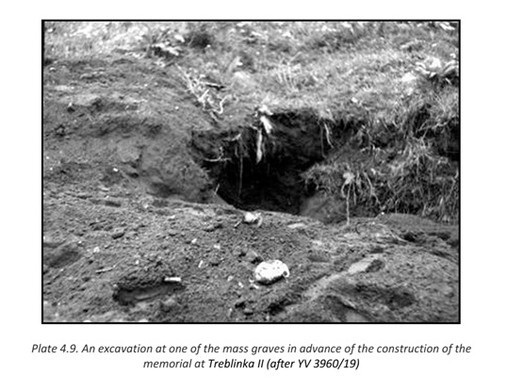
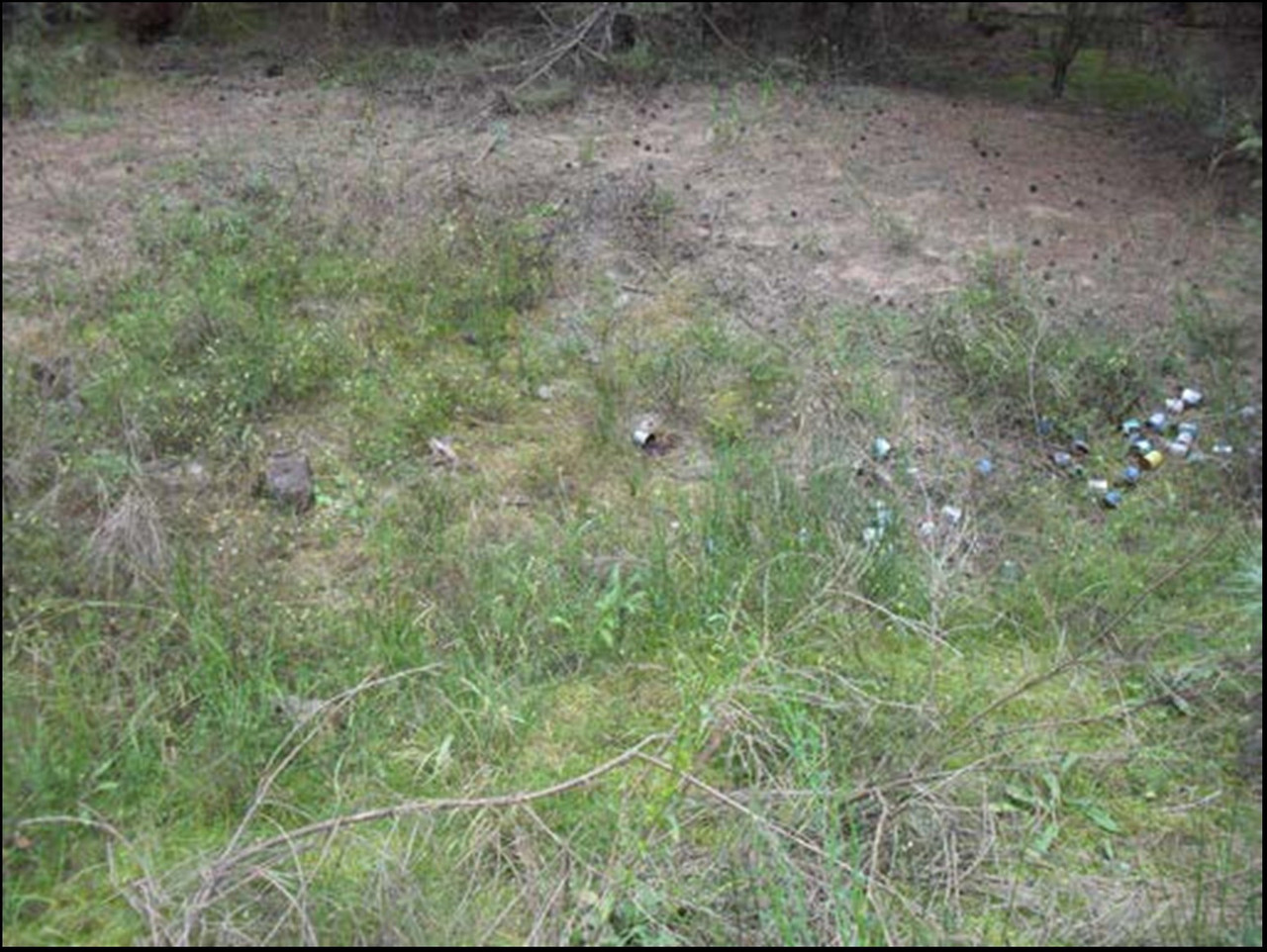
“HUGE MASS GRAVES” are easily identifiable physical entities.

I refuse to believe in the existence of any physical entity that I am not allowed to see.

If you want me to believe, then simply: Show me that which you allege I deny.
If the physical evidence for a claim that - HAS TO EXIST - in order for the claim to be true - DOES NOT EXIST - then that claim is false.
K
Keen
Posts: 1361
Joined: Mon Apr 28, 2025 1:27 pm

Re: Historians v revisionists, methodology.

Post by Keen »

Nessie wrote: Wed Apr 15, 2026 11:49 am When witnesses claim things that cannot be right, that does not prove they lied, as it is likely to be a failure of memory, recall and estimation.
Image
Image

Image

Image

Image
Treblinka II "huge mass grave" #F16

Image
If the physical evidence for a claim that - HAS TO EXIST - in order for the claim to be true - DOES NOT EXIST - then that claim is false.
User avatar
Archie
Site Admin
Posts: 1616
Joined: Thu Sep 12, 2024 6:54 am

Re: Historians v revisionists, methodology.

Post by Archie »

Nessie wrote: Wed Apr 15, 2026 11:49 am You should read this article by Prof Zimmerman, as it explains how witnesses are assessed;
"Professor Zimmerman" is/was a professor in the accounting department at UNLV. He is a (presumably Jewish) non-historian who used to defend the Holocaust as a hobby. Quoting articles from the wayback machine by a non-historian anti-HD activist is hardly reflective of the broader Holocaust historiography.

This is the thesis you have been trying to argue:
  • that historians (along with journalists, lawyers and others) have, from the beginning, carefully analyzed all available evidence, testimonial and otherwise, in a critical and objective manner, and that accordingly the core Holocaust claims developed as a result of careful, painstaking investigation using only the most rigorous professional methods.
  • that revisionists use methods that are aberrant and illegitimate and which are not used outside of revisionism
  • that revisionists do not use established methods used by "real historians" and other professionals
In addition to these you have made numerous ancillary such as your laughable claim that H historians routinely make use of "witness studies" (generally untrue) and that revisionists don't (also untrue).

I pointed out to you that you might try READING some of the H literature BEFORE telling us what the H historians have and haven't done. You got upset, but I think this is reason. And I'm not trying to gatekeep here. If you've read one orthodox book and one revisionist book and are prepared to discuss them intelligently, then maybe you would be worth talking to. But as is, this is just you making one sweeping generalization after another with zero support.

An offhand quote from Dawidowicz acknowledging merely that survivor stories are often not reliable (which you are of course getting secondhand) does not establish that H historians have been sufficiently critical in their use of testimony.
Incredulity Enthusiast
User avatar
Archie
Site Admin
Posts: 1616
Joined: Thu Sep 12, 2024 6:54 am

Re: Historians v revisionists, methodology.

Post by Archie »

Since Nessie has brought up Gerstein as an example of exemplary critical method by the orthodoxy, I think it's worth talking through that example.

The Gerstein statement (PS-1553) was introduced at the IMT but was not featured prominently. It got more attention at NMT Case I. Nessie, in your opinion, how would characterize the use of Gerstein at these trials? Careful and rigorous? Sloppy?
Incredulity Enthusiast
User avatar
Nessie
Posts: 3881
Joined: Sat Sep 28, 2024 7:41 am

Re: Historians v revisionists, methodology.

Post by Nessie »

Archie wrote: Wed Apr 15, 2026 1:50 pm
Nessie wrote: Wed Apr 15, 2026 11:49 am You should read this article by Prof Zimmerman, as it explains how witnesses are assessed;
"Professor Zimmerman" is/was a professor in the accounting department at UNLV. He is a (presumably Jewish) non-historian who used to defend the Holocaust as a hobby. Quoting articles from the wayback machine by a non-historian anti-HD activist is hardly reflective of the broader Holocaust historiography.
Quotes have also been provided showing that Browning and Dawidowicz use the same methodology.
This is the thesis you have been trying to argue:
[*]that historians (along with journalists, lawyers and others) have, from the beginning, carefully analyzed all available evidence, testimonial and otherwise, in a critical and objective manner, and that accordingly the core Holocaust claims developed as a result of careful, painstaking investigation using only the most rigorous professional methods.
The Holocaust has been investigated in the same way all historical events and crimes have been investigated. You have missed out the crucial evidence gathering part of that work. As for critical and objective, when 100% of the eyewitnesses who worked inside the Kremas state they were used for gassings and there is evidence to corroborate them, the investigation is very much evidence led to its conclusion. There is not much need for analysis to determine what the evidence means when, for example, Topf & Sons engineers describe building gas chambers to gas people and they are corroborated by camp documents and everyone who worked inside the buildings. Any attempt to insert analysis by claiming that something else happened, is the deceptive manipulation of that evidence.
[*]that revisionists use methods that are aberrant and illegitimate and which are not used outside of revisionism
[*]that revisionists do not use established methods used by "real historians" and other professionals
Correct. You try to argue gassings did not happen, rather than evidence they did not happen. I do not think you know how to go about evidencing there were no gas chambers.
In addition to these you have made numerous ancillary such as your laughable claim that H historians routinely make use of "witness studies" (generally untrue) and that revisionists don't (also untrue).
It is true to say that historians, as Zimmerman and Dawidowicz explain, do not expect witnesses to be accurate and to make mistakes with their recollections, which is what the studies I have linked to also say.
I pointed out to you that you might try READING some of the H literature BEFORE telling us what the H historians have and haven't done. You got upset, but I think this is reason. And I'm not trying to gatekeep here. If you've read one orthodox book and one revisionist book and are prepared to discuss them intelligently, then maybe you would be worth talking to. But as is, this is just you making one sweeping generalization after another with zero support.
I have just provided you with three examples of historians who understand that witnesses are not always reliable, but that does not mean they lied. I have read enough Holocaust literature to know that the historians who have written it, base their conclusions on the evidence that has been gathered over the decades, they are evidence led and their assessment of the witnesses is primary based on corroboration.
An offhand quote from Dawidowicz acknowledging merely that survivor stories are often not reliable (which you are of course getting secondhand) does not establish that H historians have been sufficiently critical in their use of testimony.
You have read Zimmerman's analysis of Hoess and the other example he provides with Nyiszli, and why he concludes they are both not lying about gas chambers. He makes the same arguments as I have done, about corroborated and that it is to be expected witnesses will make mistakes when they recollect what took place.

How about you provide your analysis? Prove Hoess and Nyiszly lied and there were no gas chambers and explain your methodology.
Sanity Check - "Thus, currently revisionists can console themselves by affirming their incredulity..."
User avatar
Nessie
Posts: 3881
Joined: Sat Sep 28, 2024 7:41 am

Re: Historians v revisionists, methodology.

Post by Nessie »

Archie wrote: Wed Apr 15, 2026 2:12 pm Since Nessie has brought up Gerstein as an example of exemplary critical method by the orthodoxy, I think it's worth talking through that example.

The Gerstein statement (PS-1553) was introduced at the IMT but was not featured prominently. It got more attention at NMT Case I. Nessie, in your opinion, how would characterize the use of Gerstein at these trials? Careful and rigorous? Sloppy?
From this trial transcript;

https://avalon.law.yale.edu/imt/01-30-46.asp

"As far as the brutal extermination by gas Is concerned, we have the invoices for poison gas, intended for Oranienburg and Auschwitz, which we submit to the Tribunal under Exhibit Number RF-350. The Tribunal will find translations on Page 27 of the second document book, Document Number 1553-PS."

"To Document 1553-PS is added the statement by Gerstein, and also the statement by the chief of the American service who collected this document."

So, that document is not a statement by Gerstein. As for how the court deals with the document,

"...in the case of the original exhibit, 1553-PS, it was certified, we imagine, by an officer of the United States. These documents which you have now drawn our attention to are not so certified by anyone as far as we have been able to see. Certainly we cannot take judicial notice of these documents, which are private documents; and therefore, unless they are read in Court, they cannot be put in evidence."

The court will not accept it as evidence until it has been verified. Or, are you referring to a different document?
Sanity Check - "Thus, currently revisionists can console themselves by affirming their incredulity..."
Post Reply