very plausible,
I will look into it in a few days
may catch me on X in the next few days
Majdanek this and that
- Fred Ziffel
- Posts: 332
- Joined: Sun Dec 01, 2024 11:02 am
Re: Majdanek this and that
I do not believe anything one is not allowed to question
- Fred Ziffel
- Posts: 332
- Joined: Sun Dec 01, 2024 11:02 am
Re: Majdanek this and that
another video out from Majdanek Museum
not sure it will be super interesting to you all but any time this museum representee posts, I sit up and listen
Link:
not sure it will be super interesting to you all but any time this museum representee posts, I sit up and listen
Link:
I do not believe anything one is not allowed to question
- Fred Ziffel
- Posts: 332
- Joined: Sun Dec 01, 2024 11:02 am
Re: Majdanek this and that
I tried to send a PM but failed
Wetzelrad, were you kicked off X?
I wanted to send you something
Wetzelrad, were you kicked off X?
I wanted to send you something
I do not believe anything one is not allowed to question
Re: Majdanek this and that
I am back on X.
I want to raise a hypothesis about the Majdanek bunker's pipe system. It remains an enigma, owing in large part to the lack of documentation and the totally unnecessary design of it. What was the perforated pipe actually for? I remain unpersuaded by any one explanation.
One possibility that occurs to me is that it was a heating pipe. We know the bunker was originally planned to have a central furnace (described in the cost estimates as a "disinfestation furnace" or "gas furnace", p.134) installed on its north exterior wall, but this was not actually built. In that same plan, there was no cell 14 on its south side, but that is what was built. From this it follows that the most likely purpose for cell 14 was to hold that furnace -- not gas bottles.
It is also true that a Klein air heater (p.131) was installed on the west wall, but since there is no photograph or document that demonstrates this object's presence until after liberation, it seems entirely possible that it was not part of the original build. I submit that the bunker was originally built to be heated from a central furnace in cell 14, with the western furnace being a later addition after a change of plans.
I am not an engineer, so perhaps there are physical reasons that this does not make sense. To my thinking, the long perforated pipes would not make sense for releasing gas, but perforated ducts are sometimes used in heating, so their use seems plausible here. If these pipes are simply too narrow to send hot air through under any circumstances, then I would posit that it was exactly this major design flaw that led to the installation of an alternative furnace system.
The closest comparable facility to the Majdanek bunker is Stutthof's delousing building. This included an exterior brick stove which blew hot air into a pipe which ran along the inside wall of the chamber. The bricks covering this pipe were perforated. See Concentration Camp Stutthof for details, especially the photo section. This particular design quirk is so similar that I am inclined to believe its purpose was exactly the same in both facilities.
I want to raise a hypothesis about the Majdanek bunker's pipe system. It remains an enigma, owing in large part to the lack of documentation and the totally unnecessary design of it. What was the perforated pipe actually for? I remain unpersuaded by any one explanation.
One possibility that occurs to me is that it was a heating pipe. We know the bunker was originally planned to have a central furnace (described in the cost estimates as a "disinfestation furnace" or "gas furnace", p.134) installed on its north exterior wall, but this was not actually built. In that same plan, there was no cell 14 on its south side, but that is what was built. From this it follows that the most likely purpose for cell 14 was to hold that furnace -- not gas bottles.
It is also true that a Klein air heater (p.131) was installed on the west wall, but since there is no photograph or document that demonstrates this object's presence until after liberation, it seems entirely possible that it was not part of the original build. I submit that the bunker was originally built to be heated from a central furnace in cell 14, with the western furnace being a later addition after a change of plans.
I am not an engineer, so perhaps there are physical reasons that this does not make sense. To my thinking, the long perforated pipes would not make sense for releasing gas, but perforated ducts are sometimes used in heating, so their use seems plausible here. If these pipes are simply too narrow to send hot air through under any circumstances, then I would posit that it was exactly this major design flaw that led to the installation of an alternative furnace system.
The closest comparable facility to the Majdanek bunker is Stutthof's delousing building. This included an exterior brick stove which blew hot air into a pipe which ran along the inside wall of the chamber. The bricks covering this pipe were perforated. See Concentration Camp Stutthof for details, especially the photo section. This particular design quirk is so similar that I am inclined to believe its purpose was exactly the same in both facilities.
- Fred Ziffel
- Posts: 332
- Joined: Sun Dec 01, 2024 11:02 am
Re: Majdanek this and that
see attached
- Attachments
-
- tqererty.JPG (111.36 KiB) Viewed 5572 times
-
- attachments to maj tanks in 14.JPG (29.58 KiB) Viewed 5572 times
-
- pipes in oven.JPG (73.19 KiB) Viewed 5572 times
I do not believe anything one is not allowed to question
- Fred Ziffel
- Posts: 332
- Joined: Sun Dec 01, 2024 11:02 am
Re: Majdanek this and that
I still say if the soviets back then were smart, they would have done something like this to sell the gas chamber Holobunga
Since the tanks are extreme high pressure, this would work and supposedly fake out inmates to be gassed
Since the tanks are extreme high pressure, this would work and supposedly fake out inmates to be gassed
- Attachments
-
- saqegergeqrg4.JPG (63.65 KiB) Viewed 5571 times
I do not believe anything one is not allowed to question
Re: Majdanek this and that
I definitely am not suggesting water circulation through the pipes. One way, air only.
Perhaps it's too impractical to send air through such a narrow pipe. Perhaps it would require a fan. We know there was an electric outlet on this wall (p.178), so whatever was installed there had power. Also bear in mind the original plan was for this one heater to heat all four chambers, presumably through four pipes.
I'm not sure about exhaust. The ceiling in cell 14 now is all new, isn't it? And as far as I can tell the room never had a door, so it was always exposed to fresh air.
I admit I overlooked the copper fittings. It's true that they look designed for a rubber pipe attachment, which would be totally extraneous for a stationary heating system. Those fittings, taken alone, make the most sense as part of an exchangeable gas tank system. Although I find it strange they are different sizes.
Perhaps it's too impractical to send air through such a narrow pipe. Perhaps it would require a fan. We know there was an electric outlet on this wall (p.178), so whatever was installed there had power. Also bear in mind the original plan was for this one heater to heat all four chambers, presumably through four pipes.
I'm not sure about exhaust. The ceiling in cell 14 now is all new, isn't it? And as far as I can tell the room never had a door, so it was always exposed to fresh air.
I admit I overlooked the copper fittings. It's true that they look designed for a rubber pipe attachment, which would be totally extraneous for a stationary heating system. Those fittings, taken alone, make the most sense as part of an exchangeable gas tank system. Although I find it strange they are different sizes.
Re: Majdanek this and that
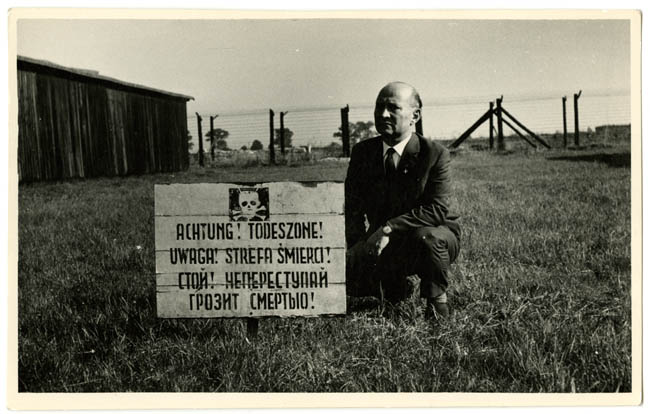
I came across a rare photo of what I think is one of the gates into the canopy bunker area. Its orientation is not clear to me, but the canopy and gate are recognizable. https://photo.rgakfd.ru/photo/1230186
Posing in it are two Jewish propagandists: Boris Yefimov and Vasily Grossman.
The most notable feature is the sign on the gate forbidding entry with a skull and crossbones. This would be a sensible sign to put outside of a fumigation gas chamber. It has no place outside of a homicidal gas chamber, where the victims were supposed to be fooled into entering.
Posing in it are two Jewish propagandists: Boris Yefimov and Vasily Grossman.
The most notable feature is the sign on the gate forbidding entry with a skull and crossbones. This would be a sensible sign to put outside of a fumigation gas chamber. It has no place outside of a homicidal gas chamber, where the victims were supposed to be fooled into entering.
Re: Majdanek this and that
Kind of the Germans to post that clear warning sign on the entrance gate to the supposed extermination area...Wetzelrad wrote: ↑Sun Jul 12, 2026 5:08 pm I came across a rare photo of what I think is one of the gates into the canopy bunker area. Its orientation is not clear to me, but the canopy and gate are recognizable. https://photo.rgakfd.ru/photo/1230186
Posing in it are two Jewish propagandists: Boris Yefimov and Vasily Grossman.
The most notable feature is the sign on the gate forbidding entry with a skull and crossbones. This would be a sensible sign to put outside of a fumigation gas chamber. It has no place outside of a homicidal gas chamber, where the victims were supposed to be fooled into entering.
If I were to guess why no t4 personnel were chosen to perform gassing that had experience with gassing, it would be because THERE WERE NONE.
-
Eye of Zyclone

- Posts: 569
- Joined: Fri Apr 04, 2025 3:12 pm
Re: Majdanek this and that
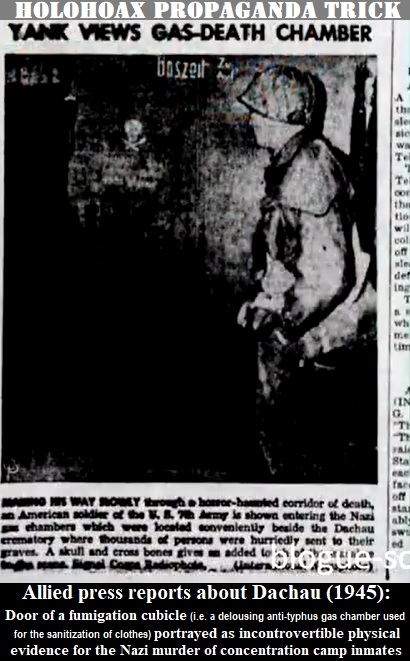
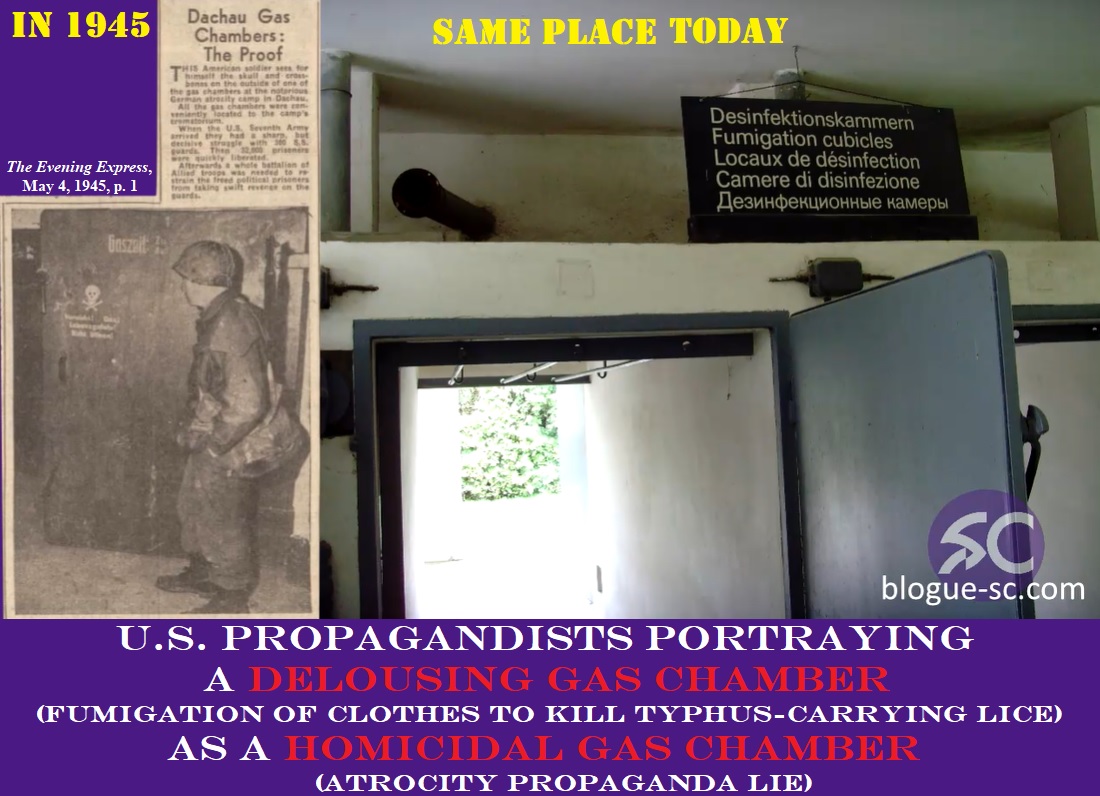
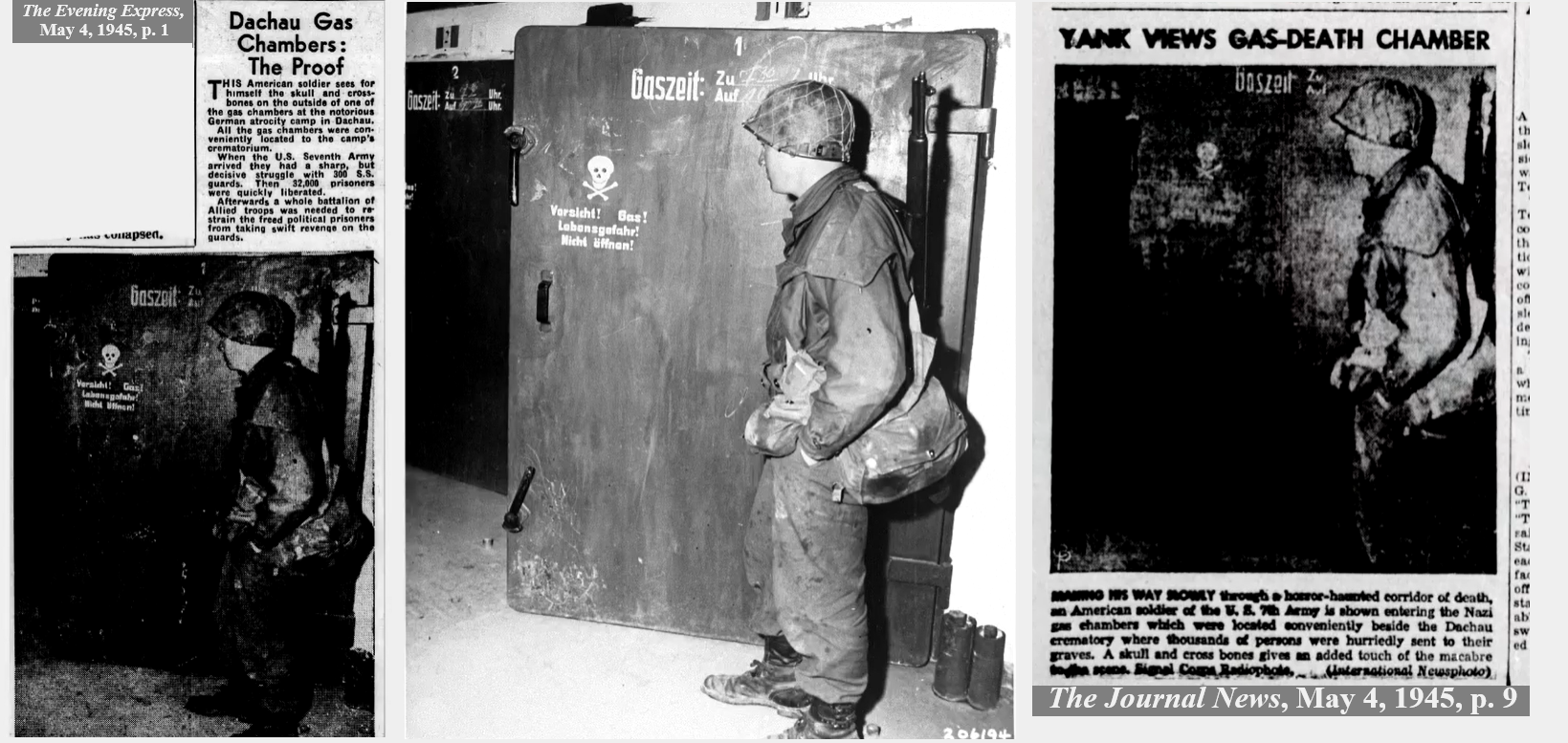
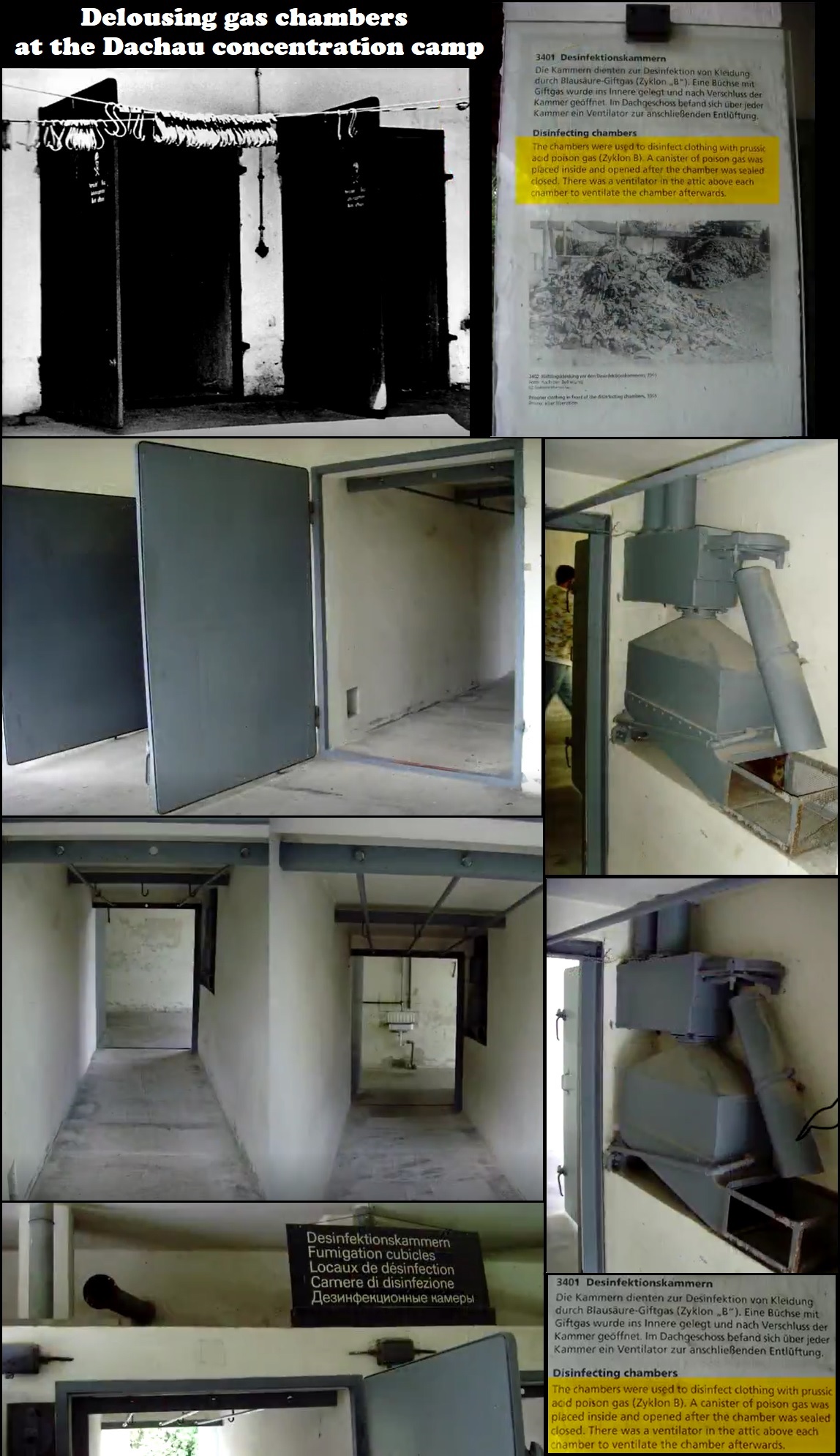
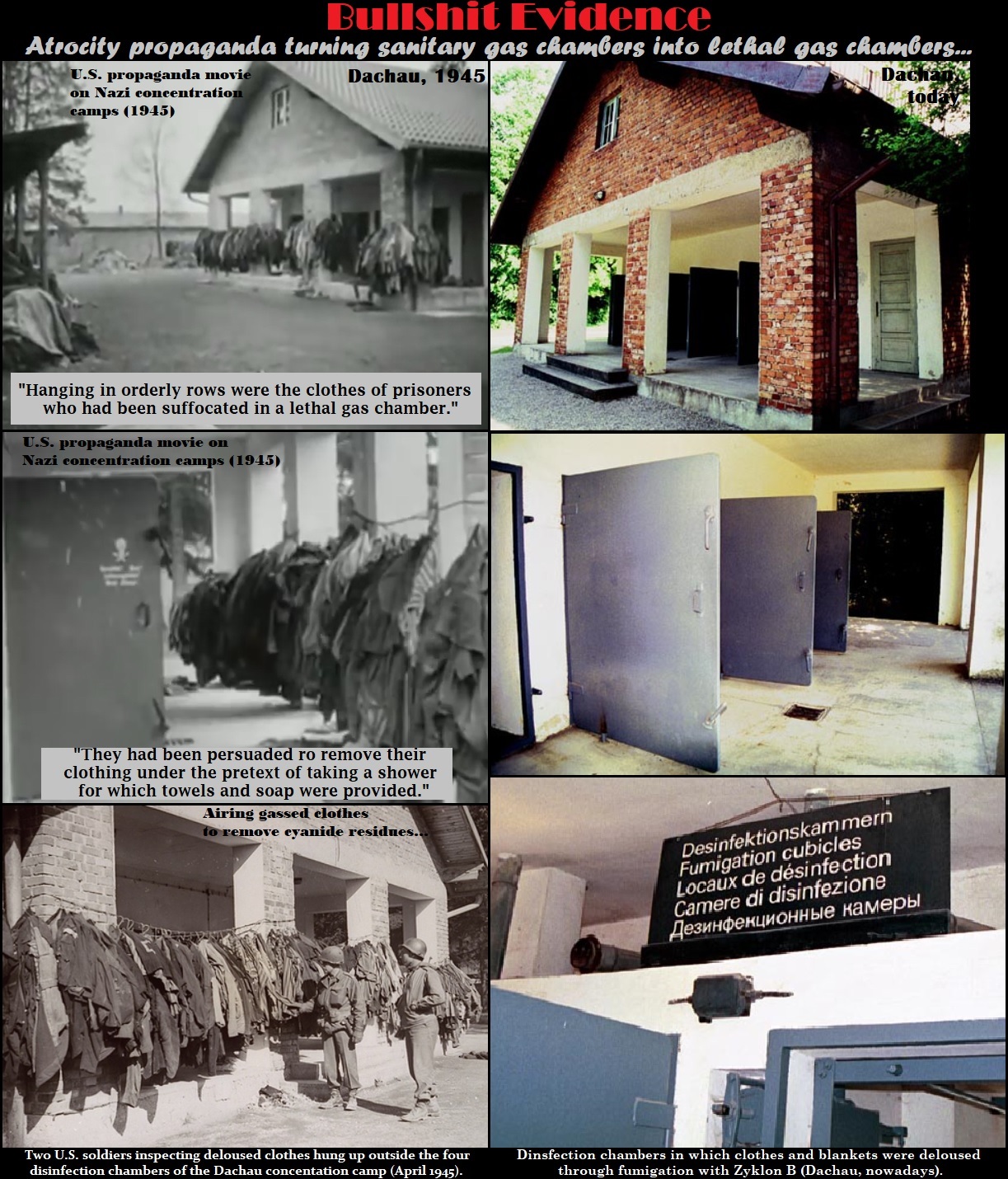
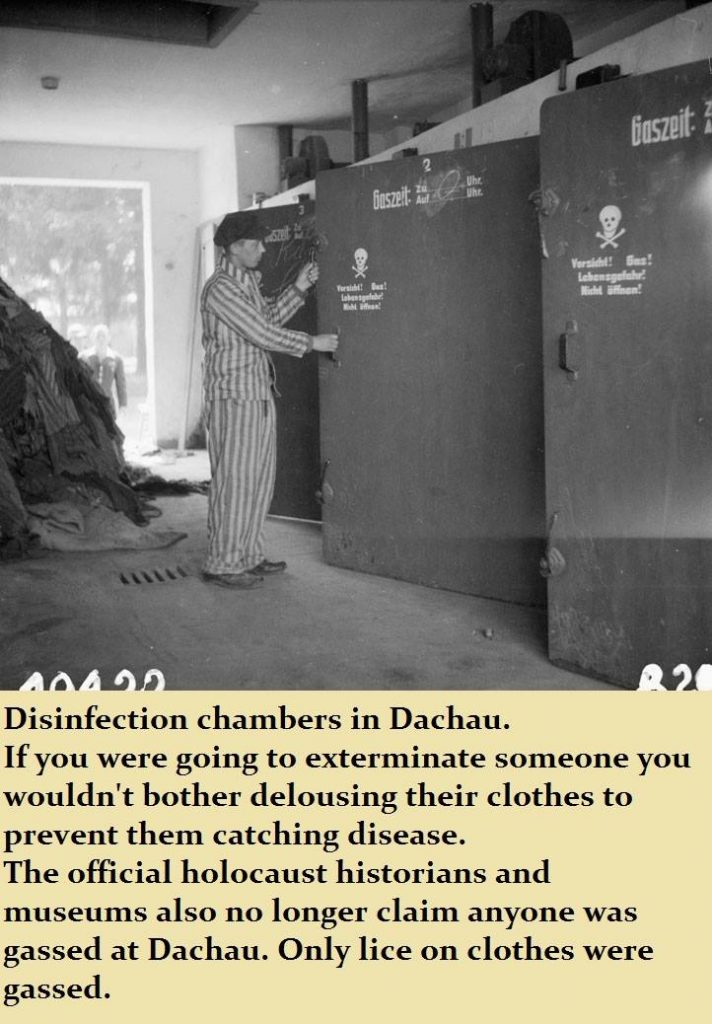
Clearly a Judeo-Bolshevik version of the trick that was used by American psychological warfare agents at Dachau in May 1945...Wetzelrad wrote: ↑Sun Jul 12, 2026 5:08 pm I came across a rare photo of what I think is one of the gates into the canopy bunker area. Its orientation is not clear to me, but the canopy and gate are recognizable. https://photo.rgakfd.ru/photo/1230186
Posing in it are two Jewish propagandists: Boris Yefimov and Vasily Grossman.
The most notable feature is the sign on the gate forbidding entry with a skull and crossbones. This would be a sensible sign to put outside of a fumigation gas chamber. It has no place outside of a homicidal gas chamber, where the victims were supposed to be fooled into entering.


"Holocaust deniers are very slick people. They justify everything they say with facts and figures."
- Fred Ziffel
- Posts: 332
- Joined: Sun Dec 01, 2024 11:02 am
Re: Majdanek this and that
Wetzelrad
I am sincerely impressed by your ability to find these type of photos
I am speculating after looking at the varied characteristics in the photo that the sign is located as shown by the red circle in the attachment.
I am sincerely impressed by your ability to find these type of photos
I am speculating after looking at the varied characteristics in the photo that the sign is located as shown by the red circle in the attachment.
- Attachments
-
- tetjyhhjkjjj.JPG (50.77 KiB) Viewed 5424 times
I do not believe anything one is not allowed to question
- Fred Ziffel
- Posts: 332
- Joined: Sun Dec 01, 2024 11:02 am
Re: Majdanek this and that
Why not use the room heater that was there near north door?
I do not believe anything one is not allowed to question
Re: Majdanek this and that
This was my first thought, but the background doesn't fit. The background includes a silhouette of large buildings on the left and a door on the right. That doesn't match any configuration looking north, east, or west. If looking south (really southwest), I think the silhouette could be B42 and mostly the roof of B43.Fred Ziffel wrote: ↑Mon Jul 13, 2026 7:52 am I am speculating after looking at the varied characteristics in the photo that the sign is located as shown by the red circle in the attachment.
I made my own drawing which is slightly more accurate than the Soviet drawing.
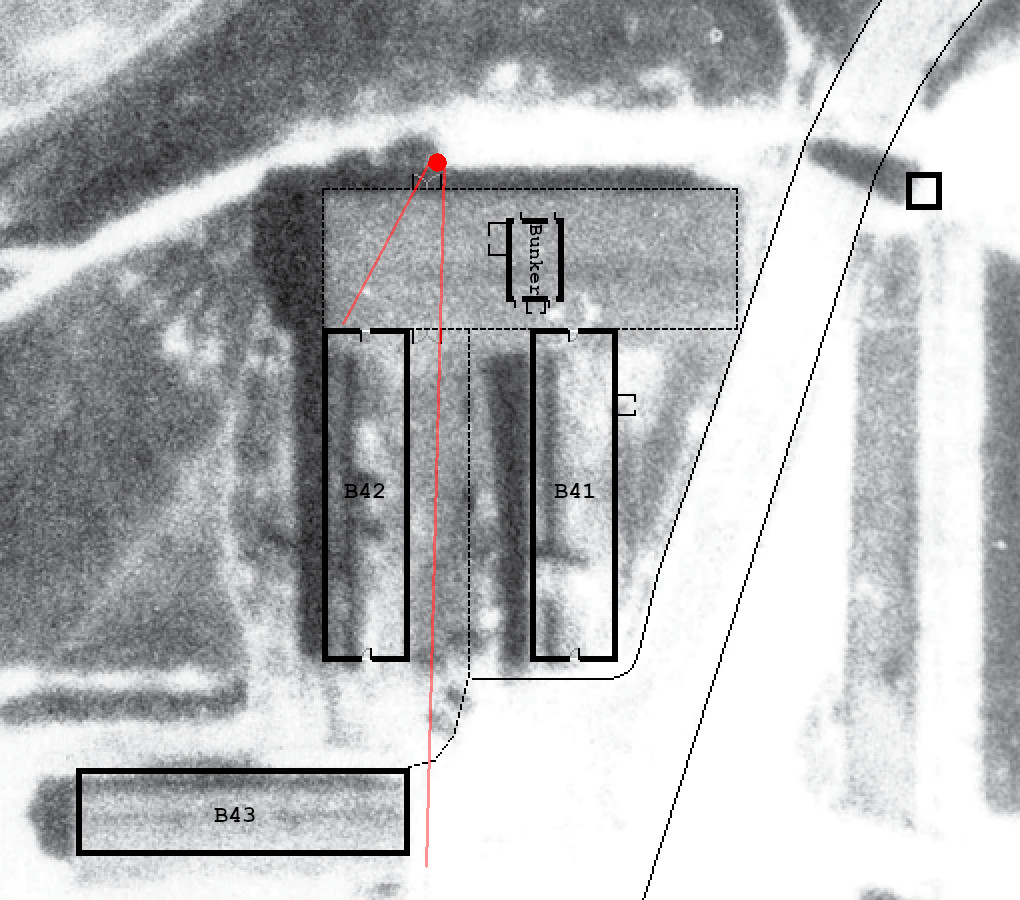
I drew in the cone of vision in a way that appears to conform well with the photo. Still, with the lack of detail I'm not 100% sure on this identification. Possibly this could be a canopy-style roof elsewhere in the camp, like maybe at a gatehouse. The lighting conditions also deserve some consideration.
I have some further thoughts about the sign. Firstly, the sign could be a generic design, that is, non-specific to the bathhouse area. If you look close, you will see that the sign is attached to a short signpost, of a kind meant to go in dirt. This means the sign could have been easily removed and placed here by the Soviets. Alternatively, it could have been, along with other signs, mass-produced in whole or in part and put here by the Germans.
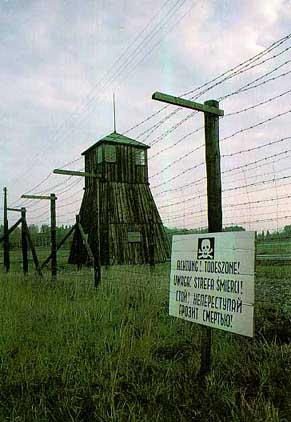
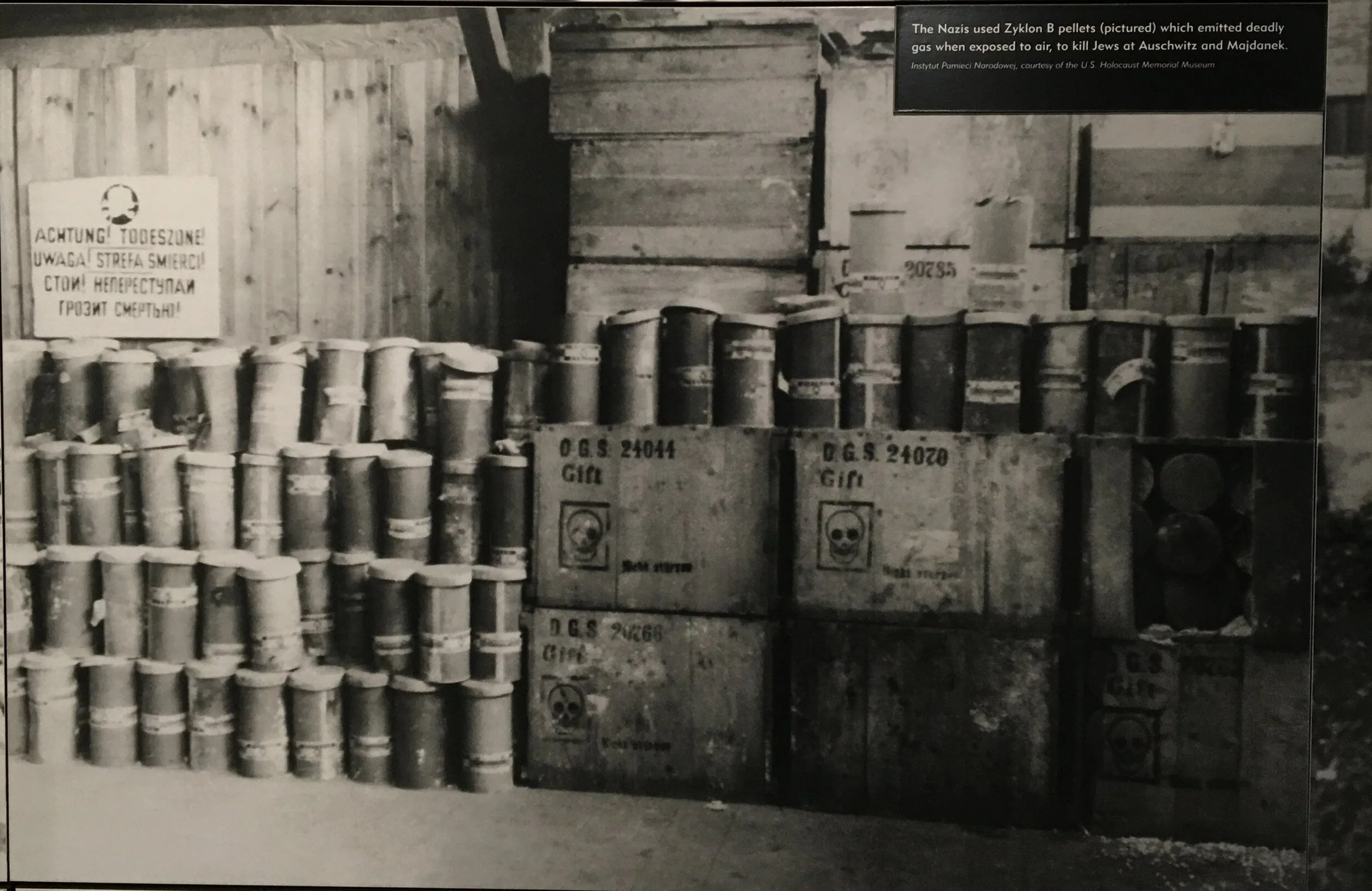
For comparison, here are photos I have come across of signs with skull and crossbones on fences at Majdanek.
https://d3k74ww17vqc8e.cloudfront.net/a ... _9_da1.jpg
https://furtherglory.com/Poland/Majdanek/Majdanek07.jpg
https://images.squarespace-cdn.com/cont ... +Image.jpg
https://api.majdanek.eu/uploads/thumbs/ ... 506743.jpg
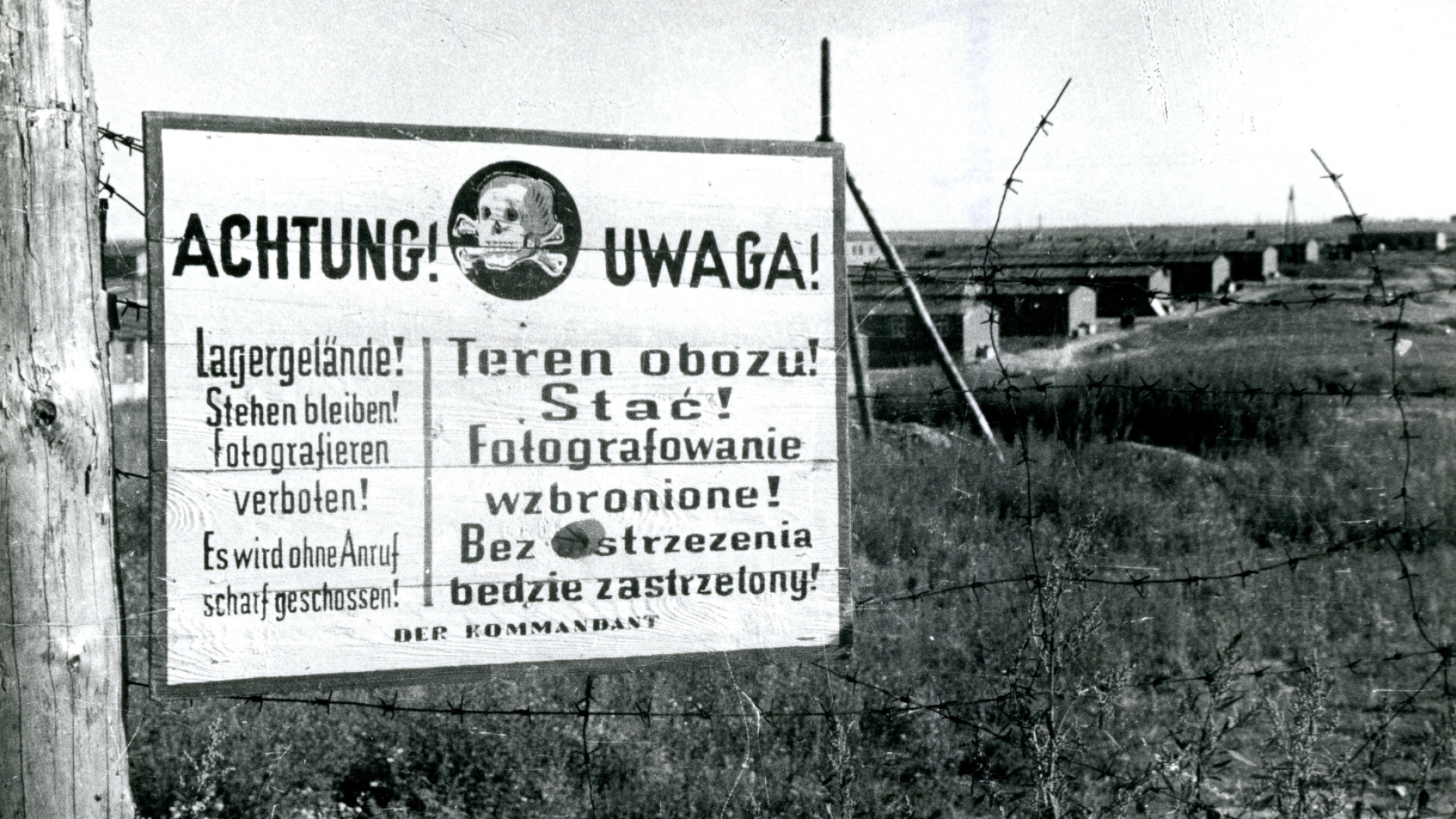
None are identical to the sign we are looking at. None of them share its text. The fourth one is at least stylistically similar.
The text of the sign is: "Das Überschreiten der Splittergräben ist verboten!"
In English: "Crossing the splinter trench is prohibited!"
The word "Splittergraben" was common in both world wars to refer to makeshift air shelters. Its literal translation is "splinter trench", meaning a dugout that protects occupants from shrapnel. I'm not sure how to interpret it in the context of Majdanek. To my knowledge, the only subterranean structures there were the shooting range and a drainage ditch.
If "Splittergraben" referred to the bunker and canopy, then it tells us that place became an air raid shelter. If so, it would support Fritz Berg's theory about air shelter doors (see images here). But this seems unlikely to me. I'm not aware of any documents or witnesses that refer to this area as an air shelter, and it doesn't make much sense to restrict "crossing" an air shelter in this context.
Is it possible that this was a generic sign to restrict crossing double barbed-wire fences, the gap between which is sometimes called a "trench"? I can't rule it out, but it seems like stretching the language too far.
A third possibility is that this sign was taken from an actual splinter trench, even though I can find no documentation to support it. We know that Splittergraben were built at Auschwitz (see The Making of the Auschwitz Myth, pp.110,112) and Treblinka (museum book, pp.144-145).
I leave it to the reader to make sense of the sign. Perhaps someone else can offer a theory or shed some light.
Again I have to point out that if the gassing story was true, signs in this location should have said something inviting like "this way to the bath".
Re: Majdanek this and that
I could generate a long list of reasons to doubt that the Majdanek bunker was ever used as an air raid shelter. However, the plain reading of the sign in the photo is exactly that, so that is how I will present the photo in debates going forward unless someone here can build a compelling counternarrative. Open to argument.
I've now read through some of Samuel Crowell's arguments on this theory, particularly page 131 of his book. His strongest point is the one about the doors. The doors on the bunker today are stamped "Auert", the name of the Berlin firm that manufactured them. These doors are known to have been ordered from Auert on or around September 26, 1942, the date of a letter that mentions them.
And what was Auert? It was a company that strictly made doors and shutters for air raid shelters. Crowell reproduces one of its ads on page 270. Translated to English, it reads:
As further support, the bunker's doors are a near-perfect visual match for other air raid shelter doors sold at that time, like the Repal firm's advertised door.
Searching the web, I also found another Auert door available for purchase from an antique store for the last few years. In many regards it closely matches the door to chamber A/III, even down to the hexagonal viewport piece and the position of the interior door handle.
So it cannot be denied that the bunker's "gas chamber" doors were produced and sold as air raid shelter doors. And yet I can't find any place the Majdanek Museum has ever acknowledged this fact. Nor do any of the historians have anything to say about this. It's only Crowell. If Crowell was still with us, I imagine he would be very be pleased to hear about this photo.
I've now read through some of Samuel Crowell's arguments on this theory, particularly page 131 of his book. His strongest point is the one about the doors. The doors on the bunker today are stamped "Auert", the name of the Berlin firm that manufactured them. These doors are known to have been ordered from Auert on or around September 26, 1942, the date of a letter that mentions them.
And what was Auert? It was a company that strictly made doors and shutters for air raid shelters. Crowell reproduces one of its ads on page 270. Translated to English, it reads:
It even uses the word "splittersichere", meaning splinter-proof.AUERT BERLIN
AIR-RAID SHELTER DOORS
In steel and steel-saving designs
Splinter-proof and fire-resistant closures
Authorized (under § 8 of the Air Raid Protection Act).
Berlin-Weißensee
Switchboard number: 564136
Air-raid shelter - doors and shutters
(under § 8 of the Air Raid Protection Act) under DIN 4104
As further support, the bunker's doors are a near-perfect visual match for other air raid shelter doors sold at that time, like the Repal firm's advertised door.
Searching the web, I also found another Auert door available for purchase from an antique store for the last few years. In many regards it closely matches the door to chamber A/III, even down to the hexagonal viewport piece and the position of the interior door handle.
So it cannot be denied that the bunker's "gas chamber" doors were produced and sold as air raid shelter doors. And yet I can't find any place the Majdanek Museum has ever acknowledged this fact. Nor do any of the historians have anything to say about this. It's only Crowell. If Crowell was still with us, I imagine he would be very be pleased to hear about this photo.
- Fred Ziffel
- Posts: 332
- Joined: Sun Dec 01, 2024 11:02 am
Re: Majdanek this and that
I sent the sign to my German friend to translate for me and this is what she wrote:
"Crossing the slit trenches is forbidden"
she went on to say:
''apparently, those are narrow trenches dug into the ground''
then I wonder if these are the narrow trenches:
see left of the bunker
Skull and bones to warn about Zy-B gas use? I assume?
Inmates Coming into the fenced in area are told via the sign to not cross an area trench (in other words stay away from the building) due to poisonous danger in the building, then the Germans tell the inmates to go into the same building to take a shower?
Things that make you go hmmm?
Well, Stubble has a strong argument
"Crossing the slit trenches is forbidden"
she went on to say:
''apparently, those are narrow trenches dug into the ground''
then I wonder if these are the narrow trenches:
see left of the bunker
Skull and bones to warn about Zy-B gas use? I assume?
Inmates Coming into the fenced in area are told via the sign to not cross an area trench (in other words stay away from the building) due to poisonous danger in the building, then the Germans tell the inmates to go into the same building to take a shower?
Things that make you go hmmm?
Well, Stubble has a strong argument
- Attachments
-
- B12 then and now.JPG (117.04 KiB) Viewed 5158 times
I do not believe anything one is not allowed to question