Kula's first statement, his deposition made prior to the trial against the former Auschwitz commandant Rudolf Höss
“For the Birkenau crematoria, we manufactured iron frames for all cremation furnaces as well as all the grates, elevators for bringing the corpses up, the fittings for all the doors, hooks, pokers and the tools required to operate the furnaces and the corpse incineration in the pits. The fitters installed the plumbing and drainage system for these crematoria. The scope of this work is written down in the order book of the metalworking shop, to which I had access.
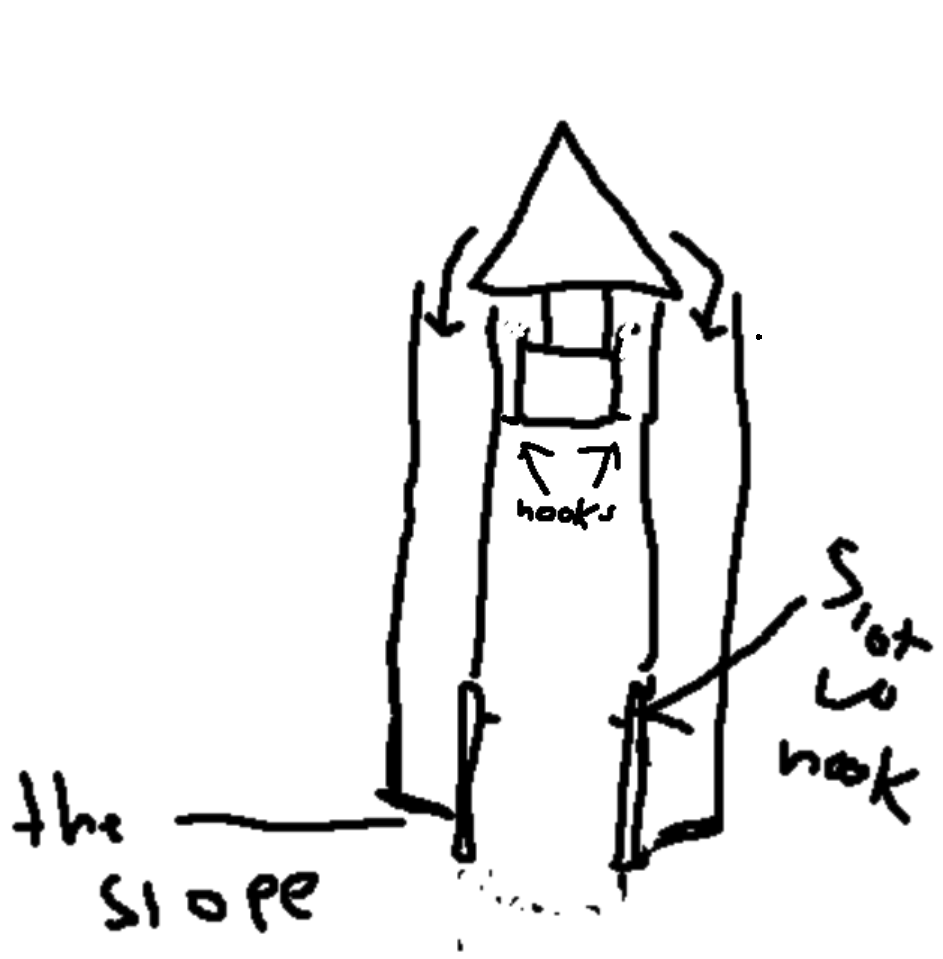
Among other things, the fake showers intended for the gas chambers and the wire-mesh columns to pour the contents of the Zyklon cans into the gas chambers were manufactured in the metal workshop. This column was about 3 meters high, with a square section of about 70 cm (wide). This column was composed of three mesh works inserted one inside the other. The outer screen was made from wire three millimeters thick, fastened to angle irons of 50 by 10 millimeters. Such corner posts were on each corner of the column and were connected at the top and the bottom by an angle iron of the same type.
The openings of the wire mesh were 45 millimeters in square. The second screen was made in the same manner, and constructed within the first column (screen) at a distance of 150 millimeters from the first. The openings of this wire mesh were some 25 millimeters in square. In the corners these screens were connected to each other by iron struts. The third part of this column could be moved. It was an empty column of thin galvanized sheet metal with a square cross-section of about 150 mm, which ended in the upper part with a cone and below with a flat square base. At a distance of some 25 millimeters, thin sheet metal corners were soldered to the corners of this column supported by sheet metal brackets. On these corners was mounted a thin mesh with openings of about one millimeter in square. This mesh ended at the bottom of the cone, and from there, extending the meshwork, ran a sheet-metal casing for the entire height up to the top of the cone.
The content of a Zyklon can was poured from above in (on) the distributor cone, which allowed for an equal distribution of the Zyklon to all four sides of the column. After the evaporation of the gas, the entire central column was extracted and the evaporated (depleted) silica (carrier) removed.”
Records of the Höss Trial, Volume 2, pp. 99f
==
Kula’s testimony given during the Höss Trial itself, he testified on the 5th day of that trial,
Comments welcome but i feel this should be self explanatory and evident.“On Höss’s order, the gassing columns that were used for the gassing were made by the metalworking shop. The columns were 2 meters and a half high, the inner space 150 square mm in diameter, the following layer at a distance of 30 mm, the third 15 mm away. The wire mesh used was like those used for windows, green in color; between the mire mesh and the sheet metal there was a distance of 15 mm. All this was about 1 meter and a half tall. At the mouth of this network was a so-called distribution cone. 7 pieces of these columns were made. The columns were installed in the gas chamber right next to the opening through which the can of gas was thrown in. This column was installed beneath this opening, the gas was poured directly onto the distribution cone. The cone was to uniformly distribute the gas into these four slots of 15 mm between the sheet metal and the netting, since that increased the gas-evaporation surface. That way the victims could be killed more rapidly.
(Question:) What did such a gas chamber look like?
In one crematorium, it was calculated for 2,500 men, in the other, smaller one (gas chamber) in the same crematorium for 1,500. The workers of the metalworking shop, inmates, had built this chamber. The chamber was higher than 2 meters, at the top were closed rectangular channels; these were the air-extraction openings through which fans expelled the gas. Zyklon is lighter than air; hence it dissipates quickly after the gassing. Makeshift (fake) showers were made so that the whole thing looked like a bath. Lamps were lit, the concrete floor was always wet. After a homicidal gassing, inmates of the Sonderkommando cleaned the concrete (floor). These were Jewish inmates who were assigned to doing that work. Every three months, the Sonderkommando was exterminated, gassed, yet not at Auschwitz, but somewhere in the vicinity of Gleiwitz instead. The leader of this unit was Hauptscharführer Moll"
Höss Trial, Vol. 25, p. 498