
A common talking point among anti-revisionists is to say that large hoaxes and mass delusions are essentially impossible. I've always felt like this was a lousy argument since humans strike me as being highly vulnerable to this, especially in group contexts where pressure to conform is often strong. This thread is to be a repository of examples that illustrate various aspects of how false beliefs take hold, especially among prestigious institutions, and how these falsehoods (sometimes) get reluctantly corrected.
ETA: I think the best examples will be ones where the matter has been conceded by most people. Examples that remain controversial and are still disputed can also be instructive but it's more effective and easier to cite examples when the essential facts are agreed upon.
"So, how does this hoax work, anyway?"
Online
"So, how does this hoax work, anyway?"
Incredulity Enthusiast
Online
Jason Arday Cambridge Scandal
The recent Jason Arday scandal at Cambridge University is a good one to kick off the thread. The TLDR is that Arday is a DEI hire (black guy) who was being showered with honors and awards but it turns out a lot of his "scholarship" is plagiarized and the guy makes up tons of stories about himself.

This is overt corruption on the part of LJMU. But because there was not at the time any public scrutiny they knew they could lie and nobody would make a big deal about it.
Journalist Jack Grove was tipped off about Arday and began looking into him in 2025. Grove quickly confirmed Arday was a fraud and compiled a 63 page dossier along with 97 pages of documentary evidence. He contacted Arday about the story and offered him a chance to respond, as is customary for journalists to do. Arday hired a law firm to threaten Grove. And called the cops on Grove, alleging racist harassment. The story was never published.
Nathan Cofnas broke the story on his Substack last month. This drew large scale outside attention to Arday at which point it became virtually impossible for Cambridge to continue covering for him. Arday resigned. (As an aside, Cofnas is a quite interesting character. He's a Jewish "race realist" who first became known for publishing the first rebuttals to Kevin MacDonald's work on Jews. Cofnas was a philosopher at Cambridge but got fired for being too racist. Basically he's into Bell Curve sort of stuff but also tries to neutralize anti-Semitism on the far-right).
Even after the story broke, many academics and other commentators continued expressing support for Arday, insisting he was the victim of a witch hunt - "no evidence of plagiarism whatsoever."
The key lesson here is that people go along with obvious nonsense when they want to believe it. Not only that, they will double-down on their lies for a remarkably long time, even when the evidence is overwhelming that they are in the wrong.
Further Reading
https://ncofnas.com/p/dei-fraud-and-cov ... -cambridge
https://www.telegraph.co.uk/news/2026/0 ... arism-row/
https://archive.is/2026.07.31-213756/ht ... 7a346cf66a
ETA (Major Update): Literally while I was writing this post, it was announced that the guy killed himself. This will no doubt be opportunistically seized upon by the Bluesky types to distract from the egregious institutional failures.
- Received PhD in 2015 from Liverpool John Moores University (LJMU)
- By 2021, he's a full professor of sociology of education at University of Glasgow
- In 2023, he's hired by Cambridge with a named chair. At 37, he was the youngest black person to receive a professorship at Cambridge and one of the youngest ever to receive a named chair. A named chair is really prestigious and difficult to get.
- Claims he was diagnosed with autism and delayed development. Says he was non-verbal until 11. Could not read until 18.
- Claims to be a world class ultra distance runner. Various stories about him running 30 marathons in 35 days or 600 miles in 6 days. Also claims to have raised millions for charity. Claims he was a torch bearer at the 2012 Olympics.
- Claims he played semi-professional snooker
- Claims he was on the TV show Seven Up! as a child (which did not exist at the time)
- Claims to have been the victim of multiple attempted hate crimes, including masked men with knives confronting him at Cambridge
This is overt corruption on the part of LJMU. But because there was not at the time any public scrutiny they knew they could lie and nobody would make a big deal about it.
Journalist Jack Grove was tipped off about Arday and began looking into him in 2025. Grove quickly confirmed Arday was a fraud and compiled a 63 page dossier along with 97 pages of documentary evidence. He contacted Arday about the story and offered him a chance to respond, as is customary for journalists to do. Arday hired a law firm to threaten Grove. And called the cops on Grove, alleging racist harassment. The story was never published.
Nathan Cofnas broke the story on his Substack last month. This drew large scale outside attention to Arday at which point it became virtually impossible for Cambridge to continue covering for him. Arday resigned. (As an aside, Cofnas is a quite interesting character. He's a Jewish "race realist" who first became known for publishing the first rebuttals to Kevin MacDonald's work on Jews. Cofnas was a philosopher at Cambridge but got fired for being too racist. Basically he's into Bell Curve sort of stuff but also tries to neutralize anti-Semitism on the far-right).
Even after the story broke, many academics and other commentators continued expressing support for Arday, insisting he was the victim of a witch hunt - "no evidence of plagiarism whatsoever."
The key lesson here is that people go along with obvious nonsense when they want to believe it. Not only that, they will double-down on their lies for a remarkably long time, even when the evidence is overwhelming that they are in the wrong.
Further Reading
https://ncofnas.com/p/dei-fraud-and-cov ... -cambridge
https://www.telegraph.co.uk/news/2026/0 ... arism-row/
https://archive.is/2026.07.31-213756/ht ... 7a346cf66a
ETA (Major Update): Literally while I was writing this post, it was announced that the guy killed himself. This will no doubt be opportunistically seized upon by the Bluesky types to distract from the egregious institutional failures.
Incredulity Enthusiast

Re: "So, how does this hoax work, anyway?"
Good topic. It is also just breaking news that the above mentioned gentleman has since passed away, the story seems to be breaking currently.
There are any number of hoaxes, from the minor to the major, that can take root, embed themselves into the general consciousness and effectively become self-sustaining. I feel that often, low-information or low skilled holocaust deniers / groypers / edgelords fall into the trap of attempting to analyse "why" some particular eyewitness or another decided to lie, take ownership of the lie, and pathologise it. IMO this is not the right move, as this phenomenon is not for Revisionists to resolve. The phenomenon of hoaxes and liars is common to all of humanity, and Holocaust orthodoxy itself must take ownership of many such hoaxes. Some notable examples:
The Wolf Lady Misha Defonseca - https://en.wikipedia.org/wiki/Misha_Defonseca
Herman "It was real in my mind" Rosenblatt - https://en.wikipedia.org/wiki/Herman_Rosenblat
Jacob Bronowski - 4 Million Jews In a Pond BBC Hoax - https://www.codohforum.com/viewtopic.ph ... hilit=pond
Its not mine, or Archie's, or Callafangers, or Germar Rudolf's job to explain these lies. It is entirely the wrong move to even attempt. If mainstream scholars wish to enlighten us as to why so many Jews lie compulsively, they can be my guest.
Pivoting from the Holocaust, I will advance this thread by introducing the WMD hoax of the early 2000s. Widely regarded these days as a hoax, in the early 2000s you could not switch your TV to the news and avoid seeing coverage of this hoax-presented-as-fact. I bet that everyone here has a lovable uncle, father, grandfather, brother, colleague, buddy or even themselves who got so wrapped up in this hoax, that they themselves became a rabid proponent of it. Seeking to "kill them over there before they kill us here".
From Wikipedia:
There are any number of hoaxes, from the minor to the major, that can take root, embed themselves into the general consciousness and effectively become self-sustaining. I feel that often, low-information or low skilled holocaust deniers / groypers / edgelords fall into the trap of attempting to analyse "why" some particular eyewitness or another decided to lie, take ownership of the lie, and pathologise it. IMO this is not the right move, as this phenomenon is not for Revisionists to resolve. The phenomenon of hoaxes and liars is common to all of humanity, and Holocaust orthodoxy itself must take ownership of many such hoaxes. Some notable examples:
The Wolf Lady Misha Defonseca - https://en.wikipedia.org/wiki/Misha_Defonseca
Herman "It was real in my mind" Rosenblatt - https://en.wikipedia.org/wiki/Herman_Rosenblat
Jacob Bronowski - 4 Million Jews In a Pond BBC Hoax - https://www.codohforum.com/viewtopic.ph ... hilit=pond
Its not mine, or Archie's, or Callafangers, or Germar Rudolf's job to explain these lies. It is entirely the wrong move to even attempt. If mainstream scholars wish to enlighten us as to why so many Jews lie compulsively, they can be my guest.
Pivoting from the Holocaust, I will advance this thread by introducing the WMD hoax of the early 2000s. Widely regarded these days as a hoax, in the early 2000s you could not switch your TV to the news and avoid seeing coverage of this hoax-presented-as-fact. I bet that everyone here has a lovable uncle, father, grandfather, brother, colleague, buddy or even themselves who got so wrapped up in this hoax, that they themselves became a rabid proponent of it. Seeking to "kill them over there before they kill us here".
From Wikipedia:
After much criticism of the war during the years that followed, every figure who had previously supported the claims of WMD in Iraq, with the exception of U.S. Vice President Dick Cheney, acknowledged that they had been wrong.[10] A related debate also emerged over whether the figures who had pushed for war were inadvertently misled by intelligence or had, in fact, intentionally deceived the public.[11][12] The failure to find WMD "would leave deep and lasting consequences for both spies and politicians,"[13] and did "lasting damage to the credibility of U.S. intelligence."
https://en.wikipedia.org/wiki/WMD_conje ... on_of_Iraq
Online
And I would just add (more controversially) that this hoax was pretty clearly perpetrated primarily by Jewish Zionist neo-cons. The most public leaders were Gentiles like Bush, Cheney, and Rumsfeld, but just under them you have people like Paul Wolfowitz, Douglas Feith, Richard Perle, Scooter Libby. All wacko Jewish war-hawks. They were the real driving force behind the hoax, and they acted under Zionist motives.
The fake intel came courtesy of the Office of Special Plans, a new org started by Wolfowitz and Feith to bypass the established intelligence agencies.
https://en.wikipedia.org/wiki/Office_of_Special_Plans
https://en.wikipedia.org/wiki/Judith_Miller#Iraq_War
These same people had been plotting regime change in the Iraq at least since the mid 90s.
https://en.wikipedia.org/wiki/A_Clean_B ... _the_Realm
https://en.wikipedia.org/wiki/Project_f ... an_Century
This works on two levels. You have the normie version where you simply note that the Bush admin got us into war on fake intel. But there's also the option to level it up and show it was a Zionist hoax.
https://archive.codohforum.com/20230609 ... 31&t=13836
Re: "So, how does this hoax work, anyway?"
That's an excellent case study.
And I would just add (more controversially) that this hoax was pretty clearly perpetrated primarily by Jewish Zionist neo-cons. The most public leaders were Gentiles like Bush, Cheney, and Rumsfeld, but just under them you have people like Paul Wolfowitz, Douglas Feith, Richard Perle, Scooter Libby. All wacko Jewish war-hawks. They were the real driving force behind the hoax, and they acted under Zionist motives.
The fake intel came courtesy of the Office of Special Plans, a new org started by Wolfowitz and Feith to bypass the established intelligence agencies.
https://en.wikipedia.org/wiki/Office_of_Special_Plans
And their BS intel was publicized in the New York Times by Jewish reporter Judith Miller.The Office of Special Plans (OSP), which existed from September 2002 to June 2003, was a Pentagon unit created by Paul Wolfowitz and Douglas Feith, and headed by Feith, as charged by then–United States Secretary of Defense Donald Rumsfeld, to supply senior George W. Bush administration officials with raw intelligence (unvetted by intelligence analysts, see Stovepiping) pertaining to Iraq.[1] A similar unit, called the Iranian Directorate, was created several years later, in 2006, to deal with intelligence on Iran.[2]
https://en.wikipedia.org/wiki/Judith_Miller#Iraq_War
These same people had been plotting regime change in the Iraq at least since the mid 90s.
https://en.wikipedia.org/wiki/A_Clean_B ... _the_Realm
https://en.wikipedia.org/wiki/Project_f ... an_Century
This works on two levels. You have the normie version where you simply note that the Bush admin got us into war on fake intel. But there's also the option to level it up and show it was a Zionist hoax.
https://archive.codohforum.com/20230609 ... 31&t=13836
Incredulity Enthusiast
-
Eye of Zyclone

- Posts: 541
- Joined: Fri Apr 04, 2025 3:12 pm
Re: "So, how does this hoax work, anyway?"
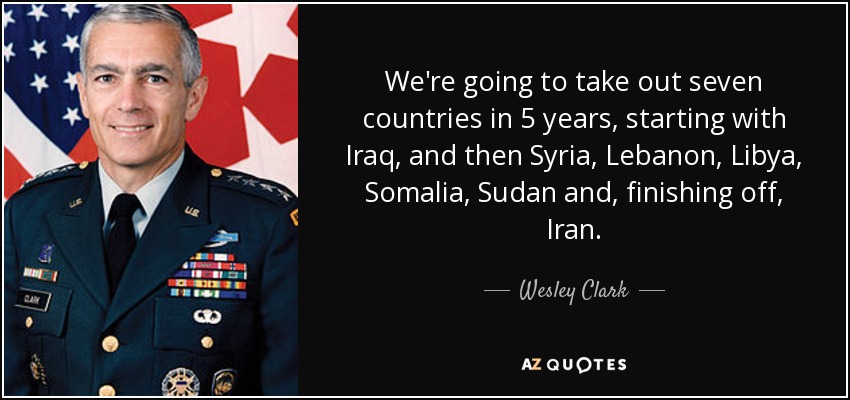
More stuff about Saddam's-weapons-of-mass-destruction hoax and the 2003 USraeli aggression of Iraq :
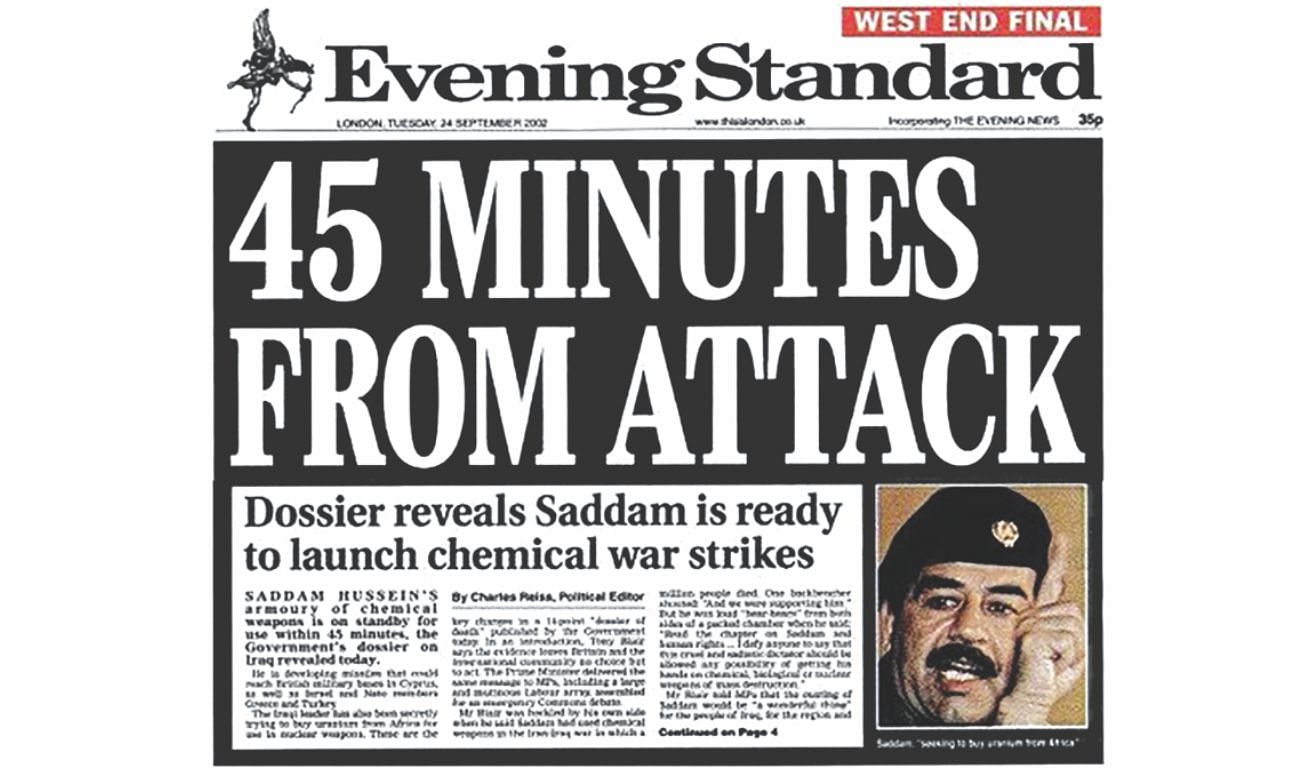
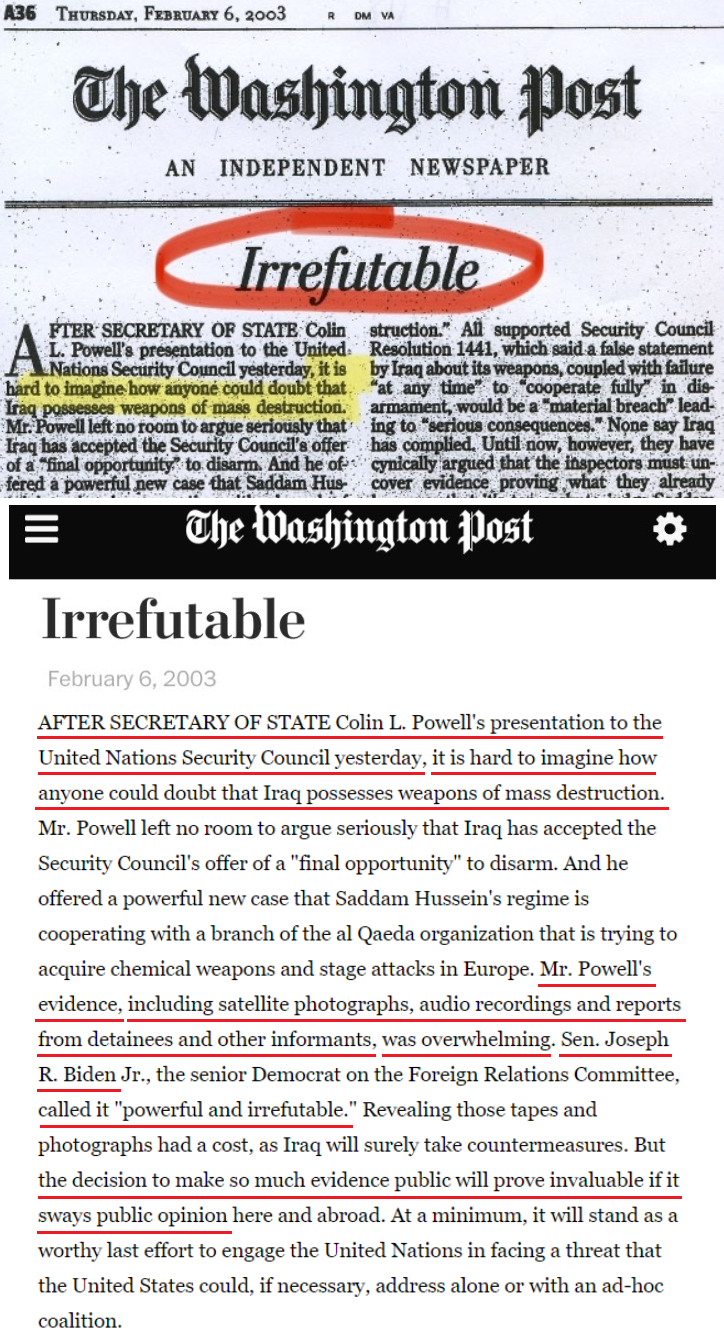

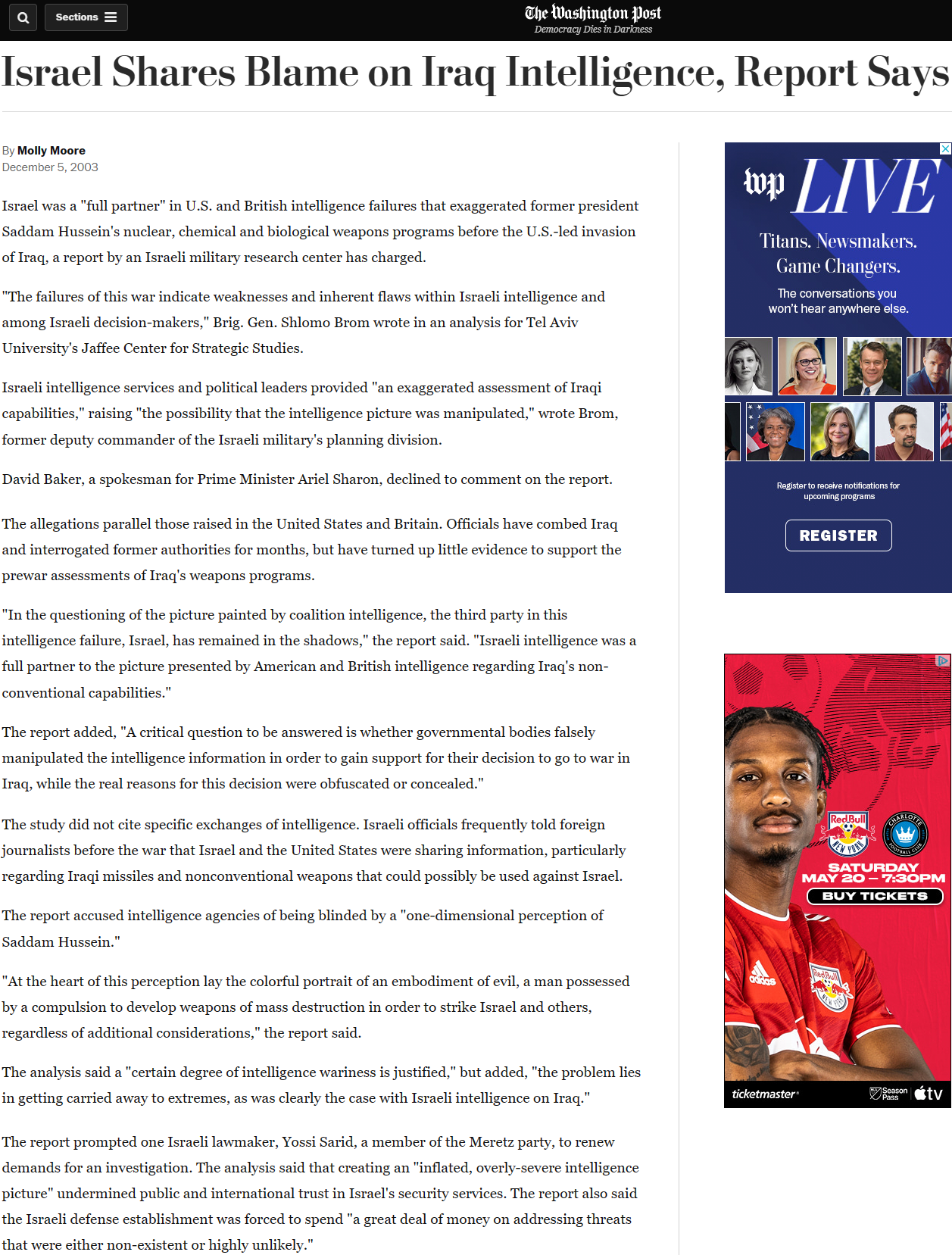

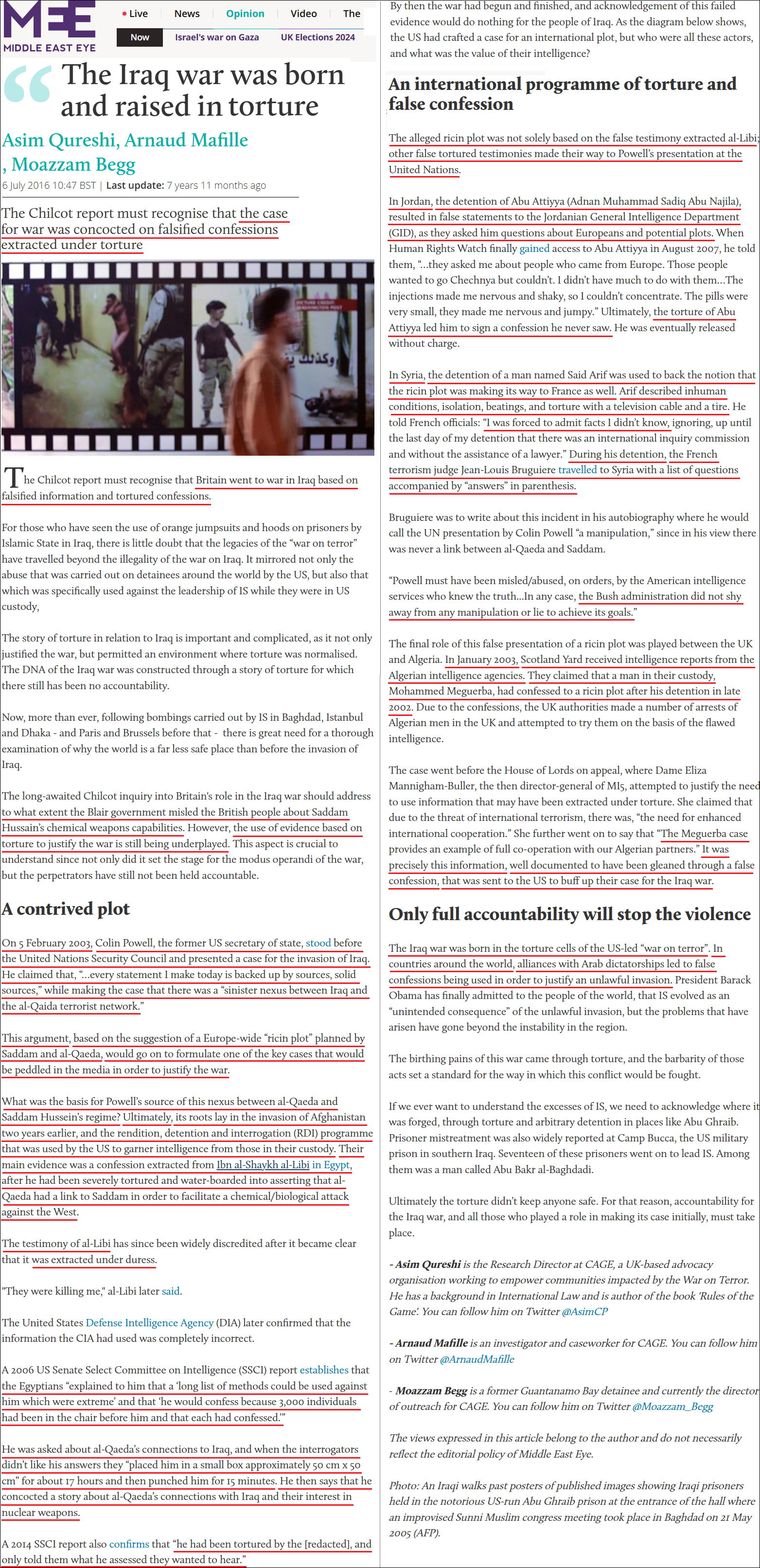
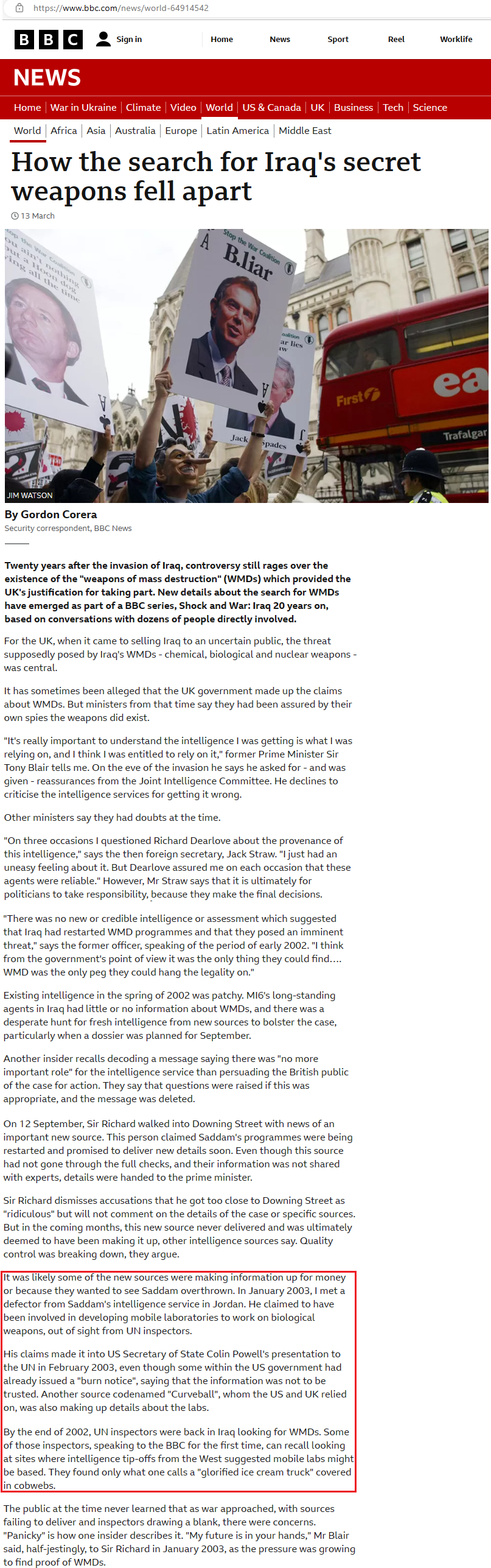
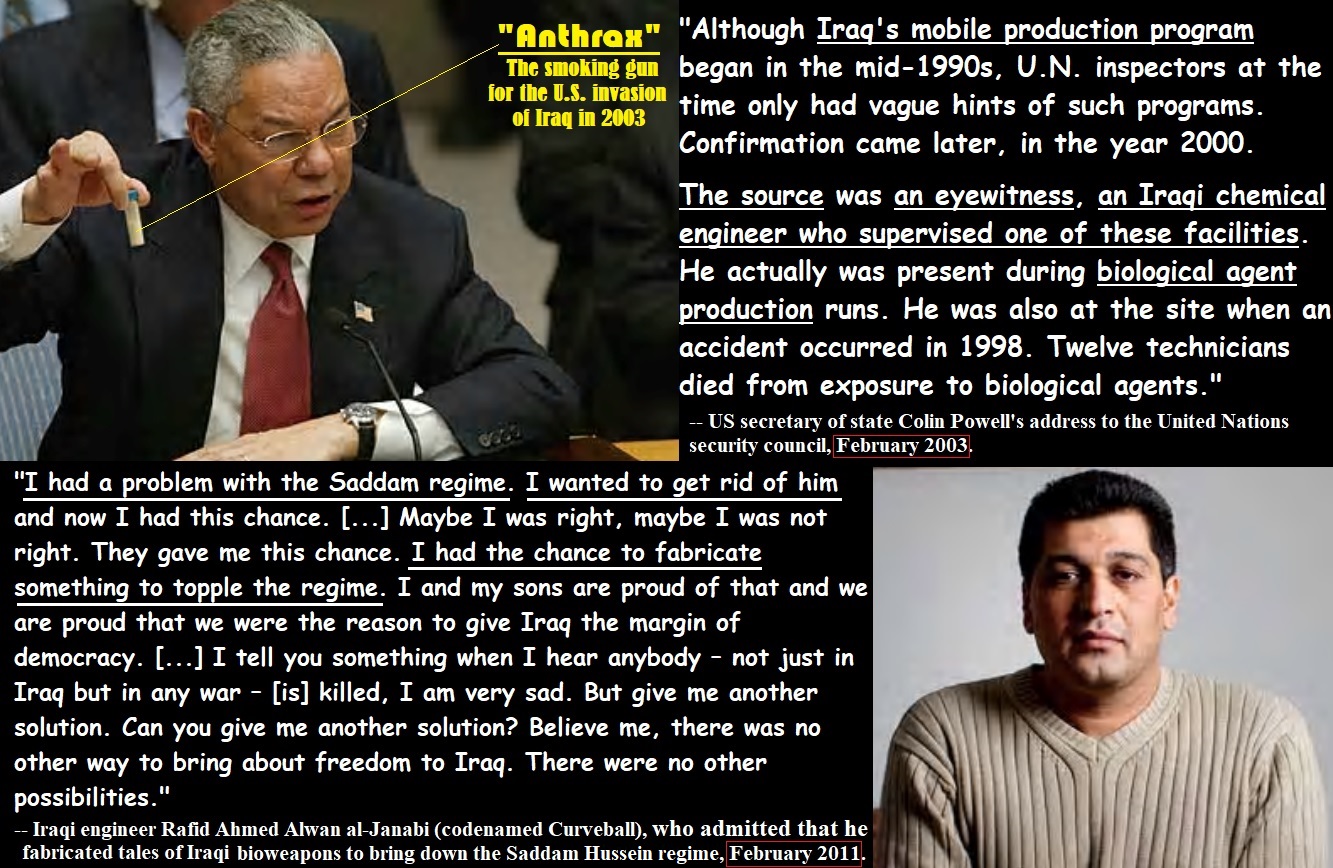
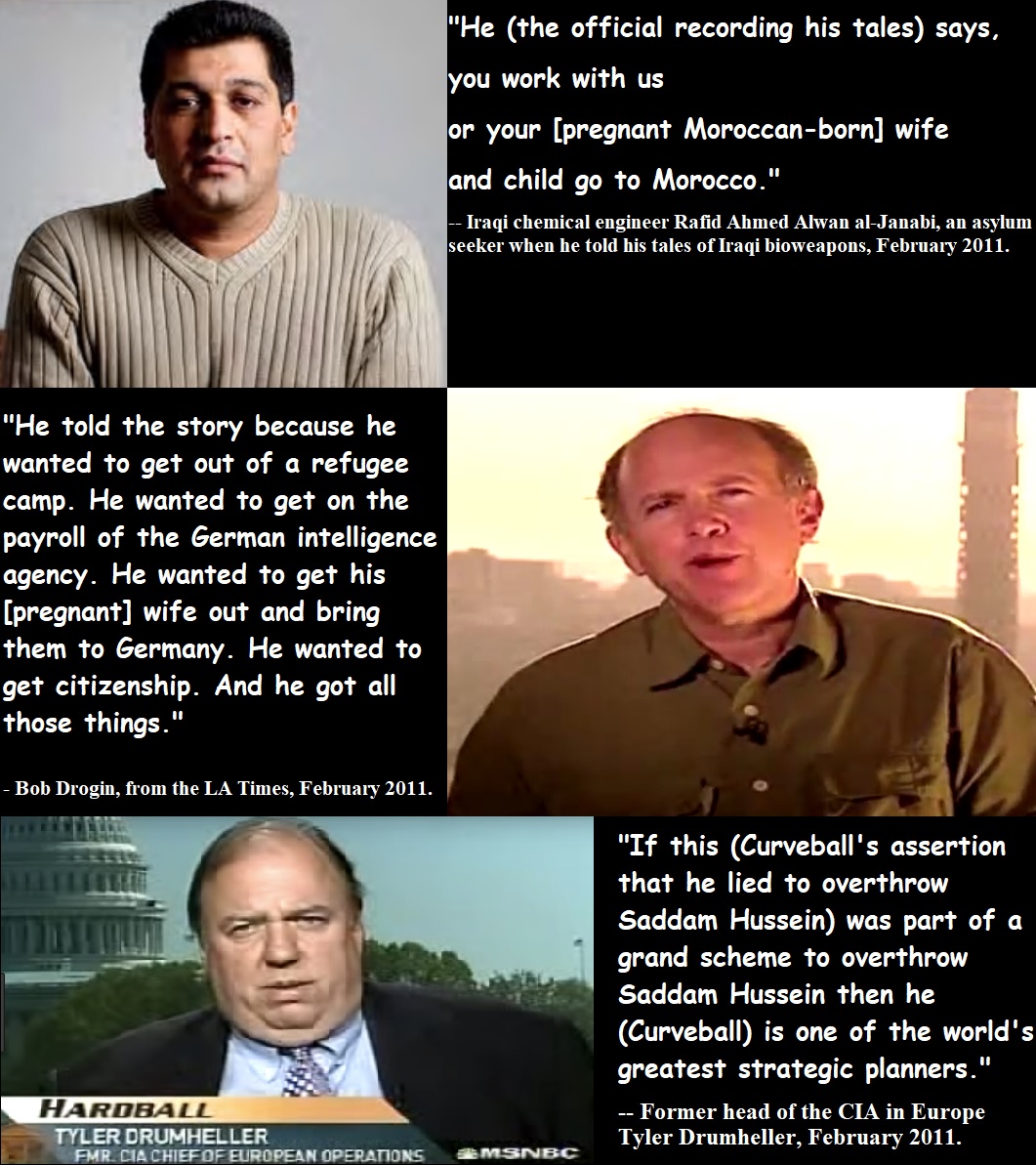
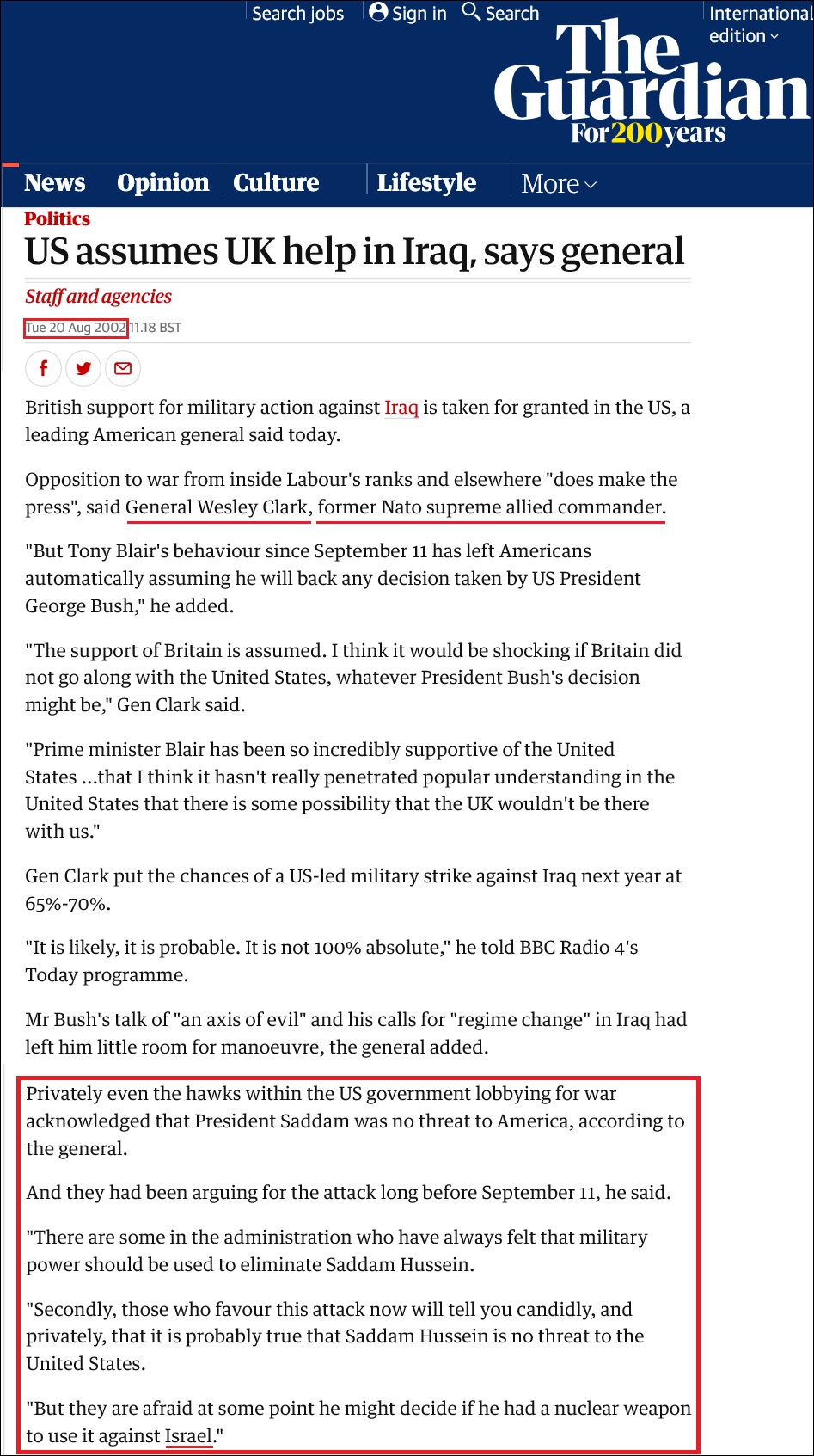
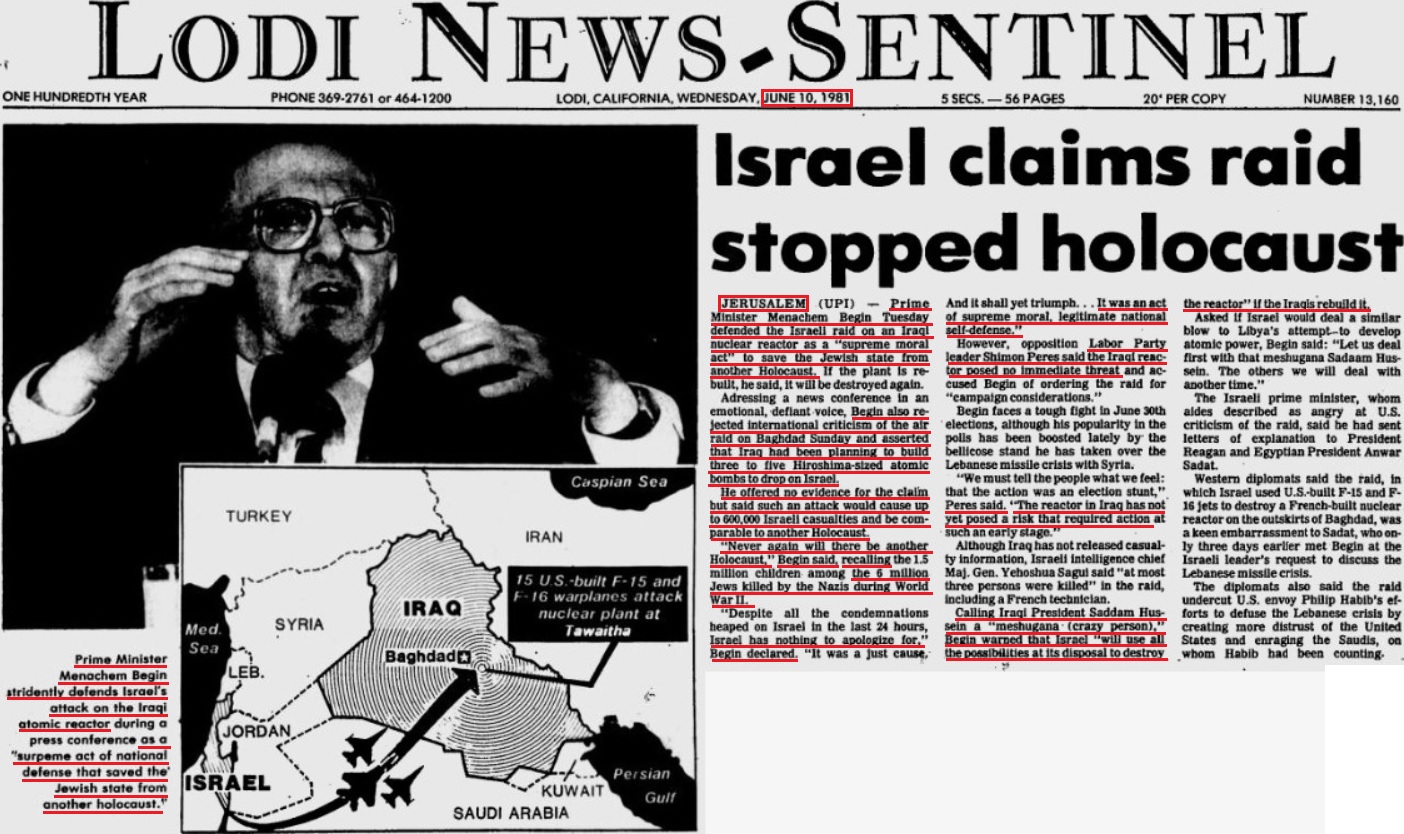
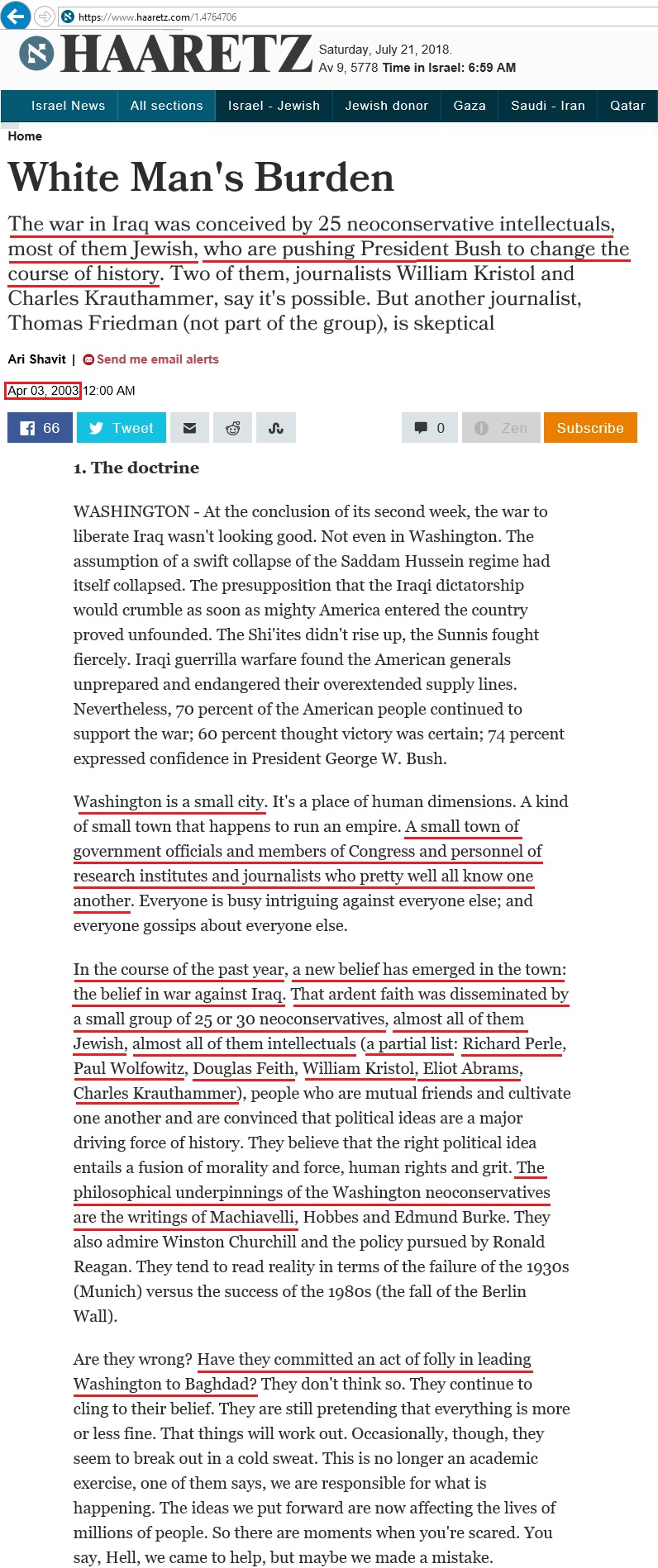

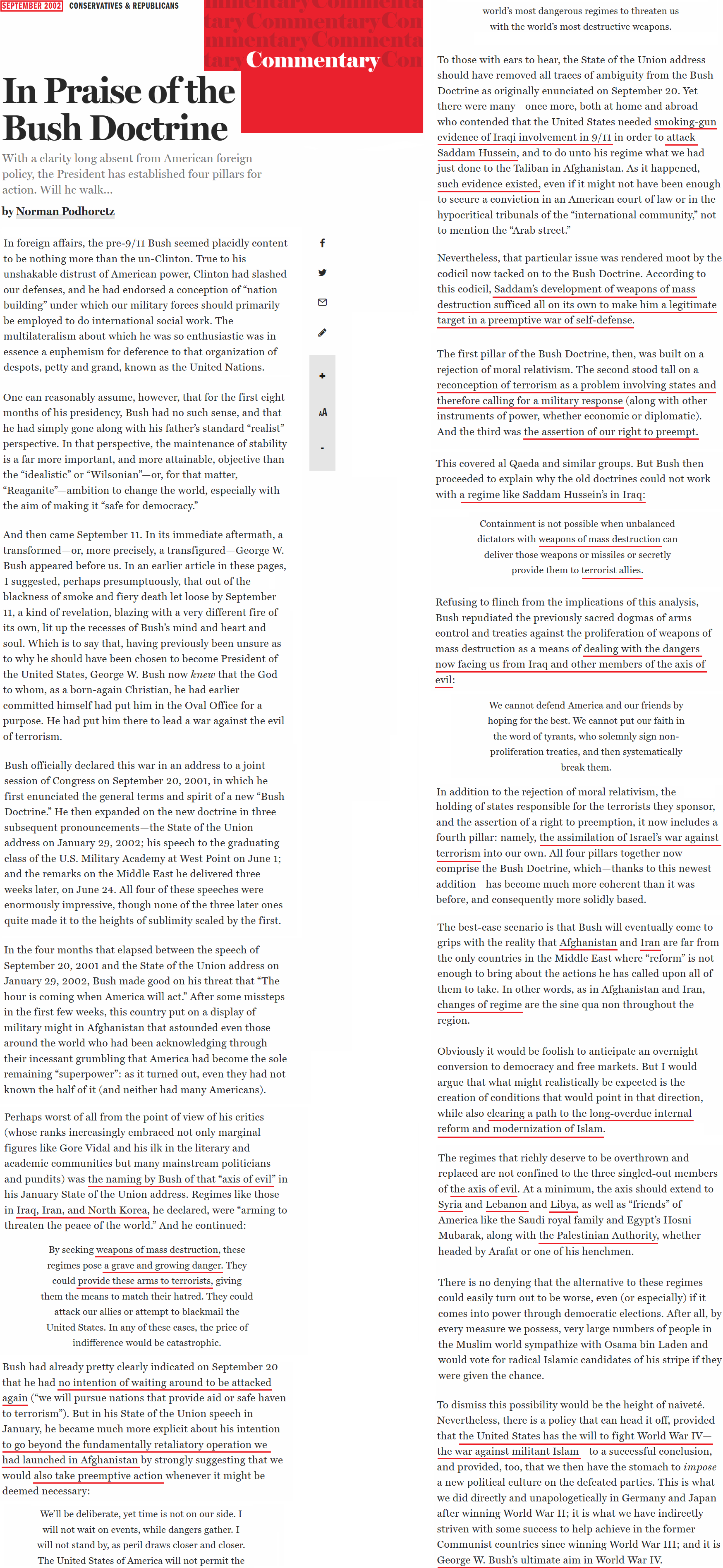
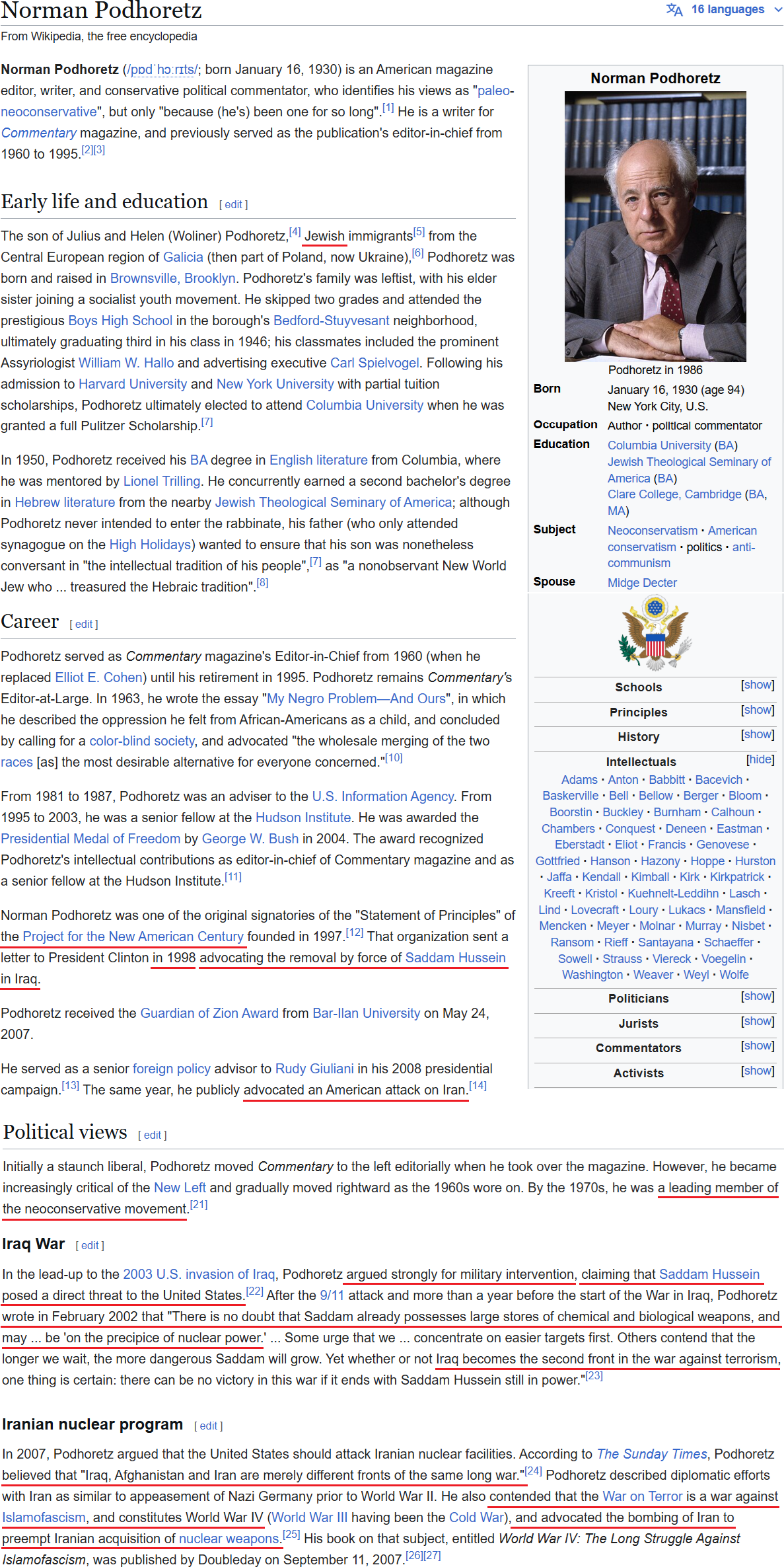
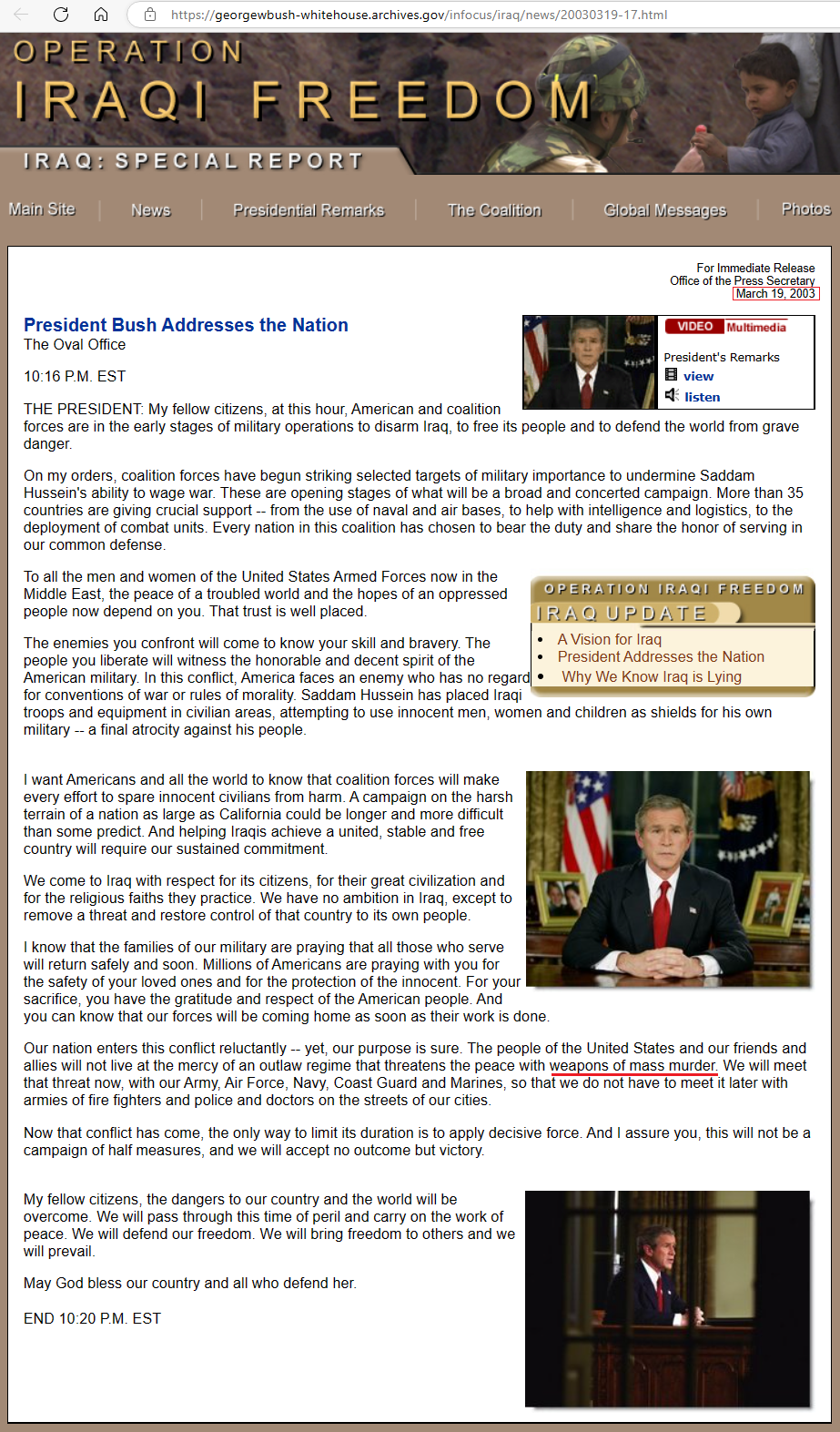
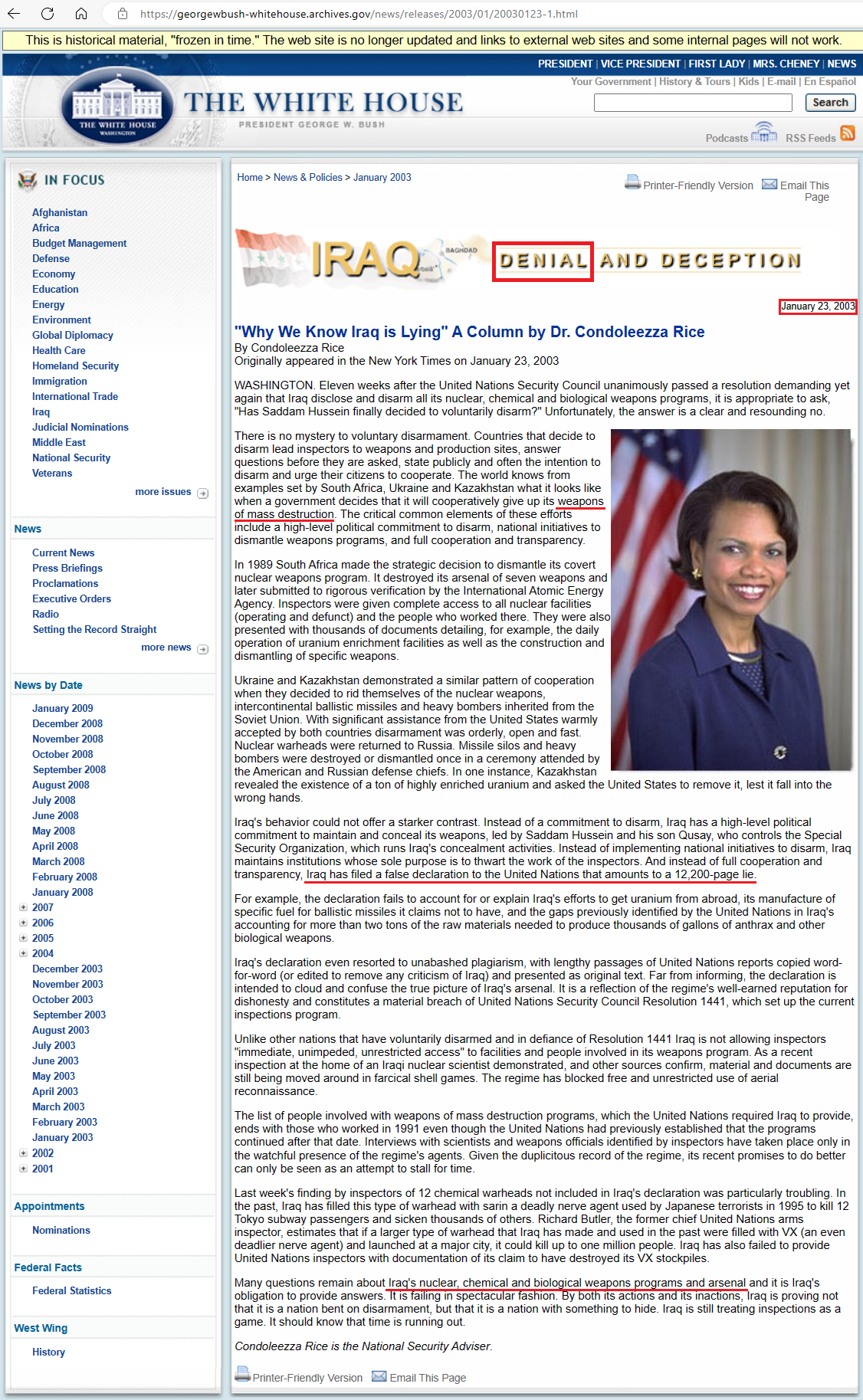
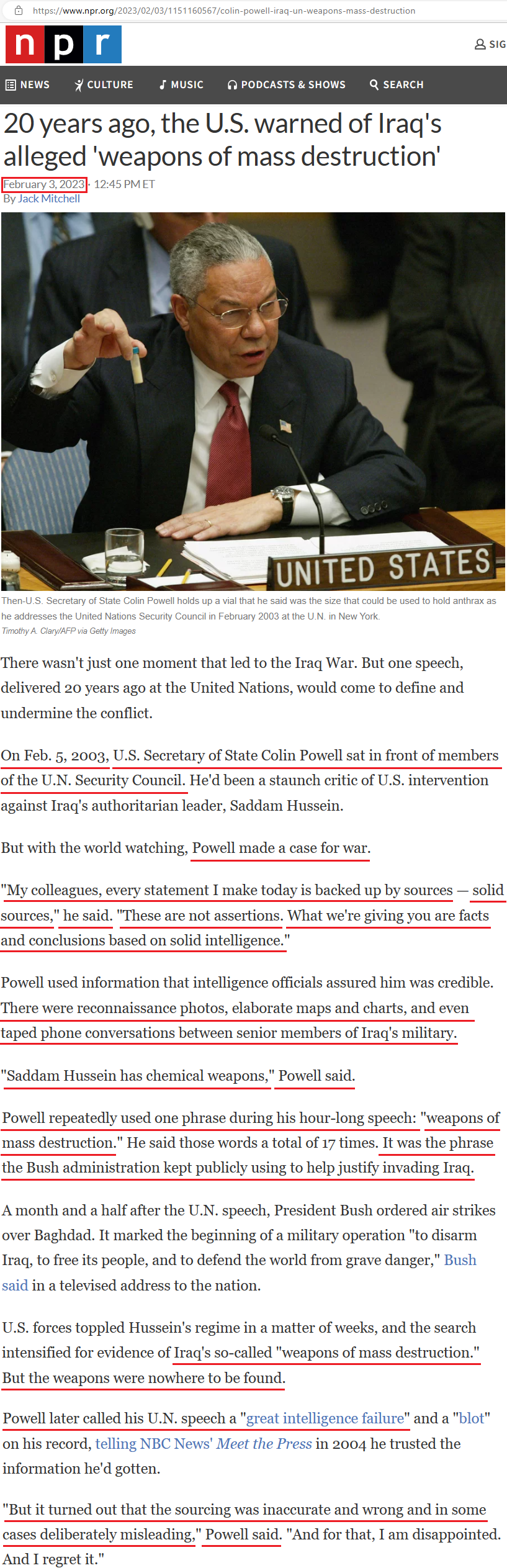
Gen. Wesley Clark Weighs Presidential Bid: “I Think About It Every Day”
March 02, 2007
We spend the hour with General Wesley Clark, the retired four-star general. He was the Supreme Allied Commander of NATO during the Kosovo War. In 2004, he unsuccessfully ran for the Democratic presidential nomination. Clark talks about his opposition to a U.S. attack on Iran; the impeachment of President Bush; the use of cluster bombs; the bombing of Radio Television Serbia in the Kosovo War under his command; U.S. servicemembers refusing deployments to Iraq; his own presidential ambitions; and much more.
AMY GOODMAN: Now, let’s talk about Iran. You have a whole website devoted to stopping war.
GEN. WESLEY CLARK: Www.stopiranwar.com.
AMY GOODMAN: Do you see a replay in what happened in the lead-up to the war with Iraq — the allegations of the weapons of mass destruction, the media leaping onto the bandwagon?
GEN. WESLEY CLARK: Well, in a way. But, you know, history doesn’t repeat itself exactly twice. What I did warn about when I testified in front of Congress in 2002, I said if you want to worry about a state, it shouldn’t be Iraq, it should be Iran. But this government, our administration, wanted to worry about Iraq, not Iran.
I knew why, because I had been through the Pentagon right after 9/11. About 10 days after 9/11, I went through the Pentagon, and I saw Secretary Rumsfeld and Deputy Secretary Wolfowitz. I went downstairs just to say hello to some of the people on the Joint Staff who used to work for me, and one of the generals called me in. He said, “Sir, you’ve got to come in and talk to me a second.” I said, “Well, you’re too busy.” He said, “No, no.” He says, “We’ve made the decision we’re going to war with Iraq.” This was on or about the 20th of September. I said, “We’re going to war with Iraq? Why?” He said, “I don’t know.” He said, “I guess they don’t know what else to do.” So I said, “Well, did they find some information connecting Saddam to al-Qaeda?” He said, “No, no.” He says, “There’s nothing new that way. They just made the decision to go to war with Iraq.” He said, “I guess it’s like we don’t know what to do about terrorists, but we’ve got a good military, and we can take down governments.” And he said, “I guess if the only tool you have is a hammer, every problem has to look like a nail.”
So I came back to see him a few weeks later, and by that time we were bombing in Afghanistan. I said, “Are we still going to war with Iraq?” And he said, “Oh, it’s worse than that.” He reached over on his desk. He picked up a piece of paper. And he said, “I just got this down from upstairs” — meaning the secretary of defense’s office — “today.” And he said, “This is a memo that describes how we’re going to take out seven countries in five years, starting with Iraq, and then Syria, Lebanon, Libya, Somalia, Sudan and, finishing off, Iran.” I said, “Is it classified?” He said, “Yes, sir.” I said, “Well, don’t show it to me.” And I saw him a year or so ago, and I said, “You remember that?” He said, “Sir, I didn’t show you that memo! I didn’t show it to you!”
Last edited by Eye of Zyclone on Sun Aug 16, 2026 11:10 am, edited 1 time in total.
"Holocaust deniers are very slick people. They justify everything they say with facts and figures."
-
Wahrheitssucher

- Posts: 981
- Joined: Mon May 19, 2025 2:51 pm
Re: "So, how does this hoax work, anyway?"
.
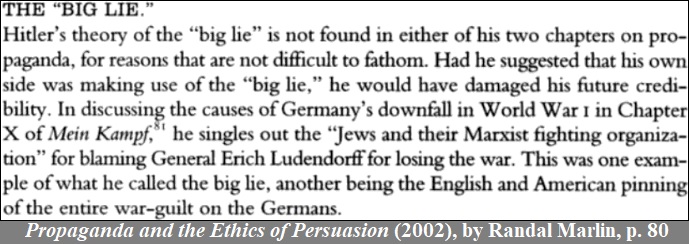
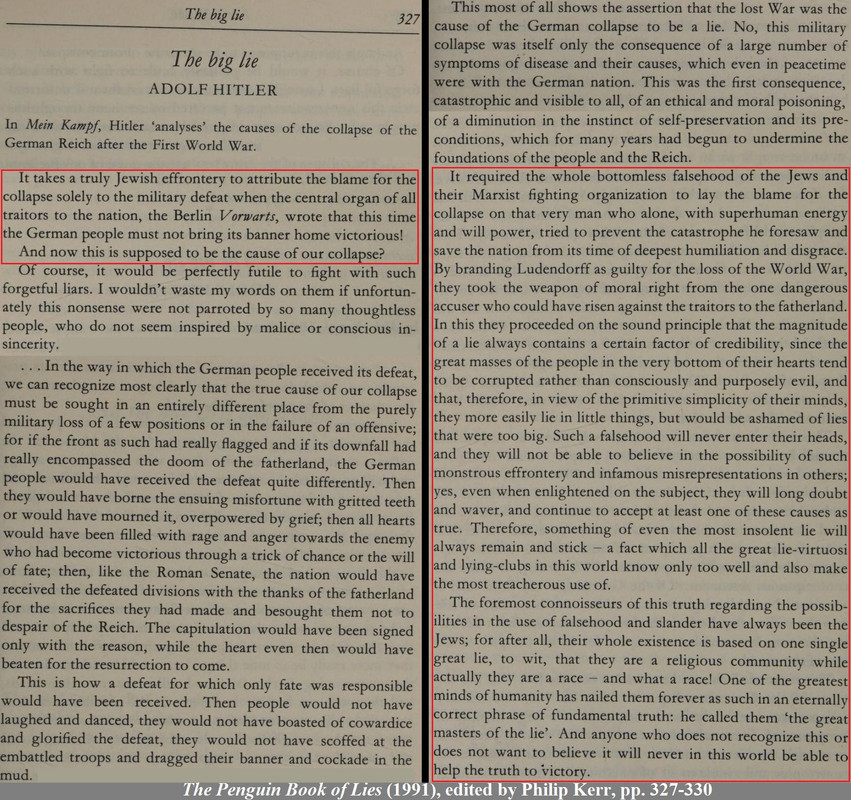
Hitler explained the psychology of how such a huge deception as the ‘mass-gassing, WW2 genocide’ hoax is, works.
His explanation is known as “die große Lüge” (“the big lie”).
He explained it in his book ‘Mein Kampf’.
This ‘hoax’ tactic works because once you have a certain number of gullible dweebs believing it, it takes on a life of its own. It becomes a “big lie” that increasing numbers of dweebs get attached to, believe, spread and even defend when it is credibly refuted.
Hitler explained the psychology of how such a huge deception as the ‘mass-gassing, WW2 genocide’ hoax is, works.
His explanation is known as “die große Lüge” (“the big lie”).
He explained it in his book ‘Mein Kampf’.
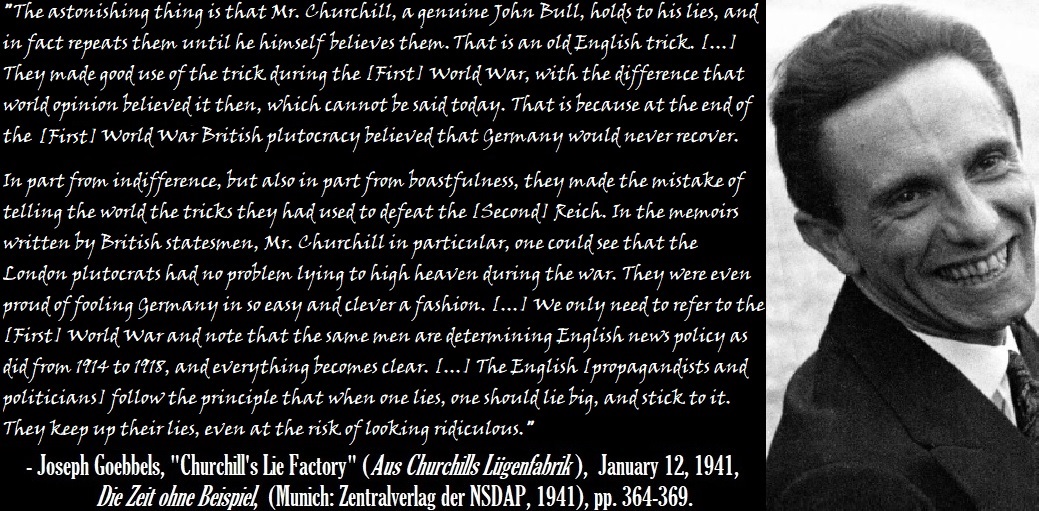
Joe Goebells referred to it:All this was inspired by the principle — which is quite true in itself — that in the big lie there is always a certain force of credibility; because the broad masses of a nation are always more easily corrupted in the deeper strata of their emotional nature than consciously or voluntarily, and thus in the primitive simplicity of their minds they more readily fall victims to the big lie than the small lie, since they themselves often tell small lies in little matters but would be ashamed to resort to largescale falsehood. It would never come into their heads to fabricate colossal untruths, and they would not believe that others could have the impudence to distort the truth so infamously. Even though the facts which prove this to be so may be brought clearly to their minds, they will still doubt and waver and will continue to think that there may be some other explanation. For the grossly impudent lie always leaves traces behind it, even after it has been nailed down, a fact which is known to all expert liars in this world and to all who conspire together in the art of lying. These people know only too well how to use falsehood for the basest purposes.
From time immemorial, however, the Jews have known better than any others how falsehood and calumny can be exploited.
… One of the greatest thinkers that mankind has produced has branded the Jews for all time with a statement which is profoundly and exactly true. He (Arthur Schopenhauer) called the Jew “The Great Master of Lies.” Those who do not realize the truth of that statement, or do not wish to believe it, will never be able to lend a hand in helping Truth to prevail.
~ Adolf Hitler. Mein Kampf (1925), pg. 198.
(Translated by James Murphy)
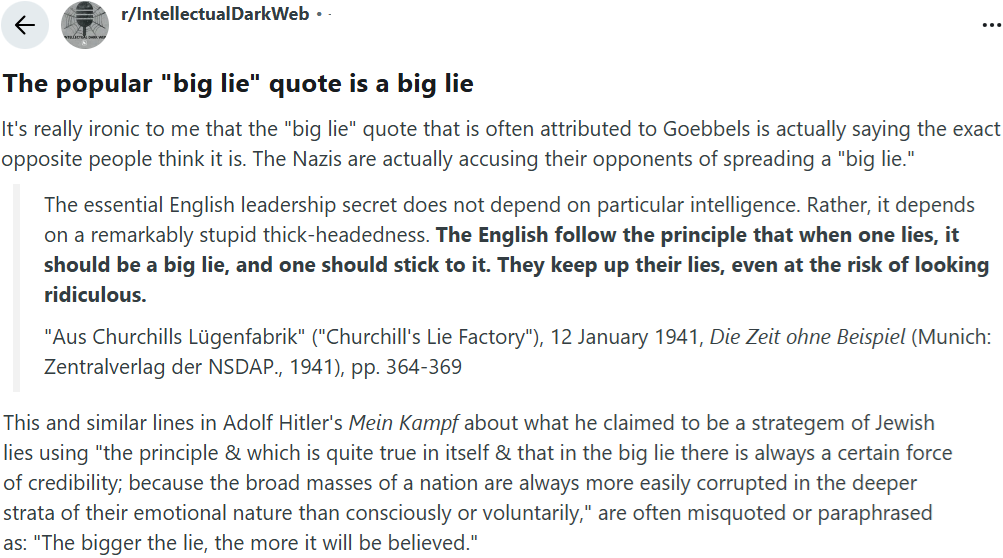
Both were describing a tactic they ascribed to others (jews and Englishmen). And yet amazingly jews have managed to falsely convince millions of people that they were actually advocating the tactic and were themselves applying it.…the English follow the principle that when one lies, it should be a big lie, and one should stick to it. They keep up their lies, even at the risk of looking ridiculous.
~ "Aus Churchills Lügenfabrik" ("Churchill's Lie Factory"), 12 January 1941, Die Zeit ohne Beispiel (Munich: Zentralverlag der NSDAP., 1941), pp. 364-369
What lying chutzpah!The proliferation of the Nazis’ lie eventually led to the justification for the murder of millions of Jewish people during the Holocaust.
~ Sheposh, Richard. ‘Big lie’ 2022
https://www.ebsco.com/research-starters ... ll-article
This ‘hoax’ tactic works because once you have a certain number of gullible dweebs believing it, it takes on a life of its own. It becomes a “big lie” that increasing numbers of dweebs get attached to, believe, spread and even defend when it is credibly refuted.
DWEEB: So, how does this holocaust "hoax" work?
A. By making people believe stuff that didn’t actually happen, erm... obviously!
DWEEB: Yeah, but HOW? How could that be possible? You’d have to make millions lie and ‘keep quiet’.
A. Er..., no! Not if you had made them BELIEVE stuff that didn’t actually happen. [Sheesh!]
Concentrate now: if they believed what they had been told, then they wouldn't be “lying”.
DWEEB: But that is impossible.
A. What is? Making people believe stuff that isn’t true?
DWEEB: Yes. You would have to have millions of people lying or keeping quiet.
A.
A ‘holocaust’ believer’s problem is not technical, factual, empirical or archeological — their problem is psychological.
- Joe Splink
- Posts: 73
- Joined: Thu Jan 02, 2025 4:23 pm
Re: "So, how does this hoax work, anyway?"
You're barking up the wrong tree. Pervasive hoaxes are the norm in human societies and always have since the beginning of recorded history(?). The obvious hoaxes that are dominant in the western world are the Abrahamic religions. They are just completely absurd, preposterous on their face, and yet .... The basis for the Abrahamic hoax is the Old Testament ... think about it for a moment ..... the Jews write a book saying that they are God's chosen people and destined to rule the world, and role of the non-Jews is to serve the Jews. And, not only do the Jews believe this idiocy, they have somehow gotten the non-Jews to sign up. There are where I'm living in the US probably 10 churches built for people to gather every week to worship this hoax in a 5 mile radius. It's to me entirely incomprehensible, yet ....
Answering the (?) above - Deepseek: Did the Epic of Gilgamesh describe a religion?
Beyond that .... the Abrahamic hoax is on the verge of destroying the world ....the Jews in the US and Israel are eagerly anticipating the Gog/Magog war that the US and Israel are doing their best to instigate in Ukraine and the ME ... It would be unbelievable if it were not happening .
Answering the (?) above - Deepseek: Did the Epic of Gilgamesh describe a religion?
So, it might be that hoaxes are the norm, and rational thought the exception.Yes, the Epic of Gilgamesh does not just describe a religion; it is a deeply religious text that serves as one of our most valuable windows into the worldview and beliefs of ancient Mesopotamia . The narrative is fundamentally shaped by the actions of gods and the beliefs about humanity's relationship with the divine
Beyond that .... the Abrahamic hoax is on the verge of destroying the world ....the Jews in the US and Israel are eagerly anticipating the Gog/Magog war that the US and Israel are doing their best to instigate in Ukraine and the ME ... It would be unbelievable if it were not happening .
-
Wahrheitssucher
- Posts: 981
- Joined: Mon May 19, 2025 2:51 pm
Re: "So, how does this hoax work, anyway?"
If it is “incomprehensible” to you then perhaps you haven’t heard about the jooish scam to create a new ‘translation’ of the Bible that distorted the meaning of the text so that it brainwashed gullible, simple-minded, obedient Christians in to believing their God had ORDERED them to ‘bless Israel’ and support the zionist project if they wanted to go to heaven after their deaths.Joe Splink wrote: ↑Sat Aug 15, 2026 5:01 pm ...think about it for a moment ...the Jews write a book saying that they are God's chosen people and destined to rule the world, and role of the non-Jews is to serve the Jews. And, not only do the Jews believe this idiocy, they have somehow gotten the non-Jews to sign up.
There are where I'm living in the US probably 10 churches built for people to gather every week to worship this hoax in a 5 mile radius.
It's to me entirely incomprehensible ...
That scam is called the SCOFIELD REFERENCE BIBLE published in 1909.
Read more,
here: https://rodoh.freeforums.net/post/17046
here: https://rodoh.freeforums.net/post/17097
and this one here, which relates the role of Samuel Untermeyer in the fraud: https://rodoh.freeforums.net/post/17112
Further to this evidence below of an extremely successful Jewish/zionist hoax that has managed to manipulate the minds of millions of Christians in the Americas and Europe, here is info on the person they used to perpetrate that hoax: Cyrus I. Scofield.
If you look on the hopelessly unreliable and controlled Wikipedia site you will find an article that has only good things to say about the man. Yet Scofield was an imprisoned fraudster, deserter and liar.
Hmmm? But how is it possible that NONE of the editors of Wikipedia are aware of this?
Some Christian websites keen on promoting their own, rival brand of Christianity have revealed the unsavoury reality about the man and his life. But most of them don’t emphasise — if they mention at all — the involvement of Samuel Untermeyer and his jewish-zionist co-conspirators.
The important fact to know in regard to the subject of myth-making and the deception of gullible millions are these:
- Scofield had no theological training,
- Scofield was a convicted felon who was used by Untermeyer and other wealthy, influential Jews,
- they used a fraudster to inject false but Zionist-serving beliefs into the minds of millions of Protestant Christians,
- Untermeyer promoted and funded Scofield, to perpetrate a collosal deception.
- Using jewish-collected money and influence they got a publishing deal, then promoted and advertised the zionist-promoting book, and used their connections to get the book in churches, theological colleges, Bible Study groups, etc.
A ‘holocaust’ believer’s problem is not technical, factual, empirical or archeological — their problem is psychological.
-
Eye of Zyclone
- Posts: 541
- Joined: Fri Apr 04, 2025 3:12 pm
Re: "So, how does this hoax work, anyway?"
True. A preposterous lie. Big liars doesn't tell people that they're going to lie. Would be very, very dumb. Makes no sense at all.Wahrheitssucher wrote: ↑Sat Aug 15, 2026 3:12 pm .
Hitler explained the psychology of how such a huge deception as the ‘mass-gassing, WW2 genocide’ hoax is, works.
His explanation is known as “die große Lüge” (“the big lie”).
He explained it in his book ‘Mein Kampf’.
Joe Goebells referred to it
Both were describing a tactic they ascribed to others (jews and Englishmen). And yet amazingly jews have managed to falsely convince millions of people that they were actually advocating the tactic and were themselves applying it.The proliferation of the Nazis’ lie eventually led to the justification for the murder of millions of Jewish people during the Holocaust.
~ Sheposh, Richard. ‘Big lie’ 2022
https://www.ebsco.com/research-starters ... ll-article
What lying chutzpah!
Ironically, Jews lying big about Hitler's 'big lie' statement just show that Hitler was right about them at least in that regard...

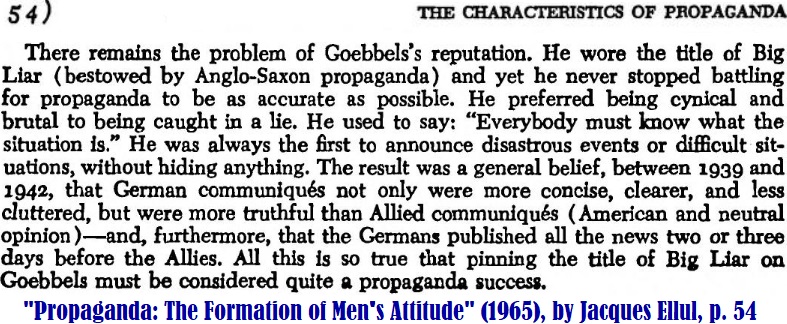
Jacques Ellul
Jacques Ellul (6 January 1912 – 19 May 1994) was a French-born philosopher, sociologist, lay theologian, resistance fighter and professor. Noted as a Christian anarchist, Ellul was a longtime professor of History and the Sociology of Institutions on the Faculty of Law and Economic Sciences at the University of Bordeaux. A prolific writer, he authored more than 60 books and more than 600 articles over his lifetime,[1] many of which discussed propaganda, the impact of technology on society, and the interaction between religion and politics. Among his most influential books are The Technological Society and Propaganda: The Formation of Men's Attitudes.
Ellul was educated at the universities of Bordeaux and Paris. In World War II, he was a leader in the French resistance.[5] (For his efforts to save Jews he was awarded the title Righteous among the Nations by Yad Vashem in 2001.[6])
Ellul discusses these topics in detail in his landmark work, Propaganda: The Formation of Men's Attitudes. He viewed the power of the media as another example of technology exerting control over human destiny.[66] As a mechanism of change, the media are almost invariably manipulated by special interests, whether of the market or the state.[67]
Also within Propaganda Ellul claims that "it is a fact that excessive data do not enlighten the reader or the listener; they drown him. He cannot remember them all, or coordinate them, or understand them; if he does not want to risk losing his mind, he will merely draw a general picture from them. And the more facts supplied, the more simplistic the image".[68] Additionally, people become "caught in a web of facts they have been given. They cannot even form a choice or a judgment in other areas or on other subjects. Thus the mechanisms of modern information induce a sort of hypnosis in the individual, who cannot get out of the field that has been laid out for him by the information".[68] "It is not true that he can choose freely with regard to what is presented to him as the truth. And because rational propaganda thus creates an irrational situation, it remains, above all, propaganda—that is, an inner control over the individual by a social force, which means that it deprives him of himself".[68]
In response to an invitation from Protestant associations, Ellul visited Germany twice (1934 and 1935). On the second visit he attended a Nazi meeting out of curiosity which influenced his later work on propaganda and its ability to unify a group.[71]
https://en.wikipedia.org/wiki/Jacques_Ellul
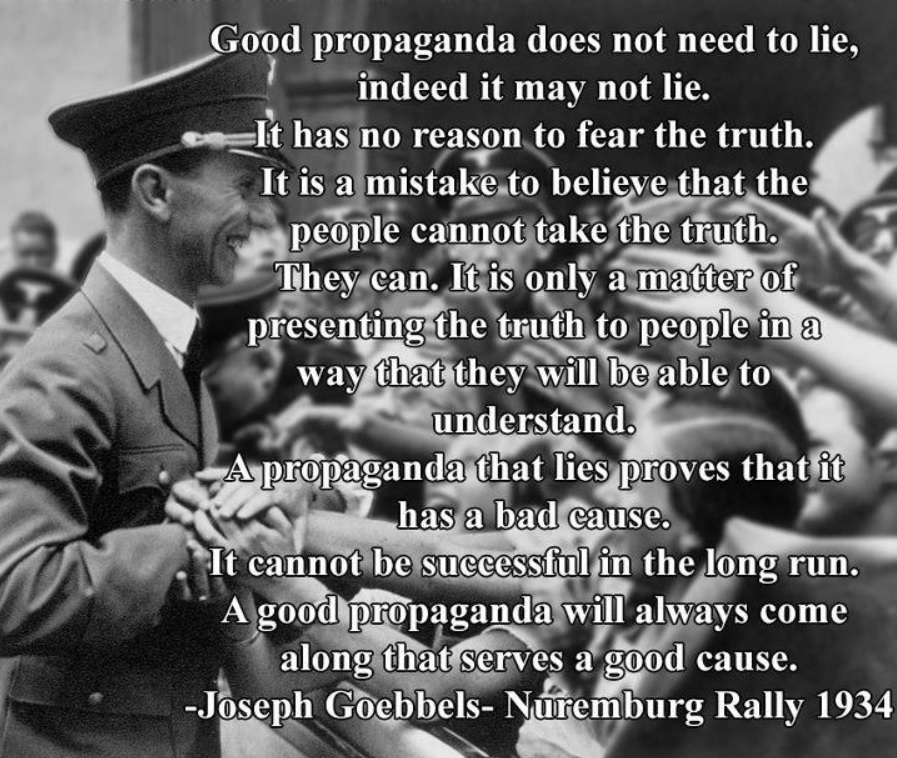
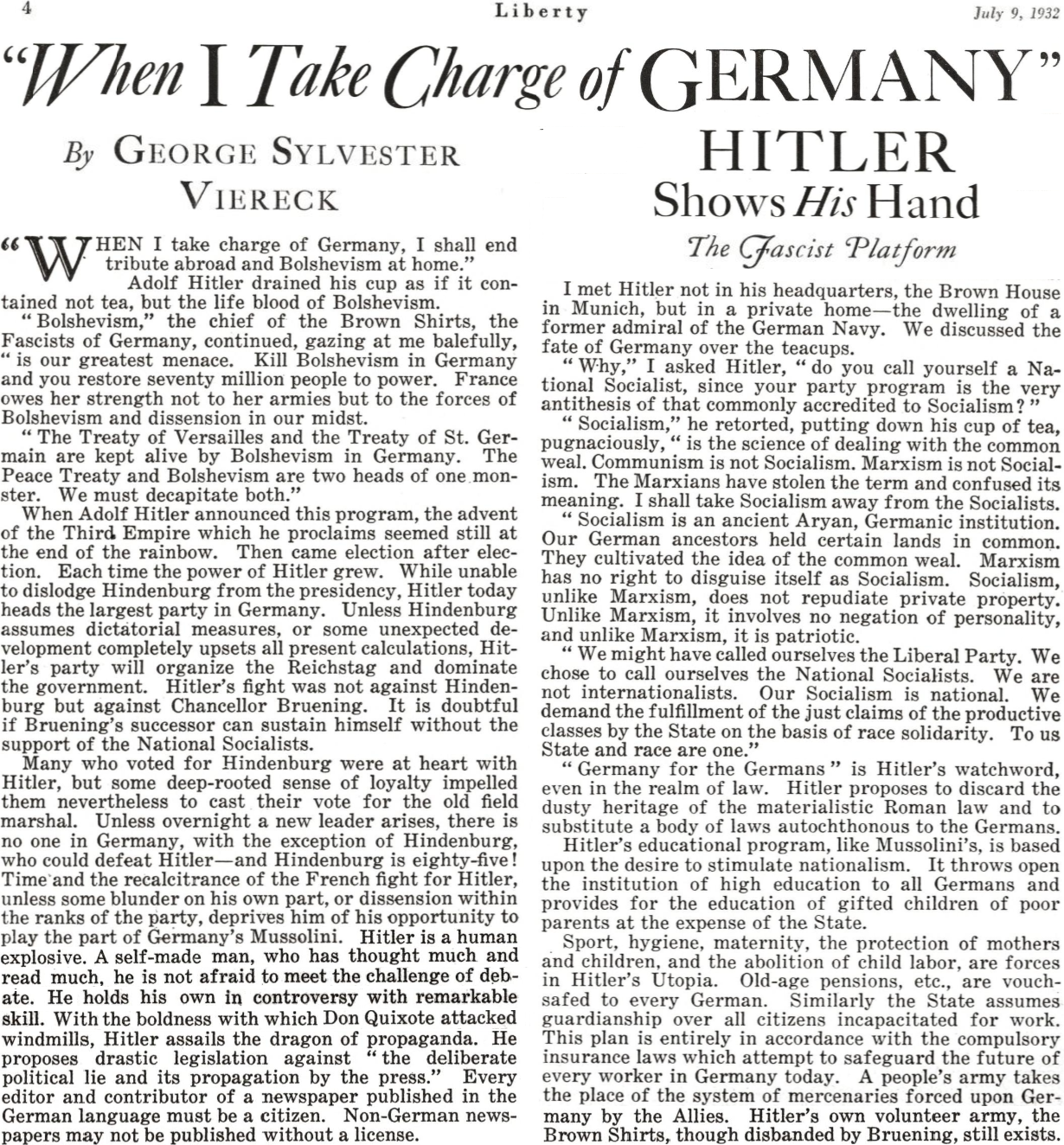
The proliferation of the Nazis’ lie eventually led to the justification for the murder of millions of Jewish people during the Holocaust.
~ Sheposh, Richard. ‘Big lie’ 2022
https://www.ebsco.com/research-starters ... ll-article
Were the "natzees" trying to hide it behind alleged code words, only-oral orders and gas chambers disguised as shower rooms?
Or were they trying to justify it with big lies about Jews? Both narratives are mutually exclusive.
Couldn't Holohoaxers at least keep their favorite horror story straight?
"Holocaust deniers are very slick people. They justify everything they say with facts and figures."
Online
Rolling Stone UVA Rape Hoax
[Repost from RODOH]
I recently revisited this story for the first time since I got into H revisionism and it struck me as a useful case study for how to detect false stories.
The Original Story
Sabrina Rubin Erdely, "A Rape on Campus," Rolling Stone, 19 Nov 2014
The story is set at the University of Virginia which is said to have "an aura of preppy success, where throngs of toned, tanned and overwhelmingly blond students." There are many lines like that hinting at the authoress's resentments. We are introduced to a girl named Jackie who meets an older student Drew who asks her to be his date at a fraternity party. It turns out Drew was just luring her to the house so that the new recruits to the frat could take turns raping her as part of their initiation. It reads like Animal House fanfiction written by a feminist.
Erdely gives the game away by being a little too heavy-handed and on-the-nose. Did those sinister blond frat bros really refer to Jackie as "it"? She might as well have said "We only see women as literal objects," just to make sure everyone got the point. There is a common complaint about how most male writers can't write believable female characters. Here we see the reverse problem where a Jewish feminist is unable to write goy frat bro characters without resorting to ridiculous caricature. Armpit and Blanket, indeed.
Erdely is equally unsubtle when telling us how shockingly indifferent everyone is to the rape victim.(Oh, are we supposed to be learning an important lesson here than can be generalized to what is a very important systemic problem?)
Early Skeptics (i.e. pro-rape misogynist mansplainers)
Online, some people were calling BS on this within 24 hours. A lot of this will be hard to find now so many years later. But here is some early commentary on the AutoAdmit forum.
https://xoxohth.com/thread.php?thread_i ... forum_id=2
“I have a hard time believing that this could actually occur (I've only read the account of the attack though so maybe they explain it later). they make it clear that they've done it before - presumably quite a bit if all the brothers had to do it. and yet they've never been found out? and they committed this extremely serious crime and then just left her to walk out of the the house right in front of all of the people that were still there at the party? And she'd been hit in the face and was noticeably bloody? it just seems so ridiculous and incredibly dumb that it's hard for me to fathom how a group of people, not one moron acting alone mind you, could have premeditated something like this and gone through with it. Multiple times.” (Nov 20, 2014)
“It is incredibly hard to believe that this story accurately describes something that actually occurred IRL.” (Nov 20, 2014)
“I actually believed all of it until the part where her friends picked her up. I was like "oh thank goodness, she goes to the hospital to get a rape kit." But no, instead they have a discussion about its impact on their status with the frats like something out of a CW show.” (Nov 20, 2014)
“Another strange thing (that I would never mention IRL) is that Phi Psi is a fairly nerdy "nice guy" frat at UVA.” (Nov 20, 2014)
“seriously. i'm a lib. but the idea that she is covered in blood, and they're all like, but think of the frat parties!!!! is beyond belief. in other circumstances? 100% believable. but this idea that she's covered in shards of glass etc. and they're just chilling is ridiculous.” (Nov 22, 2014)
In the mainstream, however, the story was received with absolute credulity and outrage. In a way, the story was already doomed just because it was so sensational but also specific enough to demand justice. So if you are doing a hoax like this, always remember that you want to make sure it can't really be checked. Or make sure whoever checks it is on your side.
"Mainstream" Doubts (Richard Bradley)
https://web.archive.org/web/20150316211 ... tory-true/
On Nov 24, 2014, Richard Bradley, a seasoned journalist and editor, expressed his disbelief in the story on his personal blog. Bradley drew on his career experience, in particular how he edited work by Stephen Glass, the notorious journalist who made up fake stories. Being fooled by Glass was a wake up call for him. He also noted that caution is needed when we come across all-too-perfect, bias-confirming stories, and he noted prior incidents such as the Duke lacrosse scandal and the Tawana Brawley rape hoax. When he read the Rolling Stone story, his reaction was "Something about this story doesn’t feel right." He then explained his reasons which come down to 1) sourcing, 2) plausibility.
Doubling Down
The true believers did not react well to the skepticism. This Jezebel article reacting to Bradley and Soave will give you an idea.
Anna Merlin, "Is the UVA Rape Story a Gigantic Hoax? Asks Idiot," Jezebel, 1 Dec 2014
https://www.jezebel.com/is-the-uva-rape ... asks-idiot
Bradley: Some Thoughts on "Discrepancies"
The Exciting Conclusion
I won't spend a lot of time on this since it isn't so relevant, but the questions swirling around the story prompted further investigation which ultimately made clear exactly what happened. It turns out that "Drew" did not exist. Jackie had a crush on a guy, "Randall"/Ryan, who had friendzoned her and so she invented a story about an older guy who was really into her in hopes of making Randall jealous. She made an email account for "Haven Monahan" (that was the name she used but this was changed to "Drew" for the article) and she started sending emails and texts to her friends from "Haven," mostly stuff about how cool Jackie is and how much she digs Randall/Ryan. Lmao. She faked a date night with "Haven" and ended up calling Randall/Ryan with the rape story afterwards. Later she joined a campus anti-rape group etc and some two years later Erdely came by looking for the "right" rape story for her article. Seriously, Erdely had already visited several campuses in this quest.
The main point about how it ended (which many people probably missed since the catfishing angle was not exactly played up) is that it leaves no doubt at all that the story is false. Not even desperate copes such as "Okay, so maybe the story isn't 100% literally true as told in the article. But she still might have been raped that night" can't survive once we find out that "Haven Monahan" doesn't exist. Case closed. It was a complete fabrication. This is a common trajectory with these things. Those who want to believe will try to cling on to some kernel that cannot be absolutely falsified. In some cases, the full information is never known.
Commentary
1) It is clear that most people when they read things like this react emotionally and do not think about any of it logically. Most people believed this at first.
2) But if you read it with your brain turned on, you notice that the story is illogical and wildly implausible. Some of this can be detected via intuition. "Something about this story doesn’t feel right," as Bradley says. There's something about it that "breaks the spell."
3) People are not always able to express their doubts rigorously, but that doesn't mean they aren't on the right track. For instance, many people noticed that it reads like fiction, that the characters are very stereotypical, and that it seemed to hit all the right political buttons. One could attempt to use literary theory and other academic concepts to analyze these things in more depth, but often this is merely a formalization of what many people pick up on intuitively.
4) In this case, the story fell apart completely when a deeper investigation started. But it is crucial to note that many people correctly determined that it was false (or almost certainly false) from the text alone. Obviously, if you can check everything directly (like looking up "Haven Monahan" in the school directory) that much easier and more conclusive. But you can't always count on having all that information. Sometimes all you have are limited textual records. Investigations can also be botched or biased. Just think what would have happened here is Anna Merlan had headed up the investigation.
5) We see here that people can be pretty stubborn if they believe something. They usually need extremely strong evidence to change their minds. As long as there is any sliver of hope, they will hang on. It is also common for people to make a limited concession and try to maintain faith in some modified version of the story. For instance, to acknowledge that the story was not accurate as written, but to claim that it was "essentially" true. And sometimes even when something is conclusively debunked, people will say the story communicates "a larger truth" or something like that.
6) (For Nessie only, since he's the only one that doesn't understand this). Notice that virtually all of the arguments offered by the skeptics would be "arguments from incredulity," at least by Nessie's definition of that term, which is not correct. Disbelieving an implausible and illogical story is not a fallacy, and we see here that the people who used this "fallacy" were the ones who figured it out way before everyone else did.
7) (Mostly for Nessie) We see here that there is a limit to the copes about "normal witness behavior," trauma, memory, etc. Yes, people recounting events after the fact will not do so perfectly and so depending on the circumstances, allowances must be made for this. But you cannot use this to gloss over any and all errors no matter how large or serious. This "witness behavior" argument was the exact argument made by the true-believers with Rolling Stone story (e.g. "well, maybe she misremembered which fraternity it was" etc). There is a breaking point with those rationalizations.
8) "Discrepancies" - This was a very important point by Bradley. Some "discrepancies" or "errors" are such that they can only be explained as fabrications.
9) In a follow-up post, Bradley remarked that it was quite hard to pull the trigger as early as he did for fear of being wrong. He noted that is it easy to see these things in retrospect, but in the moment when everyone else believes, there is quite a bit of personal risk involved in challenging something like this, especially on this sort of topic. Hell, even Steve Sailer was wary of the story and waited until Nov 29 to post about it on his own blog, and that's a guy who is already on the SLPC's naughty list. In Bradley's posts, he hedges a bit and tried to be as diplomatic as possible, which is not surprising. But really he would have had to have been quite confident to make the first post as early as the 24th when all he had to go on was the text of the article. But note that there were anonymous online posters who faced no personal risk who were calling it out and mocking it immediately.
I recently revisited this story for the first time since I got into H revisionism and it struck me as a useful case study for how to detect false stories.
The Original Story
Sabrina Rubin Erdely, "A Rape on Campus," Rolling Stone, 19 Nov 2014
The story is set at the University of Virginia which is said to have "an aura of preppy success, where throngs of toned, tanned and overwhelmingly blond students." There are many lines like that hinting at the authoress's resentments. We are introduced to a girl named Jackie who meets an older student Drew who asks her to be his date at a fraternity party. It turns out Drew was just luring her to the house so that the new recruits to the frat could take turns raping her as part of their initiation. It reads like Animal House fanfiction written by a feminist.
The part about the shattered glass table is a good example of what Arthur Butz's called an "excess fact." The excess fact is an extra detail in a story that a good hoax would be better off without.Now, climbing the frat-house stairs with Drew, Jackie felt excited. Drew ushered Jackie into a bedroom, shutting the door behind them. The room was pitch-black inside. Jackie blindly turned toward Drew, uttering his name. At that same moment, she says, she detected movement in the room – and felt someone bump into her. Jackie began to scream.
"Shut up," she heard a man's voice say as a body barreled into her, tripping her backward and sending them both crashing through a low glass table. There was a heavy person on top of her, spreading open her thighs, and another person kneeling on her hair, hands pinning down her arms, sharp shards digging into her back, and excited male voices rising all around her. When yet another hand clamped over her mouth, Jackie bit it, and the hand became a fist that punched her in the face. The men surrounding her began to laugh. For a hopeful moment Jackie wondered if this wasn't some collegiate prank. Perhaps at any second someone would flick on the lights and they'd return to the party.
"Grab its motherfucking leg," she heard a voice say. And that's when Jackie knew she was going to be raped.
She remembers every moment of the next three hours of agony, during which, she says, seven men took turns raping her, while two more – her date, Drew, and another man – gave instruction and encouragement. She remembers how the spectators swigged beers, and how they called each other nicknames like Armpit and Blanket. She remembers the men's heft and their sour reek of alcohol mixed with the pungency of marijuana. Most of all, Jackie remembers the pain and the pounding that went on and on.
Erdely gives the game away by being a little too heavy-handed and on-the-nose. Did those sinister blond frat bros really refer to Jackie as "it"? She might as well have said "We only see women as literal objects," just to make sure everyone got the point. There is a common complaint about how most male writers can't write believable female characters. Here we see the reverse problem where a Jewish feminist is unable to write goy frat bro characters without resorting to ridiculous caricature. Armpit and Blanket, indeed.
Erdely is equally unsubtle when telling us how shockingly indifferent everyone is to the rape victim.(Oh, are we supposed to be learning an important lesson here than can be generalized to what is a very important systemic problem?)
The three friends launched into a heated discussion about the social price of reporting Jackie's rape, while Jackie stood beside them, mute in her bloody dress, wishing only to go back to her dorm room and fall into a deep, forgetful sleep. Detached, Jackie listened as Cindy prevailed over the group: "She's gonna be the girl who cried 'rape,' and we'll never be allowed into any frat party again."
Her friends told her to stop being upset over a brutal gang rape? Really? Erdely is so eager to make her point she overreaches. Sometimes less is more.She was having an especially difficult time figuring out how to process that awful night, because her small social circle seemed so underwhelmed. For the first month of school, Jackie had latched onto a crew of lighthearted social strivers, and her pals were now impatient for Jackie to rejoin the merriment. "You're still upset about that?" Andy asked one Friday night when Jackie was crying. Cindy, a self-declared hookup queen, said she didn't see why Jackie was so bent out of shape. "Why didn't you have fun with it?" Cindy asked. "A bunch of hot Phi Psi guys?" One of Jackie's friends told her, unconcerned, "Andy said you had a bad experience at a frat, and you've been a baby ever since."
Early Skeptics (i.e. pro-rape misogynist mansplainers)
Online, some people were calling BS on this within 24 hours. A lot of this will be hard to find now so many years later. But here is some early commentary on the AutoAdmit forum.
https://xoxohth.com/thread.php?thread_i ... forum_id=2
“I have a hard time believing that this could actually occur (I've only read the account of the attack though so maybe they explain it later). they make it clear that they've done it before - presumably quite a bit if all the brothers had to do it. and yet they've never been found out? and they committed this extremely serious crime and then just left her to walk out of the the house right in front of all of the people that were still there at the party? And she'd been hit in the face and was noticeably bloody? it just seems so ridiculous and incredibly dumb that it's hard for me to fathom how a group of people, not one moron acting alone mind you, could have premeditated something like this and gone through with it. Multiple times.” (Nov 20, 2014)
“It is incredibly hard to believe that this story accurately describes something that actually occurred IRL.” (Nov 20, 2014)
“I actually believed all of it until the part where her friends picked her up. I was like "oh thank goodness, she goes to the hospital to get a rape kit." But no, instead they have a discussion about its impact on their status with the frats like something out of a CW show.” (Nov 20, 2014)
“Another strange thing (that I would never mention IRL) is that Phi Psi is a fairly nerdy "nice guy" frat at UVA.” (Nov 20, 2014)
“seriously. i'm a lib. but the idea that she is covered in blood, and they're all like, but think of the frat parties!!!! is beyond belief. in other circumstances? 100% believable. but this idea that she's covered in shards of glass etc. and they're just chilling is ridiculous.” (Nov 22, 2014)
In the mainstream, however, the story was received with absolute credulity and outrage. In a way, the story was already doomed just because it was so sensational but also specific enough to demand justice. So if you are doing a hoax like this, always remember that you want to make sure it can't really be checked. Or make sure whoever checks it is on your side.
"Mainstream" Doubts (Richard Bradley)
https://web.archive.org/web/20150316211 ... tory-true/
On Nov 24, 2014, Richard Bradley, a seasoned journalist and editor, expressed his disbelief in the story on his personal blog. Bradley drew on his career experience, in particular how he edited work by Stephen Glass, the notorious journalist who made up fake stories. Being fooled by Glass was a wake up call for him. He also noted that caution is needed when we come across all-too-perfect, bias-confirming stories, and he noted prior incidents such as the Duke lacrosse scandal and the Tawana Brawley rape hoax. When he read the Rolling Stone story, his reaction was "Something about this story doesn’t feel right." He then explained his reasons which come down to 1) sourcing, 2) plausibility.
And then he and others made many points about the lack of plausibility and internal contradictions. Blogger Steve Sailer left several early comments below Bradley's post. He was initially the only commenter before the story caught fire.So let’s look at this story with a different set of eyes—not the eyes of a man or a woman, but those of a magazine editor who has seen fakes before.
The first thing that strikes me about it, of course, is that Jackie is never identified. I don’t love that—it makes me uncomfortable to base an entire story on an unnamed source, and I can’t think of any other situation other than rape where a publication would allow that—but certainly one can see the rationale.
Then we have three friends who talked to Jackie right after the rape, and apparently discouraged her from going to the hospital or the authorities because they might subsequently be banned from frat parties. Not one of them is named, or interviewed; so the three people who could allegedly corroborate the assault don’t.
Then there’s the fact that Jackie apparently knew two of her rapists, but they are not named, nor does Rubin Erdley contact them, which is basically a cardinal rule of journalism: If someone in your story is accused of something, you’d better do your damnedest to give them a chance to respond. There’s no sign that Rubin Erdley did so. Why not? Did she not know their names? Would Jackie not tell her? Because if Rubin Erdley knew their names and didn’t call them, that is horrible journalism and undermines confidence in her reporting. And if she didn’t know their names—well, we’re back in Patrick Witt-land again.
From there questions starting creeping into the mainstream/semi-mainstream. See for example Robby Soave, “Is the UVA Rape Story a Gigantic Hoax?” Reason, 1 Dec 2014“Wouldn’t the rapists get cut by the broken glass all over the floor, too? I guess they were such sex-crazed animals that they didn’t notice the glass cutting their hands and knees for the first three hours.” (Nov 25, 2014)
“So this is a pre-planned, traditional annual fraternity initiation gang-rape, with two older fraternity brothers coaching the seven pledges but not partaking themselves? Yet, it doesn’t seem very well organized at all, such as leaving a glass table in the middle of the room to immediately fall over and smash. And the pitch darkness — or at least it’s dark enough so nobody can see where the glass table is, but not so dark that the poor victim can’t recognize her assailant from anthropology class — seems odd, too. Don’t these animalistic rapists want to watch?
Presumably, the pitch darkness is to prevent the victim from identifying her assailants, but she can already identify the ringleader Drew.
And how many pledges are there at this fraternity anyway? Seven? Then what good does darkness do to cloud their identities? Or say there are twelve pledges. Even if the victim couldn’t identify any (besides Drew) isn’t there a lot of worry that the police would just arrest all twelve and wait for one or two of the five who weren’t rapists to get cold feet and ID the real perps in return for immunity?” (Nov 25, 2014)
“A problem with the plausibility of the story is the source’s insistence that she was sober and remembers every detail accurately. Relax that constraint and the story would seem less unlikely because inconsistent or improbable details could be chalked up to alcohol fog.” (Nov 25, 2014)
“Sorry to keep coming back to this, but I’ve done some more thinking and here’s where the story falls apart: pitch darkness _and_ broken glass on the floor. The glass table is smashed, but nobody turns on the light to see what happened or where the broken glass is? Instead, each man, having heard the glass table get smashed, still gets down on the floor covered with shards of broken glass, risking not only his hands and knees, but also pulling out an even more personal part of his anatomy, one that he only has one of.
Really?” (Nov 27, 2014)
Doubling Down
The true believers did not react well to the skepticism. This Jezebel article reacting to Bradley and Soave will give you an idea.
Anna Merlin, "Is the UVA Rape Story a Gigantic Hoax? Asks Idiot," Jezebel, 1 Dec 2014
https://www.jezebel.com/is-the-uva-rape ... asks-idiot
The Washington Post piece noted that “Erdely spent weeks corroborating details of Jackie's account, including such minutiae as her work as a lifeguard.” Lol, as if that were what we were interested in. Erdley and Merlan apparently learned about "corroboration" from same place Nessie did.In summary, what we have here are two dudes who have some vague suspicions and, on that basis, are implying that Ederley either fabricated her story or failed to do her due diligence and didn’t fact check what Jackie told her. Never mind that she gave a long interview to the Washington Post this weekend about the weeks she spent fact-checking the story. Erdely explains in that interview, too, that she won’t discuss some details about Jackie’s alleged attackers because of an agreement she made with Jackie, who is, she tells the paper “very fearful of these men, in particular Drew. . . . She now considers herself an empty shell. So when it comes down to identifying them, she has a very hard time with that.”
But never mind Erdely’s months of work. Two guys who have no idea what they’re talking about don’t believe it. Case closed.
Bradley: Some Thoughts on "Discrepancies"
Last Friday, Rolling Stone put out a statement backing off Sabrina Rubin Erdely’s story, “A Rape on Campus,” and the account of its protagonist, a young woman named Jackie.
“There now appear to be discrepancies in Jackie’s account,” the magazine said.
That was an artfully chosen term.
This is a quite important point. When a story starts falling apart, people that want to believe it don't immediately give it. They usually start changing and modifying the story out of desperation (moving the goalposts, motte and bailey), but these contortions usually fall apart immediately if you reread the original version. Because if you do that you see how much drift there has been and how the original story contains not honest mistakes but what can only be outright fabrications. This can often get lost in a debate because the original claims get forgotten and are replaced with watered-down claims.On the other side, the victims’ advocacy wing, there are people who keep writing about “discrepancies” as if they are by definition trivial.
The context is usually something like this: “Just because there are inconsistencies in Jackie’s story does not mean that it isn’t mostly true. So what if she got the date wrong, or the name of the fraternity? Something happened to her.”
To these people I would say, let’s not forget what Jackie’s original story was: a premeditated gang rape; nine men in a pitch-black room; rape by seven of them, the last with a beer bottle; three best friends who discouraged her from reporting the rape for fear they’d never be invited to fraternity parties.
Even if there are “discrepancies” in Jackie’s story, we are still left, frankly, with a fantastical story. The argument thus becomes: So what if she got the name of the fraternity wrong? That doesn’t disprove that she was the victim of a premeditated gang rape in a blackened fraternity room by seven men!
“So what if it didn’t happen just the way she said it? She was still forced to perform oral sex on five men!”
Like this writer for the Huffington Post, who says, “Just Because Rolling Stone Got Jackie’s Story Wrong Doesn’t Mean It Is a Hoax.”
Or this writer for the International Business Times: “Why ‘Discepancies’ in Rolling Stone Rape Story Don’t Mean ‘Jackie’ Is Lying.”
Yet the forced oral sex scenario is also an incredible story that, while it could be true, must be viewed with some skepticism.
For me the challenge has always been: How do you get from something that seems plausible—a rape at a fraternity—to forced oral sex around a circle of five or gang rape by seven men? The leap from the former to the latter does not require simply getting a few details wrong; it involves the invention of dramatic and specific scenarios.
And that doesn’t suggest “discrepancies”—again, Rolling Stone’s term to explain things just not adding up—but “fabrications.” You can’t exaggerate or misremember your way to gang rape. It either happened or it didn’t.
The Exciting Conclusion
I won't spend a lot of time on this since it isn't so relevant, but the questions swirling around the story prompted further investigation which ultimately made clear exactly what happened. It turns out that "Drew" did not exist. Jackie had a crush on a guy, "Randall"/Ryan, who had friendzoned her and so she invented a story about an older guy who was really into her in hopes of making Randall jealous. She made an email account for "Haven Monahan" (that was the name she used but this was changed to "Drew" for the article) and she started sending emails and texts to her friends from "Haven," mostly stuff about how cool Jackie is and how much she digs Randall/Ryan. Lmao. She faked a date night with "Haven" and ended up calling Randall/Ryan with the rape story afterwards. Later she joined a campus anti-rape group etc and some two years later Erdely came by looking for the "right" rape story for her article. Seriously, Erdely had already visited several campuses in this quest.
The main point about how it ended (which many people probably missed since the catfishing angle was not exactly played up) is that it leaves no doubt at all that the story is false. Not even desperate copes such as "Okay, so maybe the story isn't 100% literally true as told in the article. But she still might have been raped that night" can't survive once we find out that "Haven Monahan" doesn't exist. Case closed. It was a complete fabrication. This is a common trajectory with these things. Those who want to believe will try to cling on to some kernel that cannot be absolutely falsified. In some cases, the full information is never known.
Commentary
1) It is clear that most people when they read things like this react emotionally and do not think about any of it logically. Most people believed this at first.
2) But if you read it with your brain turned on, you notice that the story is illogical and wildly implausible. Some of this can be detected via intuition. "Something about this story doesn’t feel right," as Bradley says. There's something about it that "breaks the spell."
3) People are not always able to express their doubts rigorously, but that doesn't mean they aren't on the right track. For instance, many people noticed that it reads like fiction, that the characters are very stereotypical, and that it seemed to hit all the right political buttons. One could attempt to use literary theory and other academic concepts to analyze these things in more depth, but often this is merely a formalization of what many people pick up on intuitively.
4) In this case, the story fell apart completely when a deeper investigation started. But it is crucial to note that many people correctly determined that it was false (or almost certainly false) from the text alone. Obviously, if you can check everything directly (like looking up "Haven Monahan" in the school directory) that much easier and more conclusive. But you can't always count on having all that information. Sometimes all you have are limited textual records. Investigations can also be botched or biased. Just think what would have happened here is Anna Merlan had headed up the investigation.
5) We see here that people can be pretty stubborn if they believe something. They usually need extremely strong evidence to change their minds. As long as there is any sliver of hope, they will hang on. It is also common for people to make a limited concession and try to maintain faith in some modified version of the story. For instance, to acknowledge that the story was not accurate as written, but to claim that it was "essentially" true. And sometimes even when something is conclusively debunked, people will say the story communicates "a larger truth" or something like that.
6) (For Nessie only, since he's the only one that doesn't understand this). Notice that virtually all of the arguments offered by the skeptics would be "arguments from incredulity," at least by Nessie's definition of that term, which is not correct. Disbelieving an implausible and illogical story is not a fallacy, and we see here that the people who used this "fallacy" were the ones who figured it out way before everyone else did.
7) (Mostly for Nessie) We see here that there is a limit to the copes about "normal witness behavior," trauma, memory, etc. Yes, people recounting events after the fact will not do so perfectly and so depending on the circumstances, allowances must be made for this. But you cannot use this to gloss over any and all errors no matter how large or serious. This "witness behavior" argument was the exact argument made by the true-believers with Rolling Stone story (e.g. "well, maybe she misremembered which fraternity it was" etc). There is a breaking point with those rationalizations.
8) "Discrepancies" - This was a very important point by Bradley. Some "discrepancies" or "errors" are such that they can only be explained as fabrications.
9) In a follow-up post, Bradley remarked that it was quite hard to pull the trigger as early as he did for fear of being wrong. He noted that is it easy to see these things in retrospect, but in the moment when everyone else believes, there is quite a bit of personal risk involved in challenging something like this, especially on this sort of topic. Hell, even Steve Sailer was wary of the story and waited until Nov 29 to post about it on his own blog, and that's a guy who is already on the SLPC's naughty list. In Bradley's posts, he hedges a bit and tried to be as diplomatic as possible, which is not surprising. But really he would have had to have been quite confident to make the first post as early as the 24th when all he had to go on was the text of the article. But note that there were anonymous online posters who faced no personal risk who were calling it out and mocking it immediately.
Incredulity Enthusiast
Online
The Hiss-Chambers Case
[Repost from RODOH]
This is a good example of how people can cling to a historical belief even long after it has been disproved by any reasonable measure. And when I say "people," I don't just mean randos on a park bench, but professors at elite schools, editors of top magazines, and so forth.
The whole case is too big to cover here, but the essentials are as follows: Whittaker Chambers was an American who got involved in Communism in the 1920s. In the 1930s, he joined an underground spy group and was involved in espionage on behalf of the USSR. He broke with the Communists in 1938 and went on to become an editor at Time magazine. He had spoken to people in the US government soon after his break but these leads were never followed up. In 1948, interest grew in Soviet espionage and he got called before HUAC. To cut a long story short, Chambers explained his role working in Soviet espionage with Hiss and produced a batch of State Department documents from 1938 (this was the last drop he was supposed to make before his break) which were typed on Hiss's home typewriter (Hiss would take documents home, re-type them, and then return them to the office). By that point, Hiss could not be convicted of espionage because of the statute of limitations, but he did get convicted of perjury for lying in relation to his involvement with Communism and espionage.
This case was well before my time; I knew only that it had been controversial. Upon looking into the case, I was surprised then to find that Hiss's guilt was so apparent and straightforward. Moreover this guilt was apparent even in 1950. Yet well into the 1990s people were claiming Hiss had been innocent. The "controversy" over this was entirely because some people simply did not want to accept the conclusion.
Early Evidence
What is most notable in the HUAC transcripts is that Hiss, a trained lawyer, repeatedly gave very careful, very weaselly answers, and that he frequently changed his story as his stories were contradicted. His testimony shows all the hallmarks of someone who is in a tough spot and who is hiding something.
For example, Hiss at first claimed that he did not know Chambers. Or could not say if he knew Chambers. He refused to identify him from a photograph.
HUAC became frustrated with Hiss's inability to answer even the simplest questions, like whether he had given Chambers/Crosley his car.
Based on the testimonies alone, Hiss was clearly lying/hiding something. Most likely Communism, which is what Chambers alleged. But in theory it could have been something else (like the two were gay lovers or something). The really key evidence for espionage was that Chambers had the State Department documents which had come from Hiss.
Hiss: "I am amazed, and until the day I die, I shall wonder how Whittaker Chambers got into my house to use my typewriter."
Hiss's defenders had no real explanation for this, aside from suggestions of elaborate conspiracy theories involving the FBI.
Weinstein Book, 1978
In 1978, historian Allen Weinstein published, Perjury, a very thick and highly detailed study on the case which concluded that Hiss had been guilty. Weinstein got access to the files from Hiss's original defense team as well as thousands of pages of FBI files which had previously been classified. You would think this would have settled the matter (not that there was much doubt to begin with), yet amazingly there were still quite a few hold-outs, and in the mainstream media (e.g., NYT) in the 1980s the matter was often discussed as being an unsettled question.
The Hold-Outs
Victor Navasky, a Columbia University professor and editor of The Nation, was one of the most outspoken Hiss defenders. He attacked Weinstein's work, seemingly on very marginal points, and insisted the matter was still in doubt. And John Lowenthal, a former law professor, continued representing Hiss through the 1980s, attempting to get an exoneration. Lowenthal also produced a pro-Hiss 1979 documentaryThe Trials of Alger Hiss.
Moving on into the 90s, the pro-Hiss position was becoming more and more absurd in light of further declassified info from the Soviet archives and the American Venona program which revealed that there were hundreds of Soviet agents in the US government in the 1930s. There was at least one Venona cable incriminating Hiss (the cables used code names but often the identity can be worked out by process of elimination). Additionally, given the context that Soviet espionage was common in that era, it becomes highly improbable that a guy who got convicted for it was innocent.
As late as 1998, academic Ellen Schrecker seemed to remain on the fence, saying that "the case remains problematic in many ways," whatever that means exactly. But by 2000, it seems she finally caved, admitting, "There is now just too much evidence from too many different sources to make it possible for anyone but the most die-hard loyalists to argue convincingly for the innocence of Hiss, Rosenberg, and the others."
Summary
Hiss was lying from the beginning and this was obvious to HUAC. He was rightly convicted of perjury. In addition to the very detailed testimony of Chambers which checked out on many points, there was also documentary evidence of State Department material, retyped on Hiss's personal typewriter. Additional evidence from declassified documents further established his guilt. Hiss defenders from the beginning were endorsing essentially a conspiracy theory and elaborate frame-up of Hiss. A key point here is not just that there were hold-outs in the 80s and 90s, but that in many ways this seems to have been the fashionable view in many elite circles at the time.
This particular case at the time had a partisan divide. In a partisan context, people tend to take positions based on political convenience. These position may end up being true, but only incidentally. However, if you have an instance where there is "bipartisan" incentive to support a false belief, then you get a situation where there is no constituency to advocate for the true position.
Further Reading
Whittaker Chambers, Witness
Allen Weinstein, Perjury
John Earl Haynes & Harvey Klehr, In Denial [deals with historiography and apologetics]
This is a good example of how people can cling to a historical belief even long after it has been disproved by any reasonable measure. And when I say "people," I don't just mean randos on a park bench, but professors at elite schools, editors of top magazines, and so forth.
The whole case is too big to cover here, but the essentials are as follows: Whittaker Chambers was an American who got involved in Communism in the 1920s. In the 1930s, he joined an underground spy group and was involved in espionage on behalf of the USSR. He broke with the Communists in 1938 and went on to become an editor at Time magazine. He had spoken to people in the US government soon after his break but these leads were never followed up. In 1948, interest grew in Soviet espionage and he got called before HUAC. To cut a long story short, Chambers explained his role working in Soviet espionage with Hiss and produced a batch of State Department documents from 1938 (this was the last drop he was supposed to make before his break) which were typed on Hiss's home typewriter (Hiss would take documents home, re-type them, and then return them to the office). By that point, Hiss could not be convicted of espionage because of the statute of limitations, but he did get convicted of perjury for lying in relation to his involvement with Communism and espionage.
This case was well before my time; I knew only that it had been controversial. Upon looking into the case, I was surprised then to find that Hiss's guilt was so apparent and straightforward. Moreover this guilt was apparent even in 1950. Yet well into the 1990s people were claiming Hiss had been innocent. The "controversy" over this was entirely because some people simply did not want to accept the conclusion.
Early Evidence
What is most notable in the HUAC transcripts is that Hiss, a trained lawyer, repeatedly gave very careful, very weaselly answers, and that he frequently changed his story as his stories were contradicted. His testimony shows all the hallmarks of someone who is in a tough spot and who is hiding something.
For example, Hiss at first claimed that he did not know Chambers. Or could not say if he knew Chambers. He refused to identify him from a photograph.
This became absurd once it became clear that Hiss and Chambers had known each other quite well and Chambers had a great deal of intimate info about Hiss. So Hiss started backtracking, first saying that he might have known him under the name "George Crosley." When he felt he had no choice, Hiss had a moment of dramatic and very unconvincing recollection and announced that Chambers was definitely Crosley.Mr. Hiss: [...] In the first place, I have testified and repeated that I have never known anybody by the name of Whittaker Chambers. I am not prepared to testify I have never seen that man.
Mr. Stripling: Have you ever seen that one (indicating picture)?
[...] Have you ever seen the individual whose photograph appears there?
Mr. Hiss: So far as I know; no.
Mr. Stripling: You have never seen that person?
Mr. Hiss: No.
HUAC became frustrated with Hiss's inability to answer even the simplest questions, like whether he had given Chambers/Crosley his car.
Mr. Nixon: [...] Now, returning to the automobile, did you give Crosley a car?
Mr. Hiss: I gave Crosley, according to my best recollection--
Mr. Nixon: Well, now, just a moment on that point. I do not want to interrupt you on that "to the best of my recollection," but you certainly can testify, "Yes" or "No" as to whether you gave Crosley a car. How many cars have you given away in your life, Mr. Hiss? (Laughter) That is a serious question.
Based on the testimonies alone, Hiss was clearly lying/hiding something. Most likely Communism, which is what Chambers alleged. But in theory it could have been something else (like the two were gay lovers or something). The really key evidence for espionage was that Chambers had the State Department documents which had come from Hiss.
Hiss: "I am amazed, and until the day I die, I shall wonder how Whittaker Chambers got into my house to use my typewriter."
Hiss's defenders had no real explanation for this, aside from suggestions of elaborate conspiracy theories involving the FBI.
Weinstein Book, 1978
In 1978, historian Allen Weinstein published, Perjury, a very thick and highly detailed study on the case which concluded that Hiss had been guilty. Weinstein got access to the files from Hiss's original defense team as well as thousands of pages of FBI files which had previously been classified. You would think this would have settled the matter (not that there was much doubt to begin with), yet amazingly there were still quite a few hold-outs, and in the mainstream media (e.g., NYT) in the 1980s the matter was often discussed as being an unsettled question.
The Hold-Outs
Victor Navasky, a Columbia University professor and editor of The Nation, was one of the most outspoken Hiss defenders. He attacked Weinstein's work, seemingly on very marginal points, and insisted the matter was still in doubt. And John Lowenthal, a former law professor, continued representing Hiss through the 1980s, attempting to get an exoneration. Lowenthal also produced a pro-Hiss 1979 documentaryThe Trials of Alger Hiss.
Moving on into the 90s, the pro-Hiss position was becoming more and more absurd in light of further declassified info from the Soviet archives and the American Venona program which revealed that there were hundreds of Soviet agents in the US government in the 1930s. There was at least one Venona cable incriminating Hiss (the cables used code names but often the identity can be worked out by process of elimination). Additionally, given the context that Soviet espionage was common in that era, it becomes highly improbable that a guy who got convicted for it was innocent.
As late as 1998, academic Ellen Schrecker seemed to remain on the fence, saying that "the case remains problematic in many ways," whatever that means exactly. But by 2000, it seems she finally caved, admitting, "There is now just too much evidence from too many different sources to make it possible for anyone but the most die-hard loyalists to argue convincingly for the innocence of Hiss, Rosenberg, and the others."
Summary
Hiss was lying from the beginning and this was obvious to HUAC. He was rightly convicted of perjury. In addition to the very detailed testimony of Chambers which checked out on many points, there was also documentary evidence of State Department material, retyped on Hiss's personal typewriter. Additional evidence from declassified documents further established his guilt. Hiss defenders from the beginning were endorsing essentially a conspiracy theory and elaborate frame-up of Hiss. A key point here is not just that there were hold-outs in the 80s and 90s, but that in many ways this seems to have been the fashionable view in many elite circles at the time.
This particular case at the time had a partisan divide. In a partisan context, people tend to take positions based on political convenience. These position may end up being true, but only incidentally. However, if you have an instance where there is "bipartisan" incentive to support a false belief, then you get a situation where there is no constituency to advocate for the true position.
Further Reading
Whittaker Chambers, Witness
Allen Weinstein, Perjury
John Earl Haynes & Harvey Klehr, In Denial [deals with historiography and apologetics]
Incredulity Enthusiast