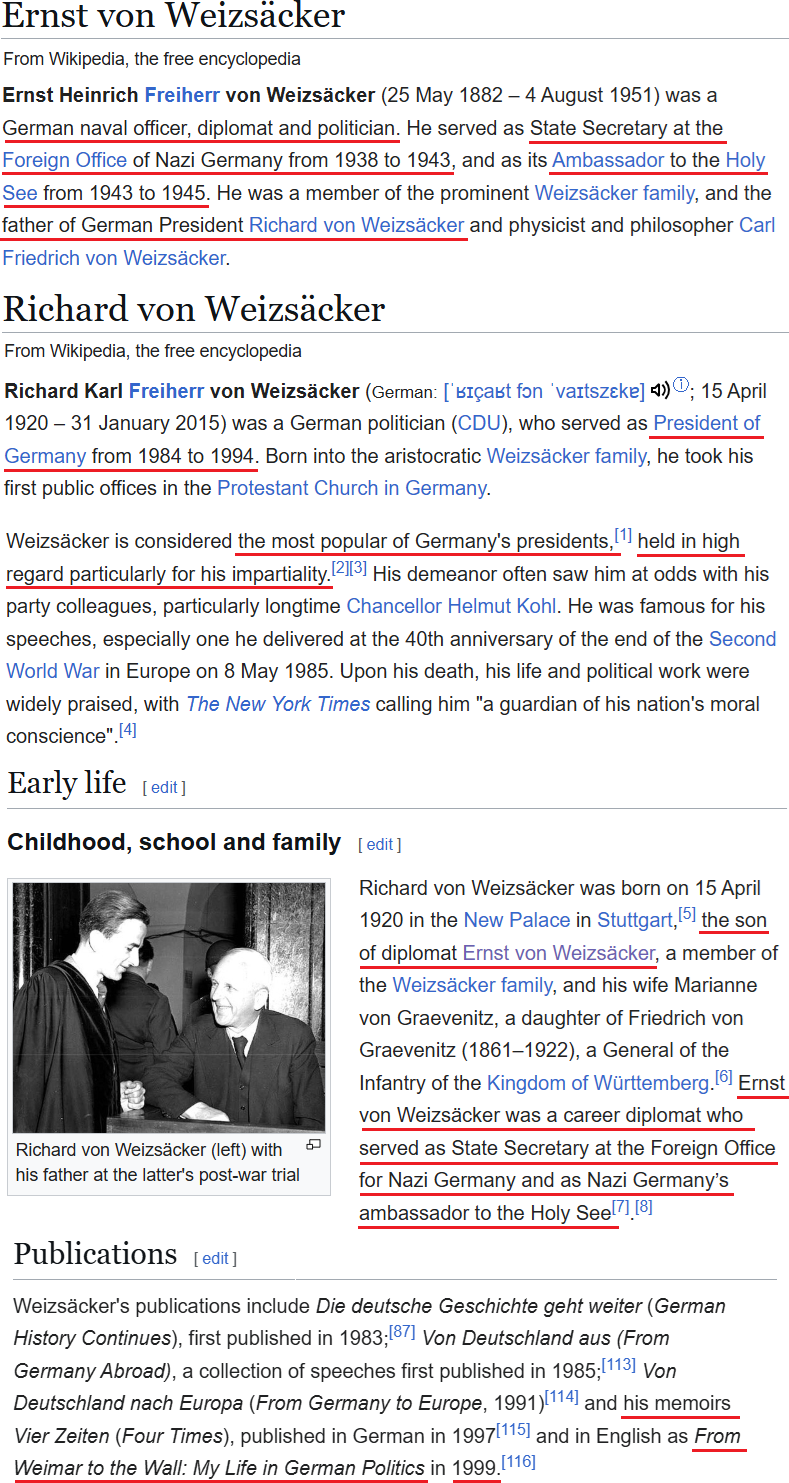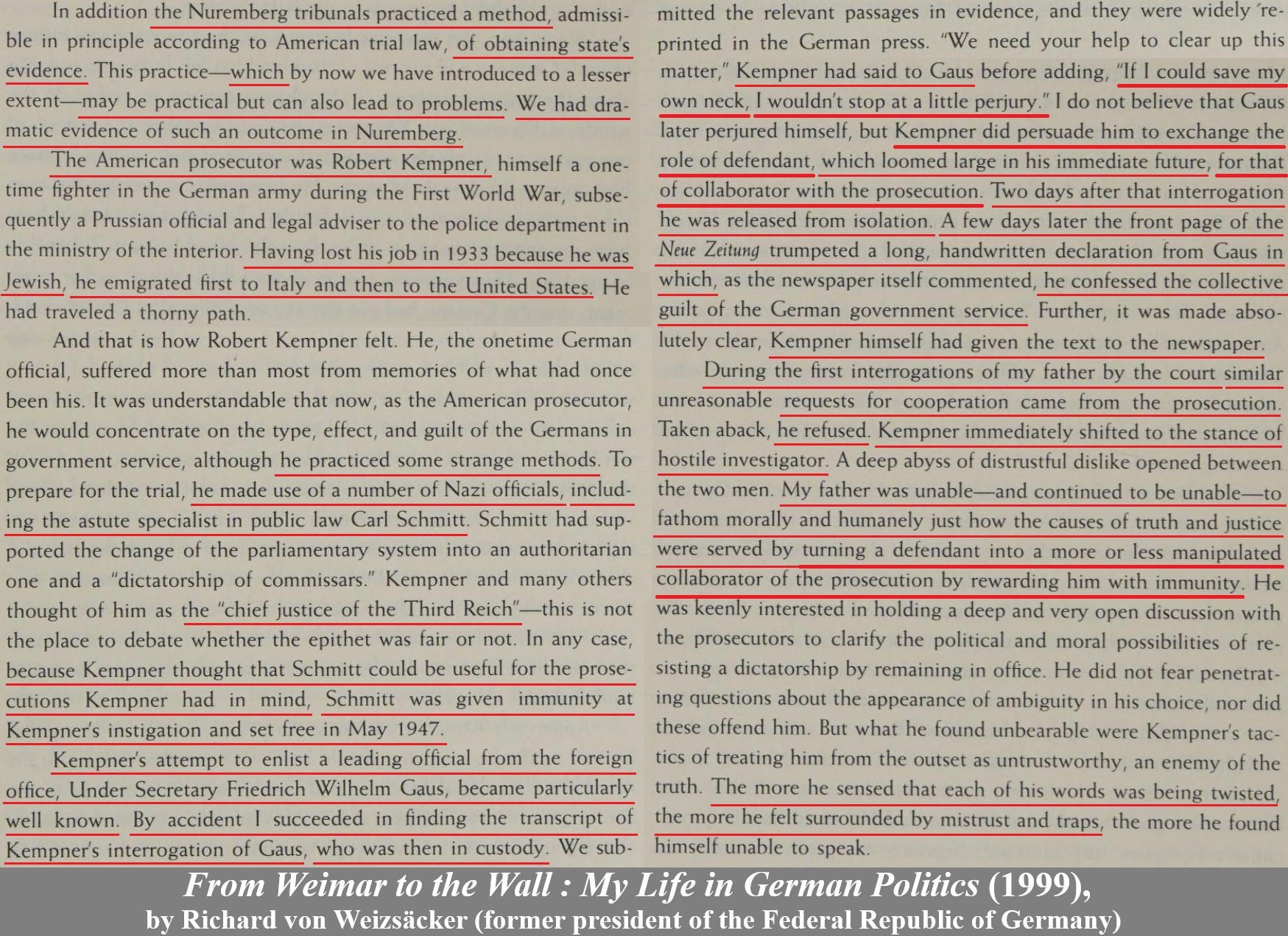
I wanted to read the original transcript, so I went and found it. March 6, 1947. Wilhelm Friedrich Gaus being interrogated by Robert Kempner and Peter Beauvais.
German: https://collections.ushmm.org/search/ca ... 65061&cv=8
English: https://collections.ushmm.org/search/ca ... 5061&cv=21
Here is the text around the perjury quote, first in its original German, from pages 5 and 6:
Spoiler
48. Fr. Was ist das fuer eine Arbeit, Opium fuer einen Moerder zu sein?
A. Das war ich niemals.
49. Fr. Sie waren das Opium fuer RIBBENTROP, sie haben ihn mit Ihren Namen gedeckt. Hoeren Sie mal zu, as ich Ihnen vorhalte. Wenn ich weiss und das wussten Sie, dass der Mann ein Moerder ist, bei einem solchen Mann bleibe ich doch nicht!
A. Sie haben recht, dass der Mann ein Moerder war.
50. Fr. Sie muessen nachdenken. Das einzige wo Sie Ihren Kopf retten, dass Sie die Wahrheit sagen oder wollen Sie als rechte Hand zum Galgen gehen? Sie kennen das alte deutsche Recht: Mitgefangen - Mitgehangen.
A. Das kann ich gar nicht fassen?
51. Fr. Das haette Sie frueher laehmen sollen, die letzten zwanzig Jahre. Nur die Wahrheit kann Sie retten!
A. Ich werde mich doch nicht mit einer Luege hierherstellen. Ich schwoere Ihnen dass ich nur die reine Wahrheit sage.
52. Fr. Es hat keinen Zweck einen Meineid zu schwoeren. Wenn ich meinen Kopf retten koentte, wuerde ich jeden Meineid schwoeren. Sie musessen uns helfen, die Sache aufzuklaeren.
A. Ich gebe Ihnen mein Wort darauf!
53. Fr. Die Tatsachen nicht Worte!
A. Ich kann mich nicht genau erinnnern. Ich glaube in Nuerenberg wurde ich von einem General gefragt wegen der Geisselfrage, das ist ein Punkt in dem RIBBENTROP hereinspielt.
54. Fr. Wie denken Sie darueber?
A. Ich hoerte als von Geisseln gesprochen wurde, dass es sich um Voelkerrechts-Geisseln in keinem einzigen Fall handelte, sondern um REpraesilien. Dagegen ist von Faellen die Rede gewesen, in Frankreich, dass da Menschen, nachdem ein Sabotage-Akt veruebt worden ist, nichtbeteiligte Menschen zur Verantwortung gezogen worden sind.
A. Das war ich niemals.
49. Fr. Sie waren das Opium fuer RIBBENTROP, sie haben ihn mit Ihren Namen gedeckt. Hoeren Sie mal zu, as ich Ihnen vorhalte. Wenn ich weiss und das wussten Sie, dass der Mann ein Moerder ist, bei einem solchen Mann bleibe ich doch nicht!
A. Sie haben recht, dass der Mann ein Moerder war.
50. Fr. Sie muessen nachdenken. Das einzige wo Sie Ihren Kopf retten, dass Sie die Wahrheit sagen oder wollen Sie als rechte Hand zum Galgen gehen? Sie kennen das alte deutsche Recht: Mitgefangen - Mitgehangen.
A. Das kann ich gar nicht fassen?
51. Fr. Das haette Sie frueher laehmen sollen, die letzten zwanzig Jahre. Nur die Wahrheit kann Sie retten!
A. Ich werde mich doch nicht mit einer Luege hierherstellen. Ich schwoere Ihnen dass ich nur die reine Wahrheit sage.
52. Fr. Es hat keinen Zweck einen Meineid zu schwoeren. Wenn ich meinen Kopf retten koentte, wuerde ich jeden Meineid schwoeren. Sie musessen uns helfen, die Sache aufzuklaeren.
A. Ich gebe Ihnen mein Wort darauf!
53. Fr. Die Tatsachen nicht Worte!
A. Ich kann mich nicht genau erinnnern. Ich glaube in Nuerenberg wurde ich von einem General gefragt wegen der Geisselfrage, das ist ein Punkt in dem RIBBENTROP hereinspielt.
54. Fr. Wie denken Sie darueber?
A. Ich hoerte als von Geisseln gesprochen wurde, dass es sich um Voelkerrechts-Geisseln in keinem einzigen Fall handelte, sondern um REpraesilien. Dagegen ist von Faellen die Rede gewesen, in Frankreich, dass da Menschen, nachdem ein Sabotage-Akt veruebt worden ist, nichtbeteiligte Menschen zur Verantwortung gezogen worden sind.
For clarity, the German words for "commit perjury" translate equally as "swear a false promise". Knowing that makes the responses flow together more smoothly.48. Qu.: What kind of an occupation is that, to be opium for murderer?
A. : I was never that.
49. Qu.: You were RIBBENTROP's opium, you covered him with your name. Listen to what I accuse you of. If I know and you did know that -, that a man is a murderer, I certainly will not stay with such a man!
A. : You are correct, in that the man was a murderer.
50. Qu.: You must think it over. The only thing that can save your neck is telling the truth - or do you want to be hanged as a right hand man? You know the old German law: "Mitgefangen - mitgehangen", (Captured together - hanged together).
A. : I am stupefied.
51. Qu.: That should have stupefied you before, throughout the last twenty years. Now only the truth can save you!
A. : But I certainly would not stand here and tell a lie. I swear to you that I am telling nothing but the truth.
52. Qu.: It is of no use to commit perjury. If I had to save my neck I would commit any kind of perjury. You must help us to clarify the matter.
A. : I give you my word on that!
53. Qu.: The facts - not words.
A. : I cannot remember exactly. I believe once in Nuernberg I was asked by a general with respect to the hostage question, that is a matter with which RIBBENTROP had to do.
54. Qu.: What do you think about that ?
A. : When there was talk about hostages, I learned that in no single cases were there hostages in accordance with International Law but that it concerned acts of reprisal. With respect to France, cases were mentioned that there people, after an act of sabotage had been committed, people who had nothing to do with it were held responsible.
Having the full context renders the standalone quote somewhat less insidious. However, the overall effect of the interrogation is the same. Kempner repeatedly stated that the only way for Gaus to avoid death is to stop lying, which to a man who is already cooperative and truthful can easily be taken to mean that he should start lying.
Prior to that, Kempner called him not just "opium for a murderer" but also "the evil spirit [boese Geist] of Ribbentrop". He also repeatedly suggested that Gaus could be turned over to the Soviets, which Gaus desperately opposed. Gaus comes across as very weak-willed throughout.
With this much coercion I would not have any expectation of finding historical truth. Gaus's response to the perjury quote was to offer up a rumor about killed hostages.
The interrogation ended with an informal deal. Gaus agreed to write what was asked of him if he wasn't turned over to the Soviets.
113. Q.: Well, let's call it a day. I'm going to tell you something.
A.: Oh, please don't hand me over to the Russians!
114. Q.: If you tell the truth, you understand ? Sure ? For any untruth is brought to light very soon with us; am I making myself clear?
You know about the breach of treaties, don't you ?
What were the worst cases ? Write those down for us. [...]
122. Q.: We shall send you paper and shall provide you with some necessities.
A.: Thank you.